
Stay informed
Higher brackets, bigger credits and benefits. What to know about Canadian taxes in 2026
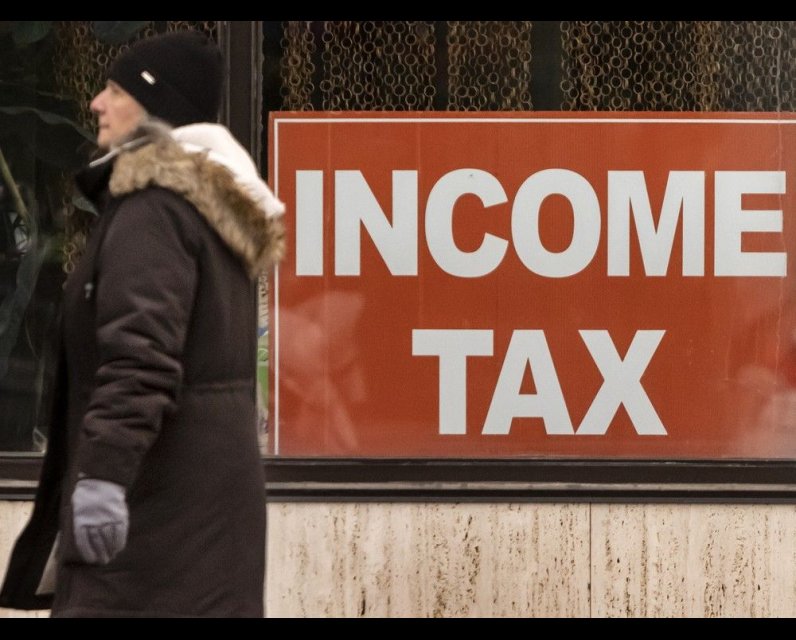
Tax changes reflective of inflation are afoot for Canadian workers in 2026, potentially leaving more money for them after federal and provincial taxes.
Last month, the Canada Revenue Agency revealed updated income tax brackets, basic personal amounts, Canada Pension Plan (CPP) thresholds and more changes set to take effect this year.
Here’s what to know.
Inflation down, tax bracket thresholds up
Income tax brackets are indexed to inflation data from Statistics Canada’s consumer price index (CPI) and the rate for 2026 was recently announced as two per cent — down from 2.7 per cent in 2025. As a result, thresholds for Canada’s five progressive tax brackets will increase as of Jan. 1, with certain credits, such as GST cheques and the Canada Child Benefit, going up on July 1.
In theory, and provided one’s income doesn’t increase drastically in 2026, it could mean a little more take-home pay after taxes.
In May, Prime Minister Mark Carney announced that his government would cut the lowest incoming tax bracket one percentage point — from 15 per cent to 14 per cent — making good on a promise made at the outset of the federal election . He said the move, which was estimated to cost $6 billion annually, could save the average family of two about $840 per year.
The Parliamentary Budget Office later estimated only $280 in savings for the same family.
Because the changes came in mid-year, the lowest tax rate was set at 14.5 per cent for the 2025 tax year.
In 2026, employees will be taxed 14 per cent on the first $58,523. Income from that amount up to $117,045 is taxed at 20.5 per cent; from $117,045 to $181,440 at 26 per cent; and from $181,440 to $258,482 at 29 per cent.
Anything above $258,482 is taxed at 33 per cent, the highest bracket.
Basic personal amount increased
As it has done in successive years, Ottawa is also increasing the basic personal amount (BPA), the amount of income you can earn without having to pay federal income tax. The non-refundable federal tax credit is automatically available to all taxpayers.
The new BPA limit for 2026 is set at $16,452, meaning if you earn that much or less, you won’t pay any tax. Using the 14 per cent rate as opposed to the tax bracket, anyone earning $181,440 or less gets the full amount of $2,303. People earning $258,482 or more are afforded the minimum BPA of $14,829, for a credit of $2,076, and those in between will be credited an amount somewhere in between.
For instance, someone earning a salary of $86,000 annually pays no tax on the first $16,452, 14 per cent on the next $42,071 ($5,889.94) and 20.5 per cent on the remaining $24,477 ($4,955.40). That means they’ll pay $10,845.34 in federal taxes.
Someone grossing $386,000, meanwhile, pays no tax on the first $14,829, but will end up paying roughly $93,000 in taxes.
CPP ceilings rise
Contribution rates for the Canada Pension Plan , for both employees and employers, are static at 5.95 per cent, but the year’s maximum pensionable earnings (YMPE) is rising to $74,600, up from $71,300 this year. The basic exemption amount of $3,500 is also unchanged.
Also known as the first earnings ceiling, YMPE is the maximum salary portion on which you need to contribute to the plan.
As of next year, the maximum annual employee and employer contribution is $4,230.45, up from $4,034.10 in 2025. Contribution maximums by self-employed persons are $8,460.90, up from $8,068.20.
Those over that $74,600 YPME will also pay an additional four per cent, to a max of $416, on earnings between $74,600 and $85,000 in what’s known as the second ceiling. For the self-employed, the rate is eight per cent, to a max of $832.
More money for parents
The Canada Child Benefit (CCB) is going up again in July 2026.
Families with children under six can receive up to $8,157 per child, up from just under $8,000 in 2025. Families with kids between six and 17 are eligible to receive up to $6,883, an increase of $6,748 this year.
The actual payment depends on family income, ages and the number of children, with full benefits going to families below about $38,237 of adjusted net income, $750 more than in 2025.
Minor adjustments to EI premiums
Employment insurance premiums are also set to change a little in 2026, according to Employment and Social Development Canada.
Premiums for everyone will only apply to the first $68,900 in gross earnings, up from $65,700 this year and $63,200 in 2024.
If you live anywhere but Quebec, your employer must deduct $1.63 for every $100 earned until you hit $1,123.07, the maximum contribution for 2026. That’s down from $1.64 and $1,077.48 this tax year.
For the Quebecois, where the province’s parental insurance plan allows for a lower rate, they must deduct $1.30 from every $100 until they hit $895.70. It was $1.31 and $860.67 in 2025.
The cross-Canada employer’s rate, 2.28 per cent up to a max of $1,572.30, remains unchanged.
RRSP and Old Age Security
CRA also announced new limits on registered retirement savings plans (RRSPs) in November, allowing Canadians to put a bit more in them.
The new maximum is $33,810, up $750 over last year, but is still limited to 18 per cent of your 2025 income.
Come 2026, the income threshold at which Old Age Security benefit clawback begins increases to $95,353. Any amount above that will result in reduced OAS payments.
Provincial tax changes
A few provinces also instituted tax changes in 2025 that will carry over into 2026 and beyond, according to CRA.
Manitoba has frozen indexation of its BPA and tax brackets, with a 2026 basic amount of $15,780 and new brackets of 10.8 per cent below $47,000, 12.75 per cent from $47,000 to $100,000 and 17.4 per cent above $100,000.
Nova Scotia will drop its income-tested BPA and apply the maximum amount for everyone in 2026 and P.E.I. is raising its BPA to $15,000.
Saskatchewan, meanwhile, will continue scheduled $500 increases to basic personal, spousal, dependent and senior amounts, lifting its 2026 BPA to $20,381.
Our website is the place for the latest breaking news, exclusive scoops, longreads and provocative commentary. Please bookmark nationalpost.com and sign up for our daily newsletter, Posted, here.

Unpublished Newswire

Comments
Be the first to comment