
Stay informed
Unpublished Opinions


Canadian support for defence spending reaches a 30-year high: Poll
OTTAWA — Canadian support for defence spending reached a 30-year high, rising nine percentage points since December 2023, due to growing anxieties from the United States and fear over Canada’s security and sovereignty, according to a new poll.
Three-quarters of Canadians believe there should be more spending on defence, in contrast to 66 per cent in December 2023, found the new EKOS survey that sampled 1,000 people between Jan 29. to Feb 3.
U.S. President Donald Trump is likely a major cause of the change in public opinion, considering Biden was still president when the previous 2023 poll was taken, said EKOS President Frank Graves.
“Trump is the key driver(of this notion) and no, those numbers would not look anything like that if Biden was still president or Kamala Harris had been elected in 2024,” said Graves, in an interview with National Post. “Most people thought it was going to be bad but didn’t think he was going to be talking about annexing us. So, that is a powerful visceral driver of this rise in support for defence spending.”
Graves says that the approval for increased defence spending has been the highest recorded since 1995.
“Defence spending is not number one priority, but it is really close,” said Graves. “This is remarkable because it’s usually 20th in the minds of Canadians.”
There is broad support nationally for Canada to meet NATO’s benchmark of two per cent of the country’s GDP, at 75 per cent, and 72 per cent support for Canada to meet a target of five per cent of GDP spending by 2035.
In 2023, Canada’s military spending accounted for only 1.33 per cent of GDP, an increase from 1.01 per cent in 2014, according to a 2025 NATO report. This put Canada joint-fifth for the lowest percentage among NATO members.
Among party lines, there is high support for increased spending on the military between Liberals and Conservatives, with Liberals polling at 75 per cent and Conservatives at 79 per cent, showing signs for bipartisanship in this issue.
NDP supporters displayed the lowest percentage of support, with only 49 per cent in favour of higher military spending. NDP supporters were found to be majority indifferent or opposed to this motion, at 51 percent, with 38 per cent of those opposed.
Graves said that NDP support has increased in previous years but their stance reflects a more guarded response from the party’s supporters.
“I think largely because many of them would rather see the funds directed to things like social programs, for example,” said Graves.
NDP MP Lori Idlout of Nunavut recently criticized the increased defence spending, calling it unprecedented.
“Boosting defence spending…is an unprecedented target which was never mentioned in the election campaign, and could impact the investments needed in other critical areas, from housing to health care to renewable energy,” said Idlout, in a press release on the NDP website.
Graves said the idea of increased military spending is less appealing towards those under 35 in the medium to long term as they are more concerned about housing and job security that can propel them to a secure retirement.
Despite this Graves said “if they(the government) can make the case that these defence expenditures will be linked to improving the economic outlooks of younger Canada,” it will help that issue.
In fact, 89 per cent of Canadians agree that innovations in the defence industry can benefit the rest of the economy.
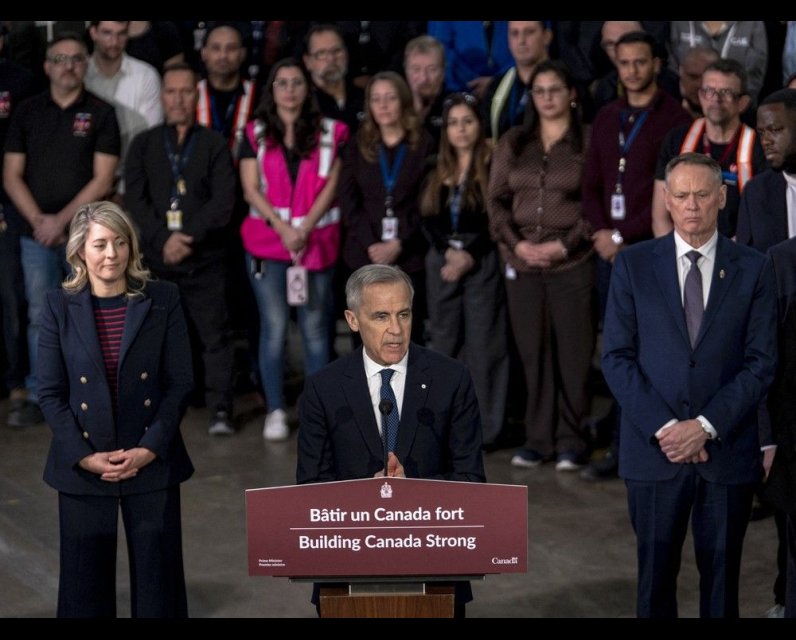
This comes prior to Prime Minister Mark Carney’s announcement of a $6.6-billion strategy to help businesses contribute to the defence industry and prioritize Canadian made equipment as well as a target to create 125,000 jobs.
Eighty-eight per cent of Canadians say that we should have an independent defence industry separated from the United States, in contrast to 79 per cent of Canadians in December 2023.
Most Canadians say that we should stop relying so much on importing American military equipment with 69 per cent saying we should buy less from the U.S..
Stephan Saideman, the director of Canadian Defence and Security Network said that Canada cannot be completely self-sufficient.
“It will always have interdependencies with a variety of countries, because we cannot produce all the weapons systems on our own,” said Saideman. We can’t just drop the United States as a defence contractor, given that a lot of our weapons systems have American parts, American ammunition. So it’s not going to lead to a radical change in the next few days or weeks or even next few years. It’s going to take a lot of time.”
Saideman said that the growing support of military spending is due to a renewed sense of Canadian nationalism, created by tensions with Trump and Canadians’ desire to not get pushed around.
“We live in a moment right now where Canadians are feeling more strongly about the Canadian nation because of the threat posed by Trump,” said Saideman to the National Post. “That has led to Canadians supporting one of the few truly national institutions, which is the Canadian military.”
National Post
Our website is the place for the latest breaking news, exclusive scoops, longreads and provocative commentary. Please bookmark nationalpost.com and sign up for our daily newsletter, Posted, here.

Unpublished Newswire

Comments
Be the first to comment