
Stay informed
Unpublished Opinions



India still one of the main perpetrators of foreign interference and espionage in Canada, CSIS says
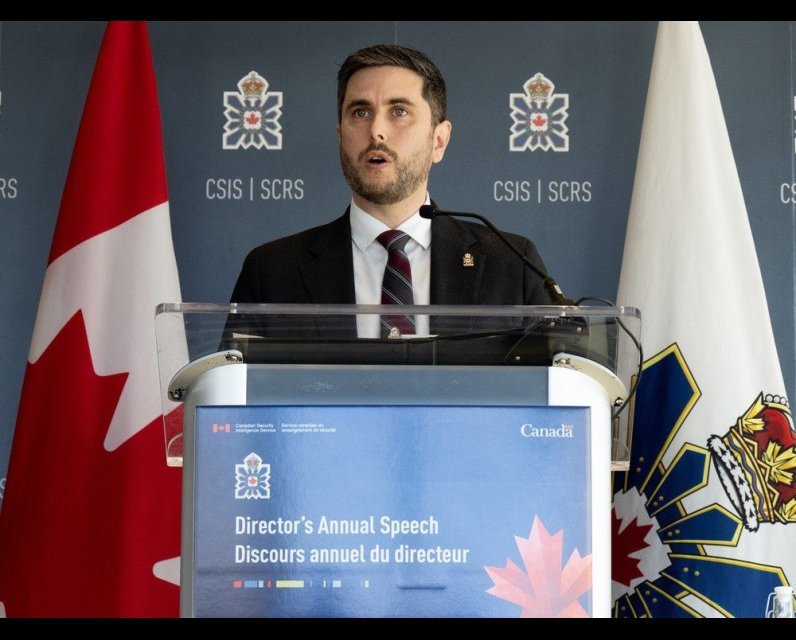
OTTAWA — Canada’s spy agency says India remains one of the main perpetrators of foreign interference and espionage against Canada, contradicting a claim by a senior government official last week that Indian agents are no longer linked to such crimes.
The Canadian Security Intelligence Service (CSIS) has repeatedly cited the Indian government as one of the main perpetrators of foreign interference and transnational repression in Canada in recent years.
In a email to National Post on Saturday, CSIS spokesperson Eric Balsam confirmed that remains the case, marking the first time a Canadian security agency has contradicted a controversial statement by a senior government official to reporters last week.
“CSIS’s threat assessment of the main perpetrators of foreign interference and espionage against Canada has not changed,” Balsam said in a statement to National Post Saturday.
As recently as Feb. 3, CSIS Director Dan Rogers cited “China, Russia, India and others” as countries the agency has called out for being the most active perpetrators of foreign interference targetting Canada.
The assessment by Canada’s spy agency puts more pressure on Prime Minister Mark Carney, who is set to meet Indian Prime Minister Narendra Modi Monday in New Delhi, to clarify if his government believes Indian agents are involved in transnational repression in Canada.
On Wednesday, during a background briefing for reporters on Prime Minister Mark Carney’s 10-day visit to India, Australia and Japan, a senior government official said that India is no longer interfering in Canadian affairs.
“We’re confident that that activity is not continuing,” the official said of previous allegations the agents of the government of India were linked to many violent crimes or threats in Canada, including the murder of B.C. Sikh-Canadian leader Hardeep Singh Nijjar in 2023.
“If we believed that the government of India was actively interfering in the Canadian democratic process, we probably wouldn’t be taking this trip,” adding the official, who was speaking on background and not for attribution.
The Indian government, via its high commissioner in Canada, quickly seized on the statement to reiterate its claim that it has never carried out transnational repression efforts to suppress critics.
In 2023, then prime minister Justin Trudeau took the unprecedented step of announcing in the House of Commons that Canada had credible evidence linking Indian government agents to Nijjar’s murder.
That pronouncement, as well as a fall 2024 press conference by the RCMP once again linking the Indian government to a series of violent crimes in Canada such as murder, arson, extortion and threats, sent the bilateral diplomatic relationship into a tailspin.
Both countries expelled their respective ambassadors as well as multiple diplomats.
Now, Prime Minister Mark Carney is in India to kickstart both diplomatic relations and a new trade deal with the third largest economy in Asia. But his government has also faced a barrage of questions about the controversial statement.
It caused significant outrage within Canada’s Sikh community, which argues it has been targeted for decades by repressive efforts by the Indian government.
Multiple MPs within Carney’s own caucus were shocked by the official’s comment and publicly disagreed.
“Any suggestions these threats have been resolved does not reflect the current security reality facing Canada,” Ruby Sahota, Carney’s secretary of state for combatting crime, wrote on social media.
“Attempting to minimize these threats risks eroding public confidence and overlooks the ongoing efforts to protect communities targeted by intimidation and violence.”
Sukh Dhaliwal, the Liberal MP who represents the riding where Nijjar was killed, went even further by calling into question the government official’s suitability for the role.
But Foreign Affairs Minister Anita Anand, who is currently in India with Carney, refused to provide a definite answer when asked repeatedly by reporters this weekend whether or not she believed that violence linked to Indian government agents had ceased or was still ongoing.
Instead, she argued that confronting concerns over India’s ties to violence on Canada’s streets and attempts to meddle in its elections can only be done through direct engagement.
The day after the official’s comments, Public Safety Minister Gary Anandasangaree — whose portfolio includes overseeing CSIS — said there remains “a lot more work to do” on the file of Indian transnational repression.
Balsam, the CSIS spokesperson, agreed with the minister in his statement Saturday.
“CSIS remains vigilant against foreign interference and espionage threats from all countries,” he added.
In a previous statement provided Thursday, another CSIS spokesperson, Magali Hébert, said the spy agency considers threats in a “country-agnostic way”.
She also noted that new “national security tables” set up between the Canadian National Security and Intelligence Advisory Nathalie Drouin and her Indian counterpart Ajit Doval allow for “transparent, direct, and systematic dialogue on security concerns”.
During the briefing to reporters, the official said that Canada’s talks with India are occurring on two different paths. One is focused on increasing trade and economic cooperation, while the other is focused on addressing joint security issues.
National Post
cnardi@postmedia.com
Our website is the place for the latest breaking news, exclusive scoops, longreads and provocative commentary. Please bookmark nationalpost.com and sign up for our politics newsletter, First Reading, here.

Unpublished Newswire


Comments
Be the first to comment