
Stay informed
Unpublished Opinions

Seconds from disaster: The terrifying growth of 'runway incursions'
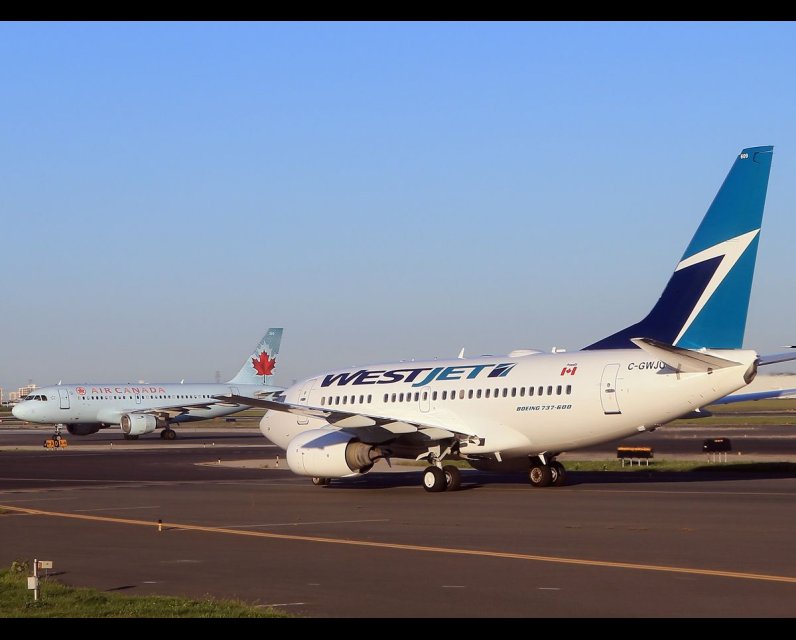
In early September last year, a potential disaster was brewing at Toronto’s Pearson airport.
An Air Canada Airbus jet carrying 122 passengers and five crew was accelerating into its “takeoff roll” as, on a nearby runway, a Bombardier plane on a test run was taxiing past the “hold-short line” designed to avoid on-ground collisions.
Air-traffic controllers issued one, then another “urgent” order to stop and the Bombardier finally came to a halt. But by that time its nose was protruding 35 feet into the runway being used by the speeding Airbus A-220.
The passenger airliner “became airborne just before reaching the intersection point,” according to a description by the Transportation Safety Board of Canada (TSB).
No one was hurt but, as events in New York Monday illustrated, the incident could have ended horribly.
Another Air Canada Express plane landing at La Guardia airport struck an airport fire truck just before midnight Sunday. Both pilots were killed, the plane’s nose crushed beyond recognition.
It was a tragic example of what the aviation industry calls “runway incursions” — incidents where planes, ground vehicles or people end up in the wrong place at the wrong time on airport pavement, risking disastrous collisions.
The problem is little known among passengers but has long preoccupied safety experts, and may be getting worse.
Flying is a remarkably safe form of transportation as a whole. But the number of runway incursions in Canada doubled between 2010 and 2021, according to a 2022 report by the TSB, with 471 incidents recorded in 2021.
“Although only a small number of incursions were classified as high-risk, the consequences of a collision could be catastrophic given the potential for injury or loss of life from a single accident,” said the board.
While the overall number of incursions at U.S. airports has been stable since 2017, the most dangerous, close-call incidents seemed to be on the rise, Jennifer Homendy, that country’s National Transportation Safety Board chairwoman, said at a 2023 roundtable.
As illustration, she mentioned a near-miss between a landing FedEx cargo plane and a packed Southwest Airlines jet on the ground in Austin, Texas, that year, the two aircraft avoiding each other by a mere 115 feet.
“Any of these events could’ve had devastating consequence, could’ve led to tragedy, to more bereaved families,” Homendy said.
That has certainly happened in the past.
One of the worst aviation disasters occurred in the Canary Islands in 1977, when a KLM Boing 747 began takeoff and hit a Pan Am 747 still taxiing on the same runway, leading to 583 deaths.
A Singapore Airlines 747 tried to take off from that city’s airport in 2000 during a typhoon, hitting construction equipment on the runway and killing 83.
Efforts by airlines, airports, air-traffic control and other stakeholders have reduced the number of high-risk incursions in Canada recently, but the number of low-risk incidents “remains elevated,” Marcelo Cabral, a safety expert with Nav Canada wrote in an article for Transport Canada last year.
Data show that the single-biggest cause of incursions is poor communication, or assuming that the message has gotten across, he said.
“In the busy, high-stakes environment of an airport manoeuvring area, assuming understanding is a risk no one can afford,” he wrote. “Deliberate and purposeful briefings are essential.”
Lawyer Kevin Durkin, who heads the aviation law practice at Chicago-based Clifford Law Offices, said in an interview he believes the problem in the U.S., at least, is tied in part to the chronic shortage of air-traffic controllers. He’s seen evidence of the issue first-hand, having been a passenger on three planes that aborted their landings because there was equipment on the runway.
“Number one, air travel has become increasingly popular in the United States,” Durkin said. “You have increasing flights, you have airports that are congested. You have flights coming in every so-many minutes, so-many seconds … You put it all together and you have a recipe.”
He said he hopes the investigation of the Air Canada crash at LaGuardia leads to safety advances, but lamented what he called “graveyard engineering.”
“Things happen, but unfortunately after people die.”
Our website is the place for the latest breaking news, exclusive scoops, longreads and provocative commentary. Please bookmark nationalpost.com and sign up for our newsletters here.

Unpublished Newswire

Comments
Be the first to comment