
Stay informed
Unpublished Opinions

UN watchdog bashes Mark Carney's 'procedural theatre' on Iran war
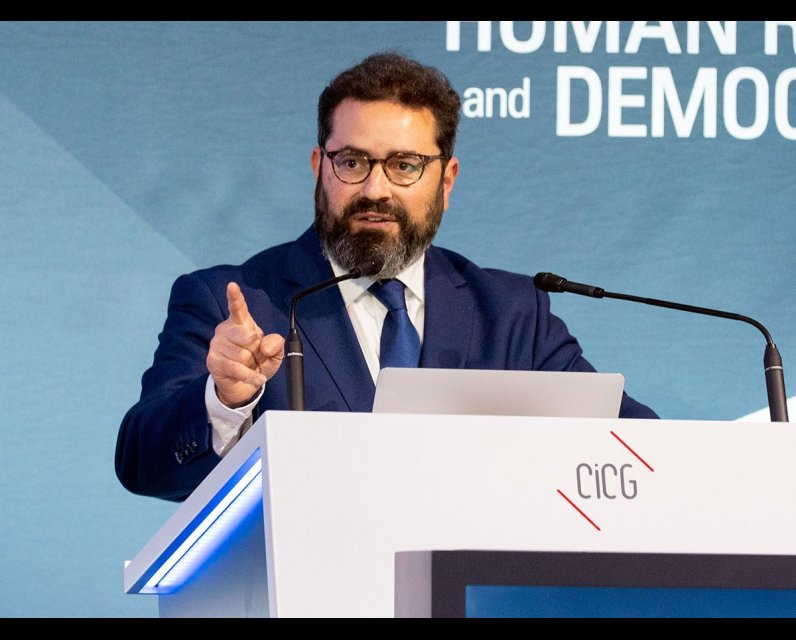
Few people can make tyrants look over their shoulder, but Hillel Neuer has built a career doing exactly that. The Montreal-born, Geneva-based lawyer and human rights crusader has become one of the most unrelenting watchdogs of the United Nations, exposing hypocrisy and defending the world’s dissidents in some of the globe’s most repressive regimes.
As executive director of UN Watch — the Geneva-based NGO known for holding dictatorships to account within the UN system — Neuer has been called “feared and dreaded by the world’s dictatorships” (Tribune de Genève) and “the most hated man at the UN” (Bild).
Since 2009, he has chaired the annual Geneva Summit for Human Rights and Democracy, bringing dissidents from Cuba, Iran, China, and beyond to testify before the world. Neuer has addressed the U.S. Congress, European Parliament, and UN General Assembly, and has appeared on CNN, BBC, and Le Monde as an authority on UN reform.
He spoke to Dave Gordon for National Post about the international legal ramifications of the ongoing Iran conflict, as well as the UN’s silence on the Islamic regime’s recent slaughter of its own civilians, estimated at 30,000 or more.
As a Canadian who has become the UN’s most persistent critic on Iran, how do you rate Ottawa’s record on responding to it, and addressing it?
Canada used to have a strong tradition on this issue. For many years Ottawa led the annual UN resolution condemning Iran’s human rights abuses, and that leadership helped keep global attention on the regime’s repression.
What’s troubling now is the tone coming from Prime Minister Mark Carney. He complained that the United States and Israel acted “without engaging the United Nations or consulting allies,” and suggested the strikes might be inconsistent with international law.
But that criticism makes little sense in the real world. The UN Security Council includes Russia and China, both close partners of Tehran. Anyone who has watched the Council for five minutes knows they would block any meaningful action against Iran. In fact, many UN bodies have spent the past week condemning the U.S. and Israel far more loudly than they condemn Iran’s missiles and terrorism.
So demanding UN engagement in this context isn’t realism — it’s procedural theatre. When a regime has spent decades funding terror proxies and threatening nuclear breakout, waiting for the UN to approve action is simply another way of guaranteeing paralysis. For someone who spoke at Davos about taking the world as it is, this is not very consistent for Mr. Carney.
If the Canadian government asked you to name three concrete moves to raise the cost for Iran’s regime, what would be on that list?
First, before anything, Canada should move decisively at home by identifying and arresting members of the IRGC and regime operatives operating on Canadian soil. Iranian dissidents have long warned that the regime uses networks abroad for intimidation, surveillance, and terror plots. Canada should make clear there is zero tolerance for that.
Second, Ottawa should rally its allies to do the same. If multiple democracies simultaneously crack down on IRGC networks, expel regime operatives, and expose Tehran’s global activities — from terror plots to hostage diplomacy — the cost to the regime rises very quickly.
Third, Canada should build a coalition of democratic states willing to speak clearly and consistently about the Islamic regime’s mass murder and support for terrorism. When democracies coordinate their voices, it becomes much harder for authoritarian blocs to drown out the issue.
As a lawyer, and as someone intimately knowledgeable of the UN, can you clarify how the UN’s own mechanisms might justify the Israel-U.S. military campaign?
International law recognizes the inherent right of self-defence under Article 51 of the UN Charter. What’s often missing from the public debate is that Iran has been waging a long campaign of aggression — arming Hezbollah, Hamas and other militias, launching missiles and drones, and openly threatening Israel’s destruction.
When fundamentalist fascists teach their children for 47 years to chant every day “Death to America, Death to Israel,” and they spend many billions of dollars on weapons to achieve that goal, maybe it’s time to take them seriously. The world learned on October 7th that when Hamas terror chiefs preached “slaughter the Jews,” that is exactly what they meant.
So when the two nations targeted by the murderous mullahs finally decide to dismantle missile infrastructure, IRGC command centres or nuclear capabilities in that context, they are not starting a new war out of nowhere. They are responding to an ongoing armed conflict and a continuing threat.
Ironically, the UN Charter that critics cite actually contains the principle that allows states to defend their citizens. The tragedy is that the UN system often invokes the law selectively — loudly when democracies act, but far more quietly when regimes like Iran violate it for decades.
You’ve shown that UN bodies move quickly and loudly on Israel and the U.S., but barely whisper on Iran; what are the concrete mechanisms — bloc politics, structural issues, committee appointments, staff culture — that make Tehran effectively ‘shielded’ inside the UN system?
It’s a mix of bloc politics and institutional culture. The UN system operates largely through voting blocs, and many of those blocs are dominated by authoritarian governments. They protect one another from scrutiny while directing disproportionate attention toward democratic states, particularly Israel.
Then there’s the machinery itself — special committees, mandates, and rapporteurships that were created decades ago and are today largely hijacked and politically driven. Once those structures exist, they generate a steady stream of reports and resolutions in one direction.
Finally, there’s a bureaucratic culture inside parts of the UN that tends to treat Western democracies as the primary objects of scrutiny while being far more cautious if not fearful when it comes to regimes like Iran, China, or Russia. The result is a system where some violators face constant attention and others effectively operate with diplomatic cover.
You’ve just watched the UN Security Council talk about Iran and then do nothing; when you walk out of that chamber, what is the one procedural excuse you hear most often from diplomats that sounds reasonable in New York but obscene if you repeat it to Iranian families of the dead?
The phrase you often hear is: “We need consensus,” or “it must be authorized by the Security Council.” Diplomats say it in very calm, procedural language.
But what that often means in practice is that one or two powerful regimes — typically Russia or China — will veto any action to save lives.
Inside the chamber, their reason for not acting sounds like diplomacy. But if you repeat that to the families of protesters who were shot in the streets of Iran, or to dissidents facing torture, it sounds very different.
When a regime is killing its own people or destabilizing an entire region, waiting for consensus — or for Moscow and Beijing to approve — often becomes a recipe for paralysis.
You chair the Geneva Summit for Human Rights and meet dissidents who risk their lives. What have Iranian activists told you privately that people might not know?
One thing they emphasize again and again is how much international attention matters. When the world is watching, the regime becomes more cautious. When the spotlight fades, the repression intensifies.
They also speak with incredible clarity about what they are fighting for. This is not just about economic grievances or isolated protests. It’s about basic freedoms — women’s rights, free expression, and the right to live without fear of the state.
And perhaps most striking is their courage. Many of them know that speaking publicly could put their families at risk. Yet they still choose to testify, to document abuses, and to keep pushing for change. Their message to the world is simple: don’t forget us.
If you were asked to write a “Neuer Doctrine” — a set of rules for how the UN should respond the next time a regime guns down its own civilians — what would be in it?
First: remember what the United Nations was created for. The countries fighting Hitler called themselves the United Nations even before the organization formally existed. It was meant to unite the world against aggressive, murderous regimes — not to give them a diplomatic shield.
Second: apply triage. In medicine you focus first on the most urgent and dangerous cases. The UN should do the same. The worst dictatorships — the ones massacring their own people, sponsoring terror, or threatening genocide — should be the primary focus of the system.
Instead, today the UN often spends disproportionate energy scrutinizing and condemning democratic states, while the world’s worst regimes, many of whom are now sitting on the UN’s human rights bodies, escape serious pressure.
Third: when regimes become a threat to their own people and to international peace, the international community must be prepared to back real consequences — sanctions, isolation, and support for those willing to stop the violence.
Peace is not preserved by pretending tyrannies are just another member of polite society.
Our website is the place for the latest breaking news, exclusive scoops, longreads and provocative commentary. Please bookmark nationalpost.com and sign up for our newsletters here.

Unpublished Newswire

Comments
Be the first to comment