
Stay informed

How the Fear of Trump Is Helping Quebec Sovereignty
When the Parti Québécois talks about sovereignty, Ottawa reaches for the same emotional tools it used in 1980 and 1995: fear of economic collapse, warnings about global instability, and dire predictions of what would happen if Quebec tried to stand on its own. The words shift with the times, but the structure never does.
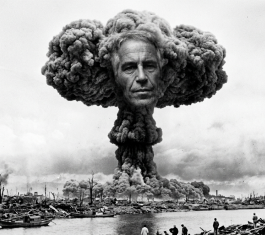
That’s how Mélanie Joly, Canada’s foreign affairs minister at the time and one of her party’s best communicators in Quebec, found herself warning last year that the PQ’s renewed push for independence would “hand Quebec over to Donald Trump.” It was a dramatic claim, delivered with conviction, and meant to suggest that sovereignty in a turbulent world amounts to geopolitical surrender. Independence, she implied, would weaken Quebec precisely when America is most threatening.
The problem is not that the argument is wrong; it’s that it belongs to another era.
Invoking a foreign bogeyman to scare Quebec back into the Canadian fold is a tactic forged in the politics of the 1990s, when Quebecers still believed Canada could insulate them from global disorder. Today, the electorate—particularly the younger half—is less inclined to interpret warnings the way Ottawa hopes they will. Frightening Quebec with Trump says less about Quebec’s vulnerability than about the federal government’s own anxieties.
This is the deeper flaw in Ottawa’s approach: fear campaigns depend on trust in the messenger. In the ’80s and ’90s, federal institutions enjoyed a degree of goodwill in Quebec that made warnings credible. But years of uneven federal leadership, recurring provincial–federal tensions, and a cultural shift away from deference have eroded that foundation. The federal government is no longer perceived as the calm adult in the room. It is seen, increasingly, as just another player.
And then there is the second requirement for fear to work: the audience must already feel insecure. Modern Quebec doesn’t—at least less than it used to.
This is a society marked by cultural confidence, linguistic pride, economic resilience, and a clear sense of its own political identity. Younger Quebecers, raised long after the last referendum, are far less susceptible to existential narratives. They are less likely to see independence as catastrophe but as a policy option.
That is the crucial shift the federal government could be missing: messages of danger only resonate with people who doubt their own footing. Quebecers, by and large, do not. Which is why dramatic appeals—especially those involving foreign threats—may feel increasingly out of touch.
In both 1980 and 1995, the federal voice Quebec heard most clearly was its own. Pierre Trudeau and Jean Chrétien were not just prime ministers who opposed sovereignty; they were Quebecers, fluent in its language, rhythms, and political reflexes. They could argue the case for Canada from within Quebec’s cultural frame, not across it. That mattered more than is often acknowledged. It is unlikely to be the case again.
That shift is not merely demographic or political. It is symbolic. Federal authority now risks sounding more distant—linguistically, culturally, and emotionally—at precisely the moment when intimacy, not instruction, would matter most.
Quebec is acutely sensitive to what effort signals. This was evident in a controversy surrounding Air Canada chief executive officer Michael Rousseau, whose remarks about not feeling the need to learn French were received not as a personal failing but as a failure of respect. The issue of his French-language fluency returned to the front pages following the tragic accident at New York’s LaGuardia Airport this past month, in which one of the two pilots killed was from Quebec. The CEO’s online condolence message—delivered almost entirely in English, save for a perfunctory “bonjour” and “merci”—was met with swift condemnation in Ottawa and Quebec City. Prime Minister Mark Carney said the CEO had shown a lack of judgment and compassion, while Premier François Legault called for his resignation. A week later, Air Canada announced Rousseau’s retirement this coming fall.
In Quebec, imperfect French spoken earnestly is often forgiven. Indifference is not. The episodes crystallized something broader: the sense that power in Canada can still appear comfortable operating at a cultural distance from Quebec—and insufficiently aware of how loudly that distance speaks.
In a referendum context, this matters. Federal leadership is not judged solely on policy positions or economic assurances. It is judged on posture—on whether authority appears to be speaking from within Quebec or merely addressing it from outside. Fluency helps, but effort matters more.
When Joly brings up Trump, it inevitably brings up the fifty-first state. There was a time when no serious political figure—on either side of the border—would dare suggest that Canada could one day be absorbed into the United States. The idea belonged to fiction, satire, or barroom bravado. It certainly wasn’t part of any mainstream political conversation, and it never appeared in the sovereignty debate. Canada’s permanence was the assumption on which federalist arguments depended.
But that assumption was rattled when Trump mused—off hand, provocatively, characteristically—that Canada might eventually join the US as its fifty-first state. It was bombast, yes, but it was presidential bombast, which carries a peculiar status: it forces listeners, even skeptics, to consider ideas they would otherwise dismiss outright.
And it has a second effect, one Ottawa doesn’t always notice. It revives an old sovereigntist challenge that has long made the rest of Canada squirm: Why is it self-evident that Canada must remain sovereign and distinct from the US but somehow unthinkable that Quebec might one day argue the same about Canada? Michael Adams and Andrew Parkin put it plainly in the Globe and Mail: the best federalist answer is pragmatic—that Quebec’s language and culture may be more likely to endure within a larger federation—but that claim can’t just be asserted. It has to be earned, through policies and behaviour that deliver security and respect, in Quebec and for francophones across the country.
This is normalization through foreign influence: an idea that once sounded wild—Quebec asserting more control over its destiny—now feels modest when placed next to the spectacle of a US president imagining swallowing Canada whole. The comparison shrinks the emotional distance between “radical change” and “ordinary adjustment.” Under that light, sovereignty begins to look less like rupture and more like prudence.
For some Quebecers, Trump’s remarks triggered an unexpected thought: If Canada itself can be rhetorically destabilized from abroad, perhaps Quebec is wise to consider anchoring its future internally. That logic is not emotional; it is strategic. Independence becomes one scenario among several, a hedge rather than a rebellion. None of this means Quebecers are suddenly more pro-sovereignty. It means the frame has shifted.
What once made independence seem too risky now makes dependence seem equally so. The world has become unpredictable enough that the idea of Quebec standing on its own—calmly, cautiously, competently—no longer feels reckless. It feels comparable.
And this is the irony Ottawa does not notice: when the federal government warns Quebec about instability, it unintentionally highlights the instability of the world Canada inhabits. When it invokes Trump, it reinforces the message that external forces can reshape political futures. The fear campaign collapses under the weight of its own logic.
If anything, Trump’s comments may have done more to normalize the idea of Quebec determining its own future than anything the PQ has said in years. His rhetoric widened the conceptual space in which Quebecers evaluate their options. And once that space expands, it rarely contracts.
The trouble for federal strategists is that in this new environment, fear no longer works the way it once did. The audience has diversified. The emotional triggers have shifted. And the political vocabulary has changed.
Younger Quebecers—native-born and immigrant alike—tend to respond to politics with a transactional lens. They ask: Does this argument make sense? Does it match what I observe? Does it respect my intelligence? When they hear warnings that echo 1995, they hear an institution talking to an electorate that no longer exists.
The emotional anchors of the No side—fear of chaos, fear of economic trauma, fear of geopolitical exposure—depend on a world view rooted in the twentieth century. But the electorate now lives in an era marked by global instability, inflation, pandemics, climate anxiety, and a near-universal sense that institutions are struggling to keep pace. In such a landscape, fear messages do not reassure; they confirm dissatisfaction. And dissatisfaction rarely breeds loyalty.
In the absence of a credible and emotionally resonant alternative vision for Canada, the federal playbook risks sounding tired. If Ottawa’s only response to sovereignty is still fear, then the message isn’t “we believe in a strong, united Canada.” It’s “we’re scared you’ll actually do it this time.” The frame we inherited—that sovereignty is dangerous and irresponsible—may have helped defeat past referendums. But this time, those trying to keep the country together may need more than anxiety to win hearts and minds.
The political psychologist Drew Westen has shown that fear messaging works only under two conditions: the audience must trust the messenger, and the audience must already feel insecure. Neither applies strongly in present-day Quebec. Trust in federal institutions is far lower than it was in the ’80s or ’90s. And insecurity is not the defining emotion of the younger Quebec electorate.
This is why referencing bogeymen like Trump does not have the effect Ottawa imagines. For older Quebecers, the American spectre once symbolized cultural domination. For younger Quebecers, the US is a source of entertainment, work opportunities, and little more. Trump does not represent a threat to their identity; he represents the noise of another country. Invoking him in a sovereignty debate feels less like a warning and more like an attempt to outsource an argument.
More importantly, fear campaigns depend on a belief that the status quo is safe. But for many Quebecers, the past decade has eroded that belief. Inflation, housing insecurity, climate instability, economic precarity, and global unpredictability have already undermined the idea that Canada offers steady ground. The notion that a vote for the status quo is a vote for stability is no longer persuasive. For some, it borders on nostalgic.
This is the point federal strategists seem reluctant to acknowledge: fear does not neutralize frustration; it amplifies it. When people feel economically and politically overlooked, warnings about what they might lose ring hollow. They are already losing things. The scare tactics of 1995 landed because Quebecers still believed Canada could guarantee a safer future. Many today are no longer convinced of that.
There is also a generational intuition at work—one that rarely registers in polling but quietly shapes how younger Quebecers think about sovereignty. For them, small does not mean weak. It often means agile. They have grown up in a world where small teams outperform slow-moving institutions, where start-ups disrupt giants, and where adaptability is a more valuable asset than scale. To voters raised in that environment, a smaller, more autonomous Quebec can look less like a loss and more like an opportunity.
Smaller political structures can move faster, decide closer to home, and adapt more easily. Independence, in that frame, is not a contraction but a refinement—a political equivalent of the organizational logic they already trust. This isn’t romantic nationalism; it’s a bias toward nimbleness in a volatile world. When people instinctively value responsiveness over size, sovereignty begins to look like a design choice rather than a dramatic break.
If independence is framed as rupture, most Quebecers will reject it. But if independence is framed as continuity—the continuation of the culture, institutions, and norms that define their daily lives—it may begin to feel entirely reasonable.
This is not wishful thinking on the part of sovereigntists. It is a realistic reading of the way political psychology interacts with belonging. People defend the environments that have defended them. And when Ottawa warns that Quebec’s future is precarious, the message may not frighten voters; it may sound disconnected from their lived reality.
This is what makes a modern Quebec referendum so different from those of the past. Fear campaigns rely on a trembling electorate. Quebec’s electorate—shaped by confidence, shaped by generational change, shaped by a political culture that feels increasingly self-possessed—is no longer trembling.
In the US, a modern referendum would not be interpreted as a constitutional psychodrama. It would be analyzed as a stability question with economic, security, and border implications. Under a Trump presidency, that instinct becomes even sharper. Trump does not do “quiet diplomacy.” He does leverage, pressure, and open bargaining. In that world view, a Quebec referendum is not a crisis; it is an opportunity—to shape trade corridors, border policy, energy flows, and geopolitical alignments on terms favourable to the US.
That doesn’t mean a Trump administration would cheerlead for independence. But it does mean neutrality would be tactical, not sentimental. Even a single ambiguous remark—a promise to “work with whoever comes out on top,” or a complaint about Ottawa’s negotiating stance—could reverberate across a Quebec campaign far more delicately balanced than the one imagined in 1995. Quebec voters would not be hearing the steady voice of a long-standing ally; they would be hearing the noise of a superpower whose priorities may have little to do with theirs.
And unpredictability cuts both ways. A Washington that remains silent fuels speculation. A Washington that speaks reshapes the atmosphere. Either path introduces a variable that no federal strategist can control—and that Quebec voters, especially the younger ones, may interpret less as a threat than as confirmation that the geopolitical world has changed.
In 1995, the US was a stabilizer. In a future referendum, it may function as something much more volatile: a reminder that Quebec is not choosing between stability and instability but between two forms of uncertainty—one Canadian, one continental.
Excerpted, with permission, from Normal Nation: How Normalcy Could Play in a Third Quebec Referendum by Éric Blais, 2026.
The post How the Fear of Trump Is Helping Quebec Sovereignty first appeared on The Walrus.
Comments
Be the first to comment