
Stay informed



Judge accuses Montreal prosecutors of proposing 'candy' sentences for criminals at risk of deportation
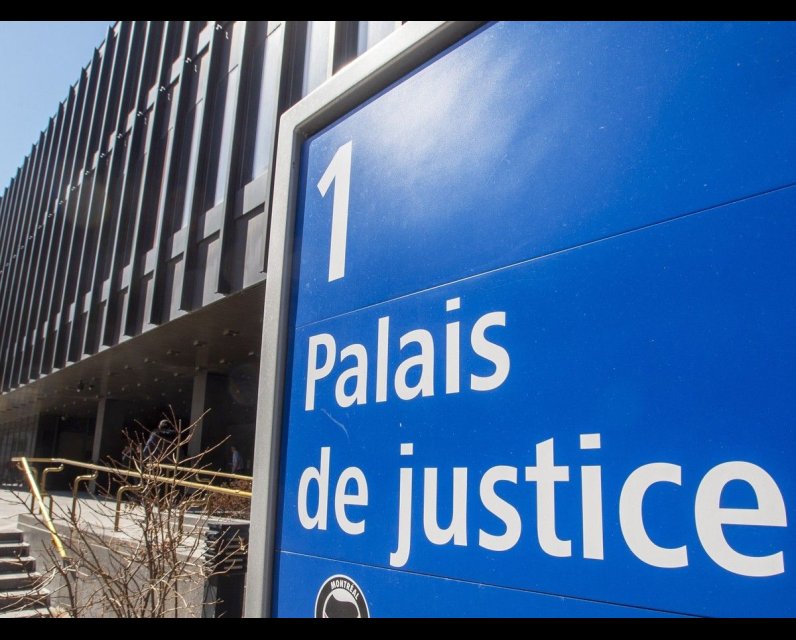
A Quebec judge has accused the provincial prosecutor of admitting to “regularly” proposing absolute discharges or lenient sentences specifically for non-Canadians convicted of crimes because they risk deportation, thereby artificially creating an “unnecessary” two-tier sentencing system.
“This practice is so widespread that to deny that the prosecutor’s approach currently has the effect of creating a separate sentencing regime between Canadian citizens and individuals governed by the IRPA (Immigration and Refugee Protection Act) is tantamount to denying the daily reality of the criminal and penal division of the Court of Quebec in the judicial district of Montreal,” Court of Quebec judge Antoine Piché wrote in recent sentencing decision that involved a request for a shorter sentence.
The matter has caught the attention of Quebec politicians, including Justice Minister Simon Jolin-Barrette, who said it raises “important questions” and invited the directeur des poursuites criminelles et pénales (DPCP) to “take the necessary reprimands if this turned out to be true,” according to La Presse .
Bernard Drainville, who lost the leadership to Christine Fréchette on Sunday, called the possibility “very worrying and even infuriating.”
“If ‘candy’ sentences are recommended to prevent non-permanent immigrants from being deported, that’s unacceptable,” he wrote in French on X.
“Sentences must reflect the gravity of the crimes committed. At all times. Without exception. Period.”
But Patrick Michel, Quebec’s director of criminal and penal prosecutions, disavowed the claim and the existence of a “parallel justice system.”
“I want to be very clear,” he wrote in a statement . “There is no practice at the Montreal courthouse of requesting the imposition of sentences that are not fair and proportionate to the seriousness of the offence committed by a non-citizen and to their degree of responsibility.”
Piché’s criticism of the alleged DPCP tactic arose in the case of Guzman Bladimir-Castillo, a 23-year-old permanent resident originally from the Dominican Republic who stole an SUV and led police on a more than 30-minute high-speed pursuit reaching speeds over 200 km/h before hitting a building and overturning the vehicle in May 2024.
He pleaded guilty to charges of theft over $5,000 and dangerous driving last August, setting the stage for sentencing hearings, which concluded in March.
Bladimir-Castillo’s counsel sought a conditional discharge with two years of probation and 240 hours of community service. The Crown, meanwhile, said nine months was “appropriate,” but “considering the potential impact such a prison sentence” could have Bladimir-Castillo’s immigration status, it proposed a sentence of six months less one day. His own counsel made a similar argument on his behalf, but Piché said they failed to explain how a criminal record would affect his permanent resident status.
Under the IRPA, any person found guilty of an offence under federal law and sentenced to more than six months shall be deemed inadmissible to Canada, which can lead to a removal order and deportation.
But as highlighted by Piché, deportation isn’t automatic and there are multiple procedures to follow before a removal order is issued and enforced.
He said it’s not the judge’s responsibility “to rule indirectly on the merits of a removal order, especially when the evidence of the accused’s situation in this regard is incomplete.”
More to the point, he noted that Bladimir-Castillo himself “does not appear to be giving his immigration case the attention it deserves” since he was unsure when he obtained permanent resident status and told the court he hasn’t renewed his residency card.
“The Court is therefore not adequately informed of the accused’s situation to determine the actual risks he faces,” he wrote.
Piché said the DPCP’s alleged practice, which he said some of his colleagues have also noticed, is problematic for two reasons.
Firstly, it doesn’t align with the Supreme Court of Canada’s “teachings” that indirect consequences of a criminal sentence on immigration proceedings should not lead to the establishment of a unique sentencing system.
Secondly, he said it circumvents the intent of Canada’s immigration legislation, thereby “inviting criminal courts to do the same” despite them having “no jurisdiction over immigration matter.”
The present case is an eloquent example of the distinct regime that is being created: if Mr. Bladmir-Castillo were a Canadian citizen, the prosecutor specifically indicates that he would have suggested a prison sentence of 9 months, but since he is a permanent resident, he suggests 6 months less one day, in order to avoid the proceedings provided for in paragraph 36(1)(a) of the IRPA being undertaken by the competent authorities.”
He also expressed concern that the two-tier system “exacerbates pre-existing social tensions and may be misused.”
Piché added that the DPCP developed the alleged strategy “on the fly” or by misinterpreting case law, not out of any “malicious intent” to circumvent the legislation.
In his statement refuting the allegations, Michel said judges sometimes take immigration status into account, despite the prosecution arguing it can’t influence sentencing.
“Consequently, it is surprising to read the court’s statements which appear to be based on observations drawn from the experience of other cases which are not identified and whose validity we cannot question or verify,” he wrote.
The Montreal-Laval-Longueuil Defence Lawyers Association and the Quebec Association of Defence Lawyers accused Drainville and Jolin-Barrette of “legal demagoguery,” per La Presse.
“It is deplorable and concerning to read such remarks, which oversimplify a complex legal issue in order to gain an advantage in the public sphere, at the expense of serious reflection on the fundamental principles of sentencing,” they wrote.
Meanwhile, MP and deputy leader Pascal Paradis said on X that the Parti Québécois wants the DPCP to “shed light on this practice and, if necessary, put an end to it.”
As for Bladimir-Castillo, he was served a 12-month sentence, but he needn’t worry about deportation as Piché ordered house arrest over incarceration and only those under custodial sentences of more than six months are inadmissible under the IRPA.
Our website is the place for the latest breaking news, exclusive scoops, longreads and provocative commentary. Please bookmark nationalpost.com and sign up for our daily newsletter, Posted, here.

Unpublished Newswire

Comments
Be the first to comment