
Stay informed


Avi Lewis wants to ban 'surveillance' pricing. Here's what that means
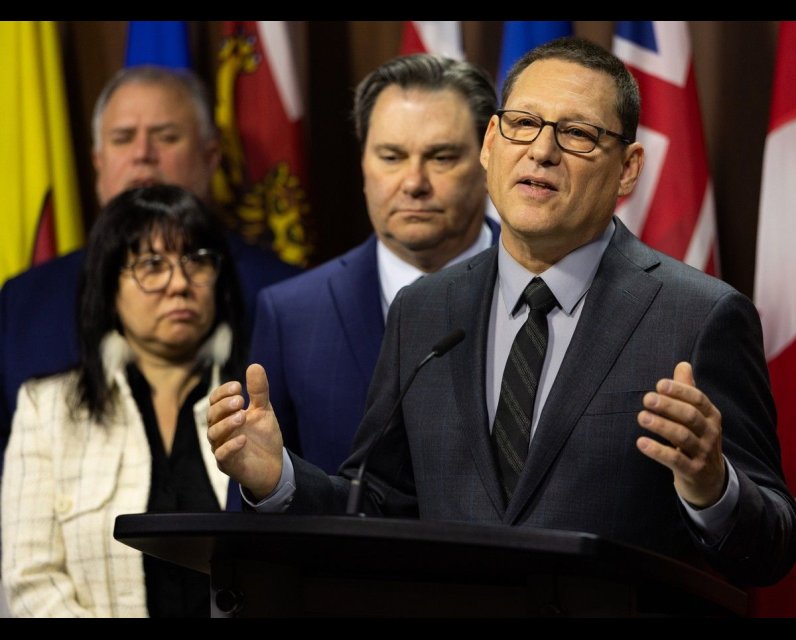
OTTAWA — Newly minted NDP leader Avi Lewis is sounding the alarm on what he calls a “creepy new tactic” corporations are using to rip-off consumers.
Lewis is calling on the Liberals to prohibit businesses from using personal data to charge customers different prices for the same product, a practice he calls “surveillance pricing.”
He said on Monday that corporations south of the border are already using copious amounts of personal data, mined from places like search engines and social media feeds, to price gouge and warned that Canadians (literally) can’t afford to be complacent about the looming threat to their wallets.
“There are Canadian (artificial intelligence) companies right now that are actively offering their services to large retailers to help them maximize revenue through individualized algorithmic pricing,” warned Lewis. “We can’t wait until we inhabit a dystopian retail landscape where every individual is their own target market, profiled and surveilled without their knowledge and consent.”
An NDP motion to stop surveillance pricing is expected to be tabled in the House of Commons this week. Manitoba’s NDP government has already introduced a bill that would prohibit businesses from using personalized algorithmic pricing to increase what they charge specific consumers.
Here’s what you need to know about surveillance pricing and what, if any, threat it poses to Canadian consumers.
What’s ‘surveillance’ pricing?Surveillance pricing, sometimes called personalized algorithmic pricing, is a form of dynamic pricing where companies use personal data to set prices as close as possible to the amount a customer is willing to pay.
Such pricing has long been used in various sectors. For example, most of us pay a personalized rate for car insurance based on our individual driver histories. However, the rapid rise of digital data collection and AI tools has raised concerns about the sorts of data companies are mining and how instantaneously they’re able to adjust prices.
App-based platforms may use especially intimate personal information to set prices. For instance, a ride-sharing app could technically charge more for a ride if it knows the consumer’s phone is running low on batteries, surmising they’re desperate to hail a ride before their phone dies.
Competition policy expert Vass Bednar told National Post that surveillance pricing is as much an ethical and privacy concern as it is an economic one.
“It may not be a huge variance between what you pay and what I pay, but it’s more the principle of whether businesses should be doing this sort of thing,” said Bednar.
How widespread is it?A study released by the Federal Trade Commission last year found that U.S.-based companies were using a “wide range of personal data” to set individualized consumer prices. The study identified at least 250 vendors, ranging from grocery stores to apparel retailers, that were working with firms selling personalized algorithmic pricing tools.
A fall 2025 investigation by watchdog group Consumer Reports into shopping app Instacart found that prices for the same order of groceries varied by as much as 23 per cent from one customer to the next. The report preceded an FTC probe and led Instacart to end its use of AI to set dynamic pricing.
The practice isn’t as well studied in Canada but anyone who’s tried booking a flight online will likely have seen a personalized price. Bednar said there’s evidence that airlines use up to 1,000 data points to determine the price of each plane ticket.
“A dream of mine is to be able to board a flight and see how much everyone around me has paid for their seat,” joked Bednar.
Would a ban lower prices?Mike von Massow, a professor of agricultural economics at Guelph University, said that a ban on surveillance pricing is unlikely to make much of a dent on the price of groceries and other everyday essentials.
“Groceries are something we buy all the time, so the average consumer has a good idea of how much two litres of milk or a dozens eggs should cost,” said von Massow.
“It doesn’t make much sense, from a business perspective, to try to upcharge certain customers and risk losing them to a competitor,” he added.
Von Massow said that the staples consumers buy at grocery stores, such as milk, bread and meat, tend to be “loss leaders” designed to get them inside the store and, if anything, the shift to a digital marketplace has shifted power back to the buyer.
“The traditional model was to put the staples at the back of the store, in the hopes that consumers would grab some impulse items on their way to get them,” said von Massow. “It’s obviously harder to do that when people are buying groceries on an app.”
Efforts to incorporate algorithmic pricing into the food service industry have similarly failed due to consumer price sensitivity. One recent example is Wendy’s disastrous 2024 experiment with dynamic pricing .
Could a ban inadvertently raise prices?Van Massow says this is a more likely scenario.
“Depending on how it’s worded, a ban on personalized algorithmic prices could end up eliminating things like customer loyalty programs,” said van Massow.
Van Massow said that such a ban could also threaten online booking sites that use algorithms to match users with the lowest possible prices.
What’s the alternative?Another option is to increase transparency surrounding the use of algorithmic pricing.
South of the border, 33 states and Washington, D.C. have introduced dynamic price disclosure laws requiring retailers to inform consumers when real-time data or artificial intelligence are used to set prices. Some states have also introduced consumer protection measures limiting the use of certain personal information in setting individualized prices.
U.S. Senator Amy Klobuchar has proposed federal legislation that would require businesses to disclose algorithmic pricing and give regulators the power to audit these algorithms in cases of suspected consumer protection violations.
Bednar said that existing federal laws, such as the Privacy Act and Competition Act, could be updated to make algorithmic pricing more transparent and ward off its predatory use.
National Post rmohamed@postmedia.com
Our website is the place for the latest breaking news, exclusive scoops, longreads and provocative commentary. Please bookmark nationalpost.com and sign up for our daily newsletter, Posted, here.

Unpublished Newswire



Comments
Be the first to comment