
Stay informed



Coast Guard planning Arctic surveillance flights in Canada's north with Israeli-made drone
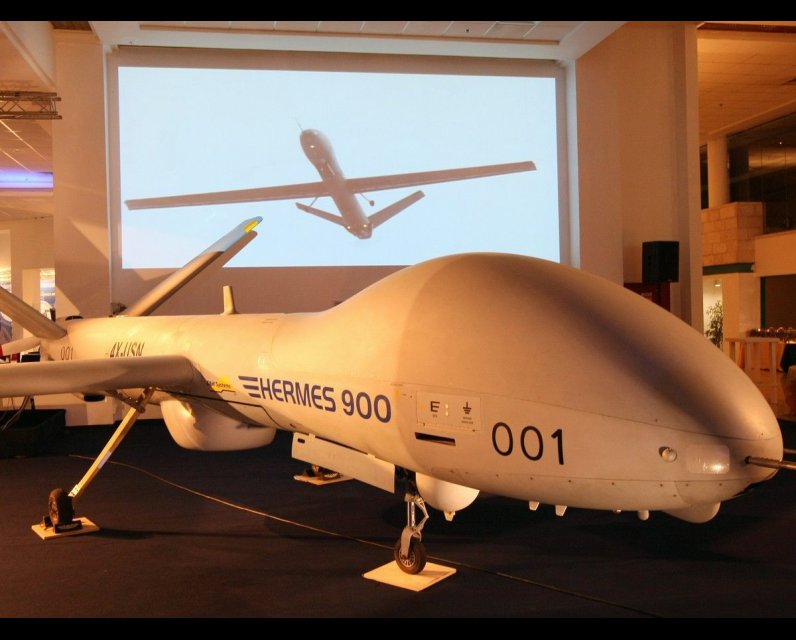
The Canadian Coast Guard is planning summer test flights with an Israeli-made drone aimed at improving Arctic surveillance.
The Hermes 900 StarLiner drone was delivered last September. Originally acquired by Transport Canada it was designated for tasks such as monitoring Canada’s north for oil spills and surveys of the ice. But ownership has shifted to the Coast Guard following recent restructuring of federal government operations, reports the CBC .
In early September, the Coast Guard was transferred from Fisheries and Oceans Canada to the Department of National Defence as part of a plan to strengthen Canada’s defences in the Arctic.
That shift comes as Russia and China pursue their own Arctic objectives. Those countries are relying less on overt force and more on sustained presence, data collection and infrastructure development, according to the Macdonald-Laurier Institute , an Ottawa think tank.
“These activities rarely trigger formal defence responses, but over time they reshape the strategic environment,” says Sweekriti Pathak in a February article for MLI .
Canada’s north is vulnerable, asserts Pathak: “Canada’s current security architecture is not strongly equipped to counter grey-zone activity.”
He insists that while “Arctic ice melts at an unprecedented pace, the region is opening up. Navigation windows are getting longer, leading to increased activity by research vessels, ice-capable survey ships, cable-mapping operations, and autonomous underwater systems.”
Russia is expanding its military presence in the Arctic with nuclear icebreakers, writes Pathak, as well as revitalized bases along key sea lanes, activity in the Northern Sea Route along Russia’s Arctic coast and extensive seabed and hydrographic surveys that map underwater features, such as depth, topography, and hazards to ensure safe navigation and support marine construction.
Beijing has used research vessels to collect critical domain information about the Northwest Passage.
At the same time, says Pathak, Russia and China “are rapidly advancing their Arctic-based drone capabilities, outpacing NATO.”
The Hermes 900 StarLiner, built by Israel’s Elbit Systems , is a medium-altitude, remotely piloted drone with a range over 1,400 nautical miles, with radar and camera sensors. Canada bought it for about $36 million, initially to bolster Transport Canada’s National Aerial Surveillance Program in the Arctic.
As such, the drone will support maritime surveillance , including oil spills, ice mapping, shipping monitoring, search and rescue, and environmental protection. It will fill gaps left by satellites and manned aircraft.
Meanwhile, in late February, Ottawa announced a $35-40 billion investment in Arctic defence infrastructure. The Canadian Armed Forces intends to operate in the Arctic on a more permanent basis rather than the warmer months.
“Canada must guard against foreign research in the Canadian Arctic and North that is dual use — having both research and military application,” according to a February statement released by Global Affairs Canada .
At present, the Canadian Coast Guard operates up to six icebreakers in the Arctic from June to November each year , which helps advance maritime safety and security, says Global Affairs.
The eventual plan for Arctic defence involves 11 new MQ-9B Sky Guardian drones, as well as 88 new F-35A fighter aircraft, and six new Arctic Offshore Patrol Ships. How the StarLiner drone will fit into that plan may involve technical and logistical complications that have yet to be addressed.
Our website is the place for the latest breaking news, exclusive scoops, longreads and provocative commentary. Please bookmark nationalpost.com and sign up for our daily newsletter, Posted, here.

Comments
Be the first to comment