
Stay informed
Unpublished Opinions


Council approves federal partnership for 3,000 new homes
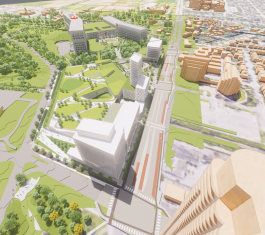
Ottawa City Council approved a partnership with the federal government to support 3,000 affordable and market rental homes in Ottawa. The majority of these new homes will be more affordable than what the market can provide, including a significant number of new affordable and supportive housing units.
This partnership is with Build Canada Homes, a new federal agency that launched in September 2025 to help grow the supply of mixed-income housing in Canada. This first-of-its-kind agreement for Ottawa represents a significant federal-municipal partnership that supports the accelerated delivery of affordable homes in Ottawa.
The partnership includes up to $400 million in federal and municipal contributions to support the development of 3,000 homes.
The 2,000 units on surplus federal lands will include a mix of market, affordable and deeply affordable homes. Up to 40 per cent of the homes on federal lands are targeted to be affordable. Mixed‑income housing like this brings people of different incomes together, helps residents do better in life, and supports the economy by making sure workers can afford to live where they work.
The agreement retains flexibility to help achieve this mixed-income approach. On federal lands, the targeted breakdown of those 2,000 units is as follows:
- 1,200 homes at market rates
- A target of 800 homes that would be affordable for moderate-income households and below
- Within those 800, a target of 200 more deeply affordable homes for the lowest-income households
Deep affordability for the lowest-income households is typically only possible with rent supplements, making it difficult to achieve this level of affordability under standard conditions. The mixed‑income development approach being advanced through this agreement supports that deeper affordability while also meeting the broad needs of a range of income earners.
Build Canada Homes will contribute federal lands to develop 2,000 homes. As part of the agreement, the City will receive $150 million of funding to support at least 1,000 homes for shovel-ready projects on the City’s Affordable Housing Pipeline, further advancing the City’s progress towards meeting its affordable housing developments goals.
The City's contribution consists of waiving fees and charges to make building less expensive, and a tailored approval and permitting process to make the overall process faster. The City’s contribution also includes property tax exemptions for the affordable homes built on surplus federal lands, helping to keep operating costs low and maintain affordability for residents. This contribution is valued at $200 to $245 million.
As directed by Council, the City is striving to become the most housing-friendly city in the country. This agreement with the federal government through Build Canada Homes is another example of the City using every tool possible to drive transformational change and help get new homes built in the short term.
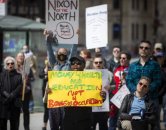
Council passes Safe Access to Social Infrastructure By‑lawCouncil approved a new Safe Access to Social Infrastructure By-law. It allows the City to create temporary safe access zones around essential community spaces and services, ensuring people can access them safely and without obstruction. Zones will be created on a request basis and will restrict demonstrations or conduct that obstructs or discourages access. It does not restrict demonstrations outside these designated zones, regulate the content of protests or limit lawful labour picketing. The goal is to reduce conflict and escalation while balancing public safety with constitutional rights.
Safe access zones would only be created after a facility applies to the City and identifies concerns about the potential for blocked or unsafe access near entrances. Eligible essential spaces and services include places of worship, schools, child-care centres, hospitals, community health centres and residential care facilities, such as long‑term care homes. Once the City approves an application, a 50‑metre safe-access zone would be established around building access points and would apply only during operating hours.
These protections are carefully limited to ensure safe access while minimizing impacts beyond what is necessary.
- The 50‑metre zone allows demonstrations to continue at a reasonable distance while helping to maintain clear and safe access to facilities
- Zones apply only during operating hours, typically beginning one hour before opening and ending one hour after closing
- Clear, City‑provided signage identifies when and where a safe access zone is in effect
- Designations are temporary and last for up to one year, with facilities able to reapply if concerns persist
- Residential care facilities that request designation receive 24‑hour protection, recognizing that residents are a captive audience
The by‑law reflects extensive public engagement, legal review and research into approaches adopted in other Canadian municipalities. Consultation and public opinion research showed strong support for protecting safe access, alongside concerns about preserving protest rights. This feedback directly informed the by‑law’s request‑based, time‑limited framework and its safeguards to protect Charter rights to freedom of expression and assembly. It comes into effect on August 1, 2026, following a three‑month implementation and education period. The fine for violating the bylaw would range from $150 to $500, depending on the severity of the offence.
Revitalization framework for downtown Ottawa approvedCouncil approved a Downtown Revitalization Framework and Action Plan to support a stronger downtown economy, which is foundational to increasing investment, attracting and retaining talent, fostering entrepreneurship and promoting overall economic growth.
The framework aims to address post-pandemic work trends, office downsizing, housing pressures and social issues, and to clarify the City’s role in supporting ongoing efforts through the Ottawa Board of Trade’s Downtown Ottawa Action Agenda. The framework focuses coordinated action around four key areas:
- Rebalance uses, modernizing the mix of residential, commercial, institutional and tourism uses that support a vibrant downtown, both day and night
- Diversify and strengthen Ottawa's downtown economy, enhancing small business supports, and attracting a broader range of industries downtown for a more resilient and diverse economy
- Improve community safety and well-being, creating a safer and more welcoming downtown with stronger policing, enhanced streetscapes and more coordinated outreach and social service responses
- Transform places and spaces, enhancing the downtown experience by improving public spaces, gateways and key destinations, creating a more attractive and engaging environment
Staff will report back to Council in 2027 with detailed economic and land-use analysis, as well as the results of stakeholder engagement. The report will recommend a coordinated long-term action plan with clear objectives, steps and performance measures for revitalizing Ottawa’s downtown.
Council updated on economic development progressCouncil received an Economic Development Strategy and Action Plan Implementation Update for the past year. Ottawa’s economy is stable, and the fundamentals remain strong. While it is facing short-term pressures, sector diversification, tourism and major capital investments indicate a brighter future. Highlights include:
- Ottawa’s globally recognized tech sector continues to expand, with growth supported by innovation and defence-related research and development.
- A strong and growing defence cluster is reinforcing the area's position as Canada's Defence Innovation Hub.
- Record-breaking tourism and a robust lineup of major events are driving strong visitor growth and economic momentum.
- Major city-building and infrastructure projects are leading to sustained growth in construction.
Council approved the Disposition of 2025 Tax and Rate Supported Operating Surplus/Deficit. The overall 2025 City budget ended the year with a net deficit of just under $21 million. This is a significant improvement over the expected deficit of $51.1 million forecasted in Q2 2025. Citywide tax-supported services ended the year with a surplus of just under $32 million while rate-supported services had a surplus of $22.1 million. These surpluses were impacted by both Transit Services, which finished 2025 with a deficit of nearly $52 million, and the Ottawa Police Service, which ended the year with a $25 million deficit.
The Ottawa Police Service deficit will be funded by the Tax Stabilization Reserve while the Transit Services deficit will be covered with:
- $44.9 million from the Tax Stabilization Reserve
- $7 million from the Transit Operating Reserve
Council ratified a tentative agreement with Amalgamated Transit Union 279, representing Para Transpo workers.

Unpublished Newswire


Comments
Be the first to comment