
Stay informed



'Not acceptable': AFN national chief decries timeline for Liberals' proposed overhaul of rules for major projects
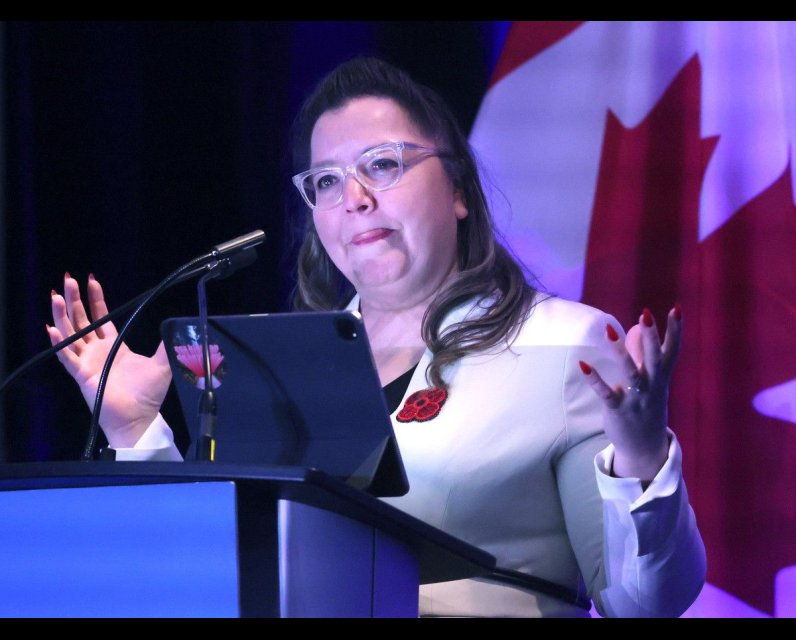
OTTAWA — The national chief of the Assembly of First Nations said Thursday that the 30-day consultation window the federal government gave to collect feedback on a sweeping set of reforms to speed up the building of new infrastructure projects is “not acceptable.”
Cindy Woodhouse Nepinak says that, at first review, some of the proposals also “threaten First Nations rights.”
“All options are on the table,” she said in an interview. “We’ve not taken anything off the table yet.”
Her comments come after Prime Minister Mark Carney’s government released discussion papers last week that propose changes to existing laws and regulations that govern how major projects receive approvals.
Among options being considered are the creation of federal economic zones, streamlining the approvals process by giving cabinet the power to exempt certain at-risk species from an existing “jeopardy test,” allowing construction to begin on certain projects before an impact decision is made and transferring the responsibility of approving new interprovincial pipelines to the Canada Energy Regulator, away from the Impact Assessment Agency, tasking cabinet with determining whether a project was in the “public interest,” before a review was complete.
“The substance of the proposals and the constrained timeline for consultation are not acceptable, and they …threaten First Nations rights in a few aspects. Unfortunately, they demonstrate a pattern of exclusion once again,” Woodhouse Nepinak said.
She added that proposals suggesting granting upfront approvals for projects like pipelines does not fit with the principle of honouring free, prior and informed consent as outlined under the United Declaration on the Rights of Indigenous Peoples (UNDRIP), which the Liberals passed into law back in 2021.
“I don’t know why it’s so hard to speak to First Nations. First Nations are willing and able to listen and to work with industry, and all governments,” she said. “Don’t leave them out.”
The federal government in announcing last week’s proposed changes touted in a statement that “Indigenous partnership is critical to building a stronger Canadian economy” and was “engaging meaningfully with Indigenous groups” according to UNDRIP.
“They keep pushing that narrative of, you know, just trust us,” Woodhouse Nepinak said.
Getting more projects off the ground faster and responding to concerns from industry that the country’s regulatory regime is too burdensome to risk investment have been at the heart of Carney’s building agenda since taking office last spring, with the proposed reforms being his government’s latest measure.
He also announced on Thursday a plan to launch a new set of consultations on the federal government’s plan to double Canada’s electricity generation by 2050. Carney also confirmed that on Friday he would be announcing a new “implementation agreement” with Alberta Premier Danielle Smith related to her proposal to build a new million-barrel a day pipeline to the West Coast and plans to increase its industrial carbon pricing system.
When it comes to the regulatory reforms announced last week, Woodhouse Nepinak says the Assembly of First Nations, an organization that advocates on behalf of more than 600 First Nations across Canada, says it plans to submit a brief outlining its concerns by the government’s June 7 deadline.
“We also challenge the federal government to hold full parliamentary committee meetings to hear from First Nations directly after the legislation is released,” she said on Thursday.
“Until an appropriate process is established with First Nations’ rights-holders founded in free, prior and informed consent, the Crown’s legal obligation cannot be met.”
She said the organization worries that the Carney government may try to fast-track its forthcoming legislation related to the proposals once the consultation window closes in early June, as it did last year when it came to passing its Building Canada Act, also known as Bill C-5.The House of Commons is set to rise for its summer recess on June 19.
“The government will be moving quickly to introduce legislation following the engagement period,” Gabriel Brunet, a spokesman for Intergovernmental Affairs Minister Dominic LeBlanc, wrote in an earlier statement provided on Wednesday.
At the time Bill C-5 was passed into law, Woodhouse Nepinak expressed concern about the lack of consultation with First Nations and the pace at which it was passed through Parliament. That bill ushered in new powers for cabinet to designate a project as being in the “national interest,” allowing a project to bypass existing regulatory and environmental laws subject to a list of conditions outlined by government.
One area the national chief says she wants to see the Carney government move on is the introduction of a First Nations Clean Water Act. An earlier version of the bill died when Trudeau prorogued Parliament in January 2025.
“With the majority government, there are no more excuses to delay legislation that recognizes water as an inherent right and includes the protection of source water as a required consideration in the assessment of major projects,” she said.
National Post
Our website is the place for the latest breaking news, exclusive scoops, longreads and provocative commentary. Please bookmark nationalpost.com and sign up for our politics newsletter, First Reading, here.

Unpublished Newswire

Comments
Be the first to comment