
Stay informed
Unpublished Opinions

Politicians are desperate to make your grocery bill cheaper — not everyone thinks it's a good idea
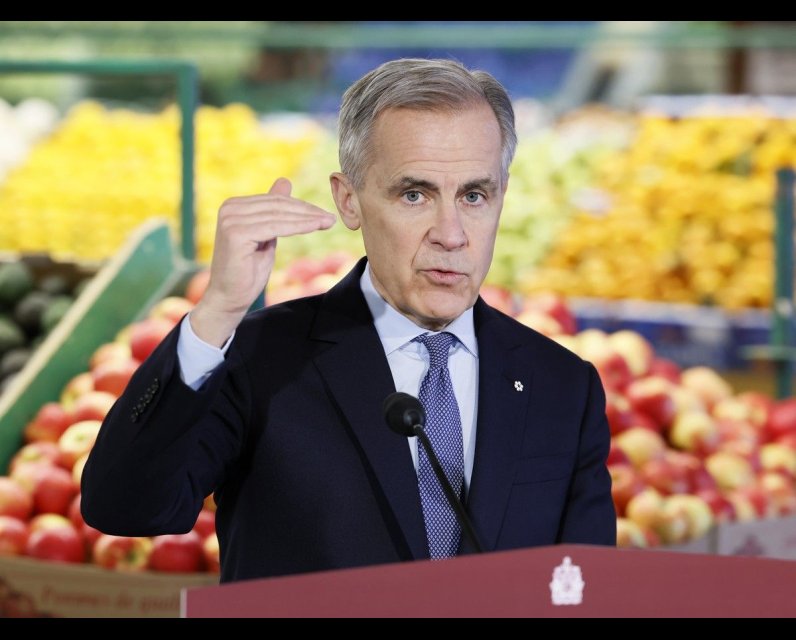
OTTAWA — Call it the coriander conundrum.
Like with parsley, carrots, dill, and most other members of the apiaceae family of edible plants, the retail price of coriander has been growing like a weed.
While the prices of many items on grocery store shelves have been heading north in recent months and years, the price of fresh coriander — and the cilantro leaves that come from the same plant — tends to be even more volatile than most because the plant is a bit precious – it needs good weather, spoils quickly after being picked, and is usually imported.
That means its shelf price, which has more than doubled in price in some markets since the start of the pandemic, is more susceptible to exchange rate fluctuations and fuel price spikes, such as those that followed the recent attacks on Iran and the subsequent closing of the Strait of Hormuz.
The price of coriander is just one small component in the broader basket of items on Canadian grocery store shelves, the costs of which have been rising sharply in recent years. The Bank of Canada said earlier this year that grocery prices climbed about 22 per cent between 2022 and 2025, compared to a jump of 13 per cent for other consumer prices during the same period.
But there are no policy options to deal with grocery prices that won’t cause more harm than good, said Don Drummond, a former high-ranking official at the Department of Finance and chief economist at TD Bank.
“There are no policy levers that would quickly and decisively lower grocery store prices,” he said. “All they can do is re-distribute who pays and when.”
Drummond says the rise in food prices is a trap for governments because most efforts to do something will mean borrowing more money, thereby adding to the burden that future generations will pay for today’s consumption. Scratching more cheques for consumers is also dangerous because it’s expensive, adds to the expectation that governments will bail people out, and puts further pressure on inflation by boosting demand.
“There is nothing useful that can be done.”
Many Canadians, however, believe their grocery bills have been climbing faster than the Bank of Canada’s statistics show. The central bank says the average Canadian spends about 11 per cent of their budget on groceries, although that figure tends to be much larger for those with limited resources.
For many consumers, the conundrum has simply been about what to do about rising grocery prices, especially when they show few signs of heading back down. They’re annoying for pretty much everybody, but a serious issue for those on tighter budgets. In some cases, the price hikes have changed their lives, leaving them unable to pay bills or even hungry. Statistics Canada reported a full four years ago, in the early days of the recent price hikes, that consumers were also responding to the post-pandemic food inflation by buying less and hunting more for bargains.
For governments, however, the conundrum rests on a misalignment between the economics of grocery prices and the politics, leaving them struggling to try to do something about a major problem that is difficult to influence.
Analysts say the economics are that grocery prices are largely a function of market forces. Michael von Massow, a food agriculture economist at the University of Guelph, said the grocery price hikes over the last five or so years have been a result of poor weather, global warming, currency fluctuations, rising energy and fertilizer costs, the wars in Ukraine and now Iran, and of course pandemic-related supply chain problems — many things, but not an industry conspiracy.
Grocery stores are still earning pre-tax margins of about 4 per cent on most items, von Massow said, just as they were before the pandemic. “The perception of gouging is grossly overstated.”
The Retail Council of Canada, which represents the large grocery chains, says that grocery store margins are lower than the net income of farmers or food manufacturers and processors. Grocery store profits, the group says, have been flat in recent years and driven much more these days by non-food items such as those in the health, beauty and pharmacy aisles.
As for the politics, it’s as much about perception than the economic reality. When millions of voters are miffed about something, governments likely won’t be stopped from doing something as a response, even if it’s mostly to be seen to be doing something. Nor will opposition parties be stopped from accusing governments of not doing enough, or too much, or just doing it wrong.
The Carney government has already taken a number of steps to try to help, targeting both consumers’ wallets and the industry itself.
In a bid to help consumers, particularly those most in need, Ottawa brought in a new Canada Groceries and Essential Benefit. This measure, an expansion of the existing GST credit, includes a one-off top-up payment of 50 per cent, plus an increase in payments by 25 per cent for five years beginning in July.
The government also provided more money for food banks and local food programs.
To encourage grocery stores to lower their costs and perhaps their prices, the Liberals spent $500 million on a Strategic Response Fund to help businesses absorb disruption costs, instead of just passing them on to consumers. They also spent $150 million on a Food Security Fund that was designed to support smaller players in the food business and brought in tax incentives to encourage the construction or expansion of greenhouses.
There were also measures to support greater competition in the grocery sector, including greater monitoring by the Competition Bureau.
All told, said John Fragos, a spokesman for Finance Minister François-Philippe Champagne, Ottawa’s responses to the food price surge will save a single person about $905 a year, and a family of four about $1,890.
Opposition parties have proposed more drastic steps.
Conservative Leader Pierre Poilievre says the government should tackle rising grocery prices by slashing taxes and input costs for truckers, farmers and food producers, and taking measures to increase competition in the grocery store market.
NDP Leader Avi Lewi says the government should attack affordability by investing in a new chain of government-supported grocery stores that would compete against the private operators. The non-profit government stores would offer a smaller array of products, the theory goes, but could charge 30 to 40 per cent less than the private chains.
A report released last week by the conservative-leaning Montreal Economic Institute argued against government-run grocery stores, saying they’d fail to provide significant savings and fail to address the real drivers of rising food prices: tariffs, interprovincial trade barriers, and unnecessary regulation.
Provincial governments have also taken their shots at combatting rising grocery prices through tax credits and rebates targeted at low-income citizens, increased support for food banks and farmers.
But the Canadian Federation of Independent Grocers said governments could help even more with grocery prices by cutting the fees that credit card companies charge smaller retailers and doing more to address the disparity between business costs in rural and urban communities. “It’s like an invisible border,” said Gary Sands, the federation’s senior vice-president.
The Liberals argue that the soaring food prices are a global phenomenon and that their measures have prevented prices from going up even more.
The OECD says that Canada ranks somewhere in the middle of the pack of industrialized countries when it comes to grocery price inflation over the last few years. But that’s cold comfort to Canadian consumers who just want to feel like they’re getting a fair shake as they make their way through the checkout.
Despite the global increase in inflation, economists say Canadian governments have also played a role by throwing too much coal on the fire. During the pandemic, at a time when the global economy was already experiencing a number of supply shocks and increased consumer demand, the Trudeau government embarked on an unprecedented spending spree.
In 2020, near the start of the pandemic, about 20.7 million Canadians out of an adult population of 30.3 million received income from one of the federal pandemic-related programs, according to a 2022 report from Statistics Canada. During that year alone, the programs are estimated to have cost $270 billion — about 12.5 per cent of Canada’s gross domestic product (GDP).
While the programs provided relief to individuals and businesses and offered a short-term economic cushion during the crisis, the C.D. Howe Institute noted that injecting that much extra money into an economy with strong employment will almost certainly lead to inflation.
Von Massow, the University of Guelph economist, said today’s higher food prices might not seem fair, but market forces can also work the other way too. In recent months, for example, coffee, olive oil, pasta, some berries and some seafood have been among the grocery items to fall in price, he said.
Consumers, however, tend to notice the rising prices, notably of some imported fruits, chocolate, beef, and fresh vegetables, much more than those that are falling, von Massow said.
Economists also point out that food prices haven’t jumped that much more than inflation overall, which has averaged 2.8 per cent over the last three completed years, or 3.8 per cent if 2022’s 6.8 per cent is included.
“They’re tough,” Von Massow said about the grocery price hikes over the last few years, “but they’re not as tough as we make them out to be.”
He suggests that consumers try to control what they can control, such as what they buy and when. For example, buying produce that is in-season and grown nearby can help, he said.
Coriander, by contrast, is largely imported to Canada from warmer places, mostly Mexico, Arizona and California in the winter, dried seeds from India, Morocco and Egypt in the winter. That makes the spice among the items on the grocery store shelves most susceptible to fuel price hikes and other supply chain fluctuations — and a small piece of a big conundrum for both consumers and governments.
National Post
Our website is the place for the latest breaking news, exclusive scoops, longreads and provocative commentary. Please bookmark nationalpost.com and sign up for our daily newsletter, Posted, here.

Unpublished Newswire


Comments
Be the first to comment