
Stay informed



Why graduates are getting more pessimistic about finding jobs
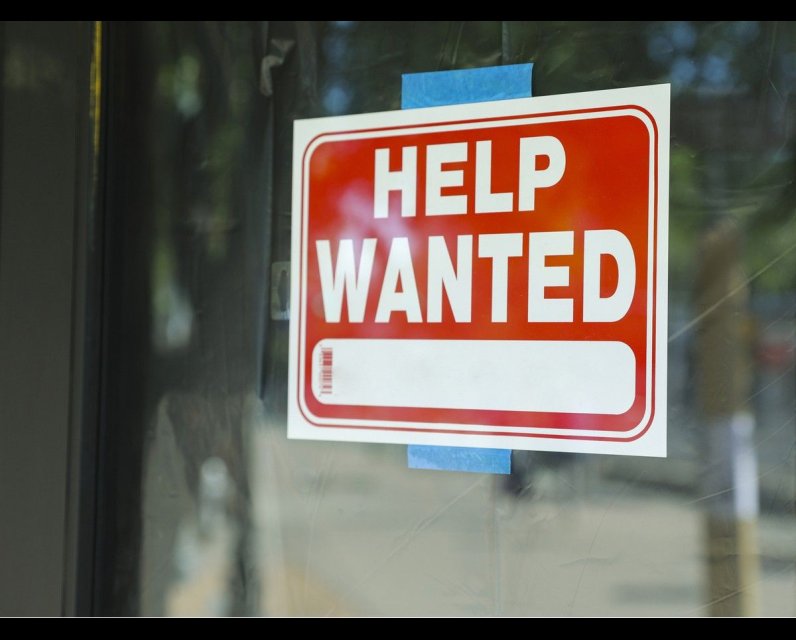
WASHINGTON, D.C. — Canadian and American high school and college graduates are entering a labour market shaped by artificial intelligence, economic uncertainty, and shifting hiring patterns. This is making entry-level work harder to find.
Canadian youth optimism has eroded in recent years due to the state of the economy and fewer job opportunities. In the United States, meanwhile, young Americans are more pessimistic than older generations about finding work.
“The job market this class is graduating into is genuinely unlike anything we’ve seen before,” said Kip Havel, CMO of Dexian, a global IT and professional staffing consultancy.
The gap in job market perceptions between younger and older Americans is larger than ever — and the largest in the world — according to a recent Gallup poll.
Last year, 43 per cent of Americans between the ages of 15 and 34 said they felt it was a good time to find a job in their area, compared to 64 per cent of people over the age of 55 — a 21 percentage-point gap.
Gallup noted this is rare because older generations usually show more pessimism, but Americans are not alone. The pattern is also true, but not quite as stark, in China, Serbia, the United Arab Emirates, Hong Kong, and Norway.
In Canada, meanwhile, optimism about finding work is even lower. Just 25 percent of young adults said it was a good time to find a job locally, and older generations were similarly skeptical.
Gallup’s State of the Global Workplace study also showed that Canadian workers suffer from more workplace stress than their American counterparts. Fifty-eight per cent of workers said they had experienced stress the day before, compared to 50 per cent in the U.S. and 40 per cent globally.
Hard data suggests those concerns are not unfounded.
In the United States, youth unemployment rose to 9.5 per cent last month, compared to 8.5 per cent the month before, according to the U.S. Bureau of Labor Statistics. In Canada, it was 14.3 per cent and 13.8 per cent for April and March, respectively, according to Statistics Canada.
But the headline unemployment rate doesn’t tell the whole story because gen Z is finding it harder than previous generations to break into even the entry-level market.
“Employers are hiring,” said Havel. “The challenge is that what they’re hiring for shifted while this class was still in school, and I don’t think anyone prepared them for the feeling of doing everything right and still walking across the stage into a market that’s asking for something different than what you spent four years building toward.”
Madeline Andrews, head of insights at Findem, a California-based AI-powered talent intelligence and recruitment platform, agrees that today’s graduating class faces a tough climb.
They are “entering one of the toughest entry-level job markets in recent memory,” she said, noting that the unemployment rates for new graduates are comparable to the aftermath of the 2008 financial crisis.
The overall national hiring rate in the U.S. — the share of workers starting a new job each month — has fallen to 3.5 per cent, making it “more consistent with the sluggish recovery years following the Great Recession than with a healthy economy.”
“When companies pull back on hiring,” she added, “the first door that tends to close is the one for people who haven’t accumulated experience or built professional networks.”
Some tech- and information-related parts of the labour market have weakened sharply in recent years, which is “creating a real sense of uncertainty for gen Z graduates,” Andrews said.
So the pessimism young people are experiencing isn’t irrational.
“They’ve inherited a market that rewards credential stacking,” said Kolby Goodman, a career coach at Employed by Graduation, “while quietly eliminating the task-based roles they were trained for.”
Companies adopting artificial intelligence tools to do entry-level tasks isn’t helping.
“AI is accelerating that faster than any generation has had to deal with,” added Goodman.
This perhaps explains why commencement speakers are being booed this year for daring to mention AI in their speeches.
The cost of living has soared in both countries since the pandemic, making rent, groceries, and car insurance that much harder for young people to pay. A recent Fraser Institute summary shows cumulative inflation from January 2020 to June 2024 at 18 per cent in Canada, while U.S. Consumer Price Index data show overall prices up by nearly 25 per cent since early 2020.
The difficult labor market is also shaping how young workers approach their careers.
For members of gen Z who do find work, many are entering the workforce on the verge of burnout, according to confidence expert and author Simone Knego.
In her new book, “REAL Confidence: A Simple Guide to Go from Unsure to Unshakeable,” Knego argues many young people are entering the workplace trapped in a cycle of perfectionism — forever seeking approval and fearing their own failure.
“When they don’t get something right away,” Knego said, “they consider themselves a failure instead of saying, ‘What did I learn from this?’”
That leads many young professionals to wait to be given instructions for every move, she explained.
“They basically wait to be told what to do … and they are afraid that if they do something wrong, they’ll instantly lose their job.”
Social media, she says, doesn’t help because people are always comparing themselves to others.
Knego and the labour experts offer similar tips for young people looking to break into the workforce and to feel productive at work. Adaptability, they say, is key.
“Employers I talk to care a lot less about what you already know and a lot more about how you handle what you don’t know yet,” said Havel, noting that companies want employees who can sit down with an unfamiliar tool and stay calm long enough to figure it out.
In practical terms, that means taking the initiative, even when you don’t know how to do the job at hand.
“Many people think that they’ll wait until they feel more confident, and then they’ll take action,” Knego said. “But the taking action piece is what actually builds confidence.”
National Post
Our website is the place for the latest breaking news, exclusive scoops, longreads and provocative commentary. Please bookmark nationalpost.com and sign up for our newsletters here.

Unpublished Newswire



Comments
Be the first to comment