
Stay informed



A Halifax Woman Devoted Her Life to Rescuing Dogs. Then Authorities Investigated Her
.main_housing p > a { text-decoration: underline !important; }
.th-hero-container.hm-post-style-6 { display: none !important; }
.text-block-underneath { color: #333; text-align: center; left: 0; right: 0; max-width: 874.75px; display: block; margin: 0 auto; } .text-block-underneath h4{ font-family: "GT Sectra"; font-size: 3rem; line-height: 3.5rem; } .text-block-underneath h2{ font-size: 0.88rem; font-weight: 900; font-family: "Source Sans Pro"; } .text-block-underneath p { text-transform: uppercase; } .text-block-underneath h3{ font-family: "Source Sans Pro"!important; font-size: 1.1875rem; font-weight: 100!important; }
.flourish-embed { width: 100%; max-width: 1292.16ppx; }
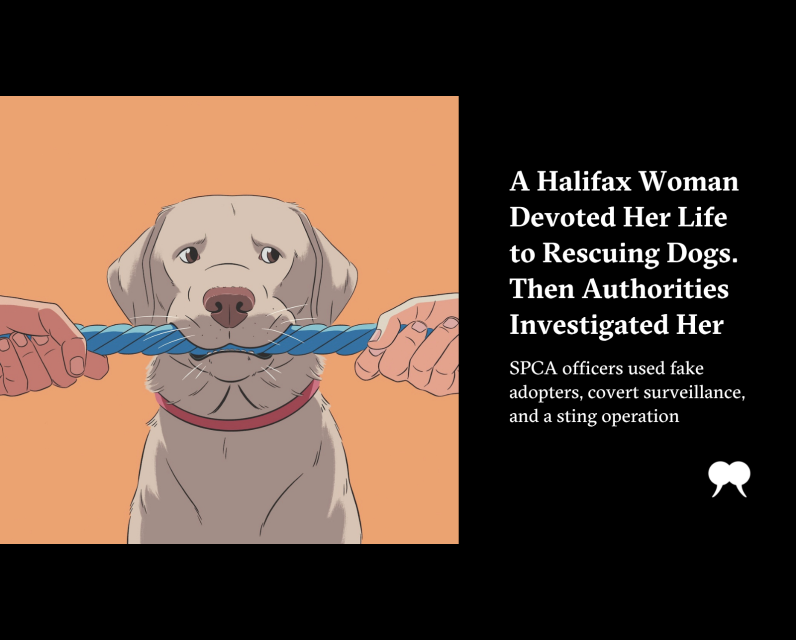
.th-content-centered .hm-header-content, #primary.content-area { width: auto; } .entry-content p, ul.related, .widget_sexy_author_bio_widget, .widget_text.widget_custom_html.widget-shortcode.area-arbitrary { margin-left: auto; margin-right: auto; } .hitmag-full-width.th-no-sidebar #custom_html-45.widget { margin: auto; } @media only screen and (max-width: 768px) { .img-two-across-column{ flex-direction: column; } .img-two-across-imgs{ width: auto !important; max-width: 100%!important; padding:0px!important; } .main_housing, .text-block-underneath { margin-left: 25px !important; margin-right: 25px !important; } .text-block-underneath h4{ font-family: "GT Sectra"; font-size: 35.2px; line-height: 38.7167px; } } @media only screen and (min-width: 2100px) { .main_housing, .text-block-underneath { margin-left: 32% !important; margin-right: 32% !important; } } @media only screen and (max-width: 1200px) { .main_housing, .text-block-underneath { /* margin-left: 25px !important; margin-right: 25px !important; */ } } @media only screen and (max-width: 675px) { .main_housing, .text-block-underneath { margin-left: 10% !important; margin-right: 10% !important; } } .hero-tall {display: none;} .hero-wide { display: block; } @media (max-width:700px) { .hero-wide { display: none; } .hero-tall { display: block; } } SOCIETY / JULY/AUGUST 2026 A Halifax Woman Devoted Her Life to Rescuing Dogs. Then Authorities Investigated Her SPCA officers used fake adopters, covert surveillance, and a sting operation BY SARAH TRELEAVEN ILLUSTRATION BY MADISON KETCHAM
Published 6:30, MAY 27, 2026
LISA BENOIT RESCUED her first pet when she was just a kid. As an adult, she continued to be an animal lover, assembling a menagerie of strays. In 2019, Benoit and her family—a husband and three kids, who lived in Halifax—were looking to adopt yet another dog. They used Petfinder, an international online adoption database, and inputted all their needs: kid friendly, cat friendly, other-dog friendly. But scrolling through pages and pages of cute photos, Benoit saw nothing that quite met her family’s criteria. She turned to pet rescue organizations bringing strays into the Atlantic provinces. That was how she found Marley—a boxer-lab puppy who was owner surrendered and looking for a home.
Benoit had to drive to St. Stephen, New Brunswick, to pick her up. When the rescue volunteer opened the back door of the transport van, Benoit was overwhelmed: it was full of dogs of every shape and size—a mix of nervousness and desperation and love looking for somewhere to land. “There were chihuahuas and shepherds and just everything,” says Benoit, now fifty-four. Marley was sitting quietly, almost completely still, her laser-beam eyes burrowing into Benoit’s heart. “She was saying, pick me, pick me, because she didn’t know where she was going or what she was doing,” she says. Benoit started crying and couldn’t stop—even after the volunteers placed tiny Marley in her hands.
Benoit, who works as a business analyst, left that day with more than a new puppy to snuggle. She knew that all the dogs in that van—all dogs everywhere, really—deserved loving homes. Soon, dog rescue became her mission. “It was too important to not be involved in,” she told me. By the summer of 2020, she was volunteering for rescues and fostering dogs who were waiting on their “forever homes.” The rescues were staffed by volunteers and often stretched thin. Benoit threw herself into the work, managing transports and filling out paperwork. Most of the rescue dogs being brought to Nova Scotia were from the southern United States, especially Texas, which has a large population of strays. Benoit was determined to do everything she could to help bring those lost dogs to loving homes in the Maritimes.
She decided to form her own rescue: Furever Homes, a branch of a Texas-based rescue of the same name. Working with a partner in Texas named Jeanine Christian, Benoit’s transport team made monthly runs, driving through the night in a van loaded with some seventy barking, crying, and confused pups. Her drivers slept in shifts and were paid $500 (US) per transport by Christian’s organization, when they weren’t offering their time for free. At the end of every transport, Furever Homes got to deliver each dog to his or her new family.
As Benoit embarked on an ambitious new chapter, she believed she had an unquestionably righteous mandate. But she would soon learn that there were unexpected and abundant tripwires to her work. The world of animal welfare can be an opaque wilderness. Rescuers and adopters are pitted against regulators and enforcers—all parties convinced they’re doing the right thing. And the resulting power struggle would not only threaten Benoit’s personal mission but temporarily upend her entire life, threaten her job, and send her spiralling into despair.
THE HUMAN–DOG connection is ancient, but the past decade has seen a pet ownership boom. Between 2013 and 2019, the number of dogs imported into Canada increased by an estimated 400 percent. Today, around 60 percent of Canadians own a dog or cat. They sit next to us at baseball games and on airplanes. We bring them to birthday parties and bat mitzvahs. In Korea, sales of strollers for dogs reportedly outnumbered those for children in 2023. Some dogs have closets full of outfits, dine on organic food, and travel in Gucci carriers. The Louis Vuitton logo-embossed “Speedy Pet Trunk” retails for $24,700 (US)—an amazing amount to transport an animal that, while completely lovable, also often needs to be forcibly prevented from eating trash.
Concerns about impulse purchases and puppy mills have led to a widespread phasing out of buying dogs from retail stores. Some jurisdictions, such as Vancouver, forbid it. And so, when the pandemic pushed our obsessive puppy love to the next level, Canadians instead emptied shelters across the country. This coincided with an uptick in demand placed on the global dog rescue network, where dogs move from country to country in search of a permanent home. Dogs have long come to Canada from the southern United States, Turks and Caicos, South Korea, Turkey, Mexico, the Gulf countries, and beyond. Many are strays; some have been saved from grim conditions, like meat farms in Asia or abusive homes.
But international dog rescue organizations sometimes operate in grey areas. Foreign paperwork, including vaccination certificates and other vet records, can be hard to verify, and import regulations (dogs are considered commercial imports) are sometimes applied arbitrarily. There are countless examples of rescue dogs coming to Canada with dangerous and communicable conditions, like rabies, heartworm, influenza, distemper, and parvovirus. A 2022 Toronto Star investigation into Redemption Paws found that the Toronto-based rescue was importing more animals than it could responsibly manage, particularly dogs with behavioural issues.
For many rescuers, the situation is acute. Kristina Grevatt, who organized international dog rescue in Nova Scotia for years, told me that rescue partners in Texas would reach out about dogs that were going to be killed the next day. “Would you like us to save any of these dogs and bring them up to you?” they would ask. “And I’d be like, ‘Oh my God, yes, please,’” she says.
But the desire to save as many lives as possible had to be tempered against the temptation to cut corners. Rescues need to vet prospective adopters, many of whom have signed on after simply viewing a cute dog online. And they should be confirming the health of dogs and ensuring they don’t have any serious behavioural concerns. “I know many, many adopters who have ended up with thousands and thousands of dollars in vet and training bills with dogs that were not what they expected to get at all,” says Grevatt. “And that shouldn’t really be happening.”
In May 2021, after hundreds of devastatingly sick puppies arrived from Ukraine for adoption, the Canadian Food Inspection Agency, or CFIA, introduced revised regulations governing the commercial import of dogs under eight months old. These included requirements for recent rabies vaccinations and travel plans that allow for inspections in the country of origin. The CFIA now publishes an online guide to adopting a rescue dog, including “red flags” such as adopters not being able to visit a dog prior to adoption.
A 2024 study of rescue motivation found that many volunteers consider the work of saving dogs an existential vocation. But the self-appointed role of saviour is almost always deceptively fraught. And in a system of confusing or insufficient regulations and enforcement, it’s easy to see how rescuers, adopters, and those tasked with their oversight can all be set up for failure—even as each party desperately clings to their righteous mission.
IN OCTOBER 2021, Benoit received an application from a middle-aged man named Colin Starzynski who lived in the Halifax area and wanted to adopt a rescue dog. After a lengthy back and forth, Starzynski sent a deposit for a puppy who would be arriving on a transport in early 2022. In the meantime, he asked, might he be able to foster a dog? Benoit sent him a picture of a two-year-old tan mutt with a white muzzle that looked like it was part pit bull. His name was Truitt, and he was being adopted by a home in Newfoundland but needed somewhere to stay before his transport left Halifax for St. John’s. On December 21, Truitt arrived from Texas and was dropped off with Starzynski.
By December 23, it was clear that Starzynski was in love. His mother, who he lived with, was too. Truitt was friendly and affectionate. Starzynski asked Benoit to keep him posted if she received another dog with a similar temperament. Later that day, he sent another message: “My mom actually wants to keep Truitt. She is a therapist and wants to use him as a therapy dog for some of her clients and seniors in nursing homes.” Starzynski offered to pay the adopter’s fee. Benoit asked Truitt’s adopter if they wanted to give him up, and they said no. When she told him, Starzynski responded with a thumbs-up emoji, and Benoit assumed that the matter was settled.
But on Christmas Day, the day before Truitt was scheduled to be driven to Newfoundland, Starzynski started asking questions. He wanted Benoit to detail Truitt’s transit for him, explaining how Truitt’s bathroom, food and water, and medical needs (he was taking an antibiotic, prescribed by a vet Starzynski had taken him to) were going to be accommodated. He seemed worried about the seven-hour ferry ride. Benoit reassured him, telling him that dogs were often transported by truck and that being crated for the ferry ride wasn’t so different than people crating their dog while they’re at work all day.
Then, Starzynski changed tack. He told Benoit he hadn’t been advised of the plan for Truitt when he agreed to take the dog. Benoit sent him screenshots showing that she had told him from the beginning that Truitt would be trucked to his home in Newfoundland. She could feel Starzynski stalling, and she was starting to get nervous. Benoit offered to have Truitt picked up that night rather than the next day. And then she asked him to confirm that there wouldn’t be any issues with the pickup. He didn’t respond.
A day later, Benoit heard from the person who picked Truitt up. Starzynski had handed him over, but he accused Furever Homes of moving dogs from Texas in a poorly maintained school bus that broke down en route, and of leaving dogs in “subzero temperatures” for hours. It was explained to him that while there had been some mechanical issues with Truitt’s transport to Canada, there had always been portable heaters inside the vehicle and the mechanic had worked on the bus inside a bay; there had been no welfare issues.
Starzynski said he had called the police and the Society for the Prevention of Cruelty to Animals—SPCA—and asked them to investigate. He implied that the person picking Truitt up was now culpable. “You do what you feel is necessary because you didn’t get what you wanted and I’ll do what I was asked to by his owner,” this person texted Starzynski before asking him not to contact her again.
Once Truitt had been transported out of Nova Scotia, Benoit refunded Starzynski’s deposit for the puppy he planned to adopt, telling him that she had reconsidered his application. She brushed off the complaint to the SPCA and assumed she was done with him.
THE SPCA STARTED in England in 1824, its key aim to protect the horses that pulled carriages, which were notoriously overworked and underfed. The SPCA later extended their attention to other animals and expanded their operations overseas in the 1860s. The first Canadian SPCA was founded in Montreal in 1869.
While branches of the SPCA typically operate independently, they share a broad mandate of animal protection, and many jurisdictions in Canada, including Nova Scotia, empower local SPCA personnel with some of the same privileges as law enforcement. They can, under certain circumstances, enter homes, seize property, and lay charges. Some have characterized these powers as overreach vulnerable to exploitation. Others point to the essential mandate of defending the defenceless, bolstered by grotesque and all too frequent examples of cruelty that include dog-fighting rings, shameless and profit-driven breeders, and tragic hoarding situations.
In 2024, according to its annual report, the Nova Scotia SPCA provided veterinary services to 220 animals, food support to 4,777, and “sheltering and care” services to 5,304. They also conducted 3,455 investigations. Their total revenues were $11,462,549—only a small fraction of which comes from the government. The organization is mostly donor funded.
Some animal owners have accused the SPCA of being unfairly heavy handed, seizing or refusing to return dogs even when a case warrants it. Between 2019 and 2024, the British Columbia SPCA saw a 350 percent increase in the number of formal disputes launched by people hoping to reclaim their animals. Social media is full of stories of Canadians fighting for the return of what they claim are beloved and well-cared-for pets. In Nova Scotia, there’s even a Facebook group—Education and Experiences with the NS SPCA—that functions as a support group for people who say they have been unfairly targeted, or who simply believe that, like with other forms of law enforcement, individuals are vulnerable to unchecked bullying by the SPCA.
In early 2025, the Halifax Examiner published an investigative feature that suggested the local SPCA was in crisis. Former employees described a toxic workplace where funds were misappropriated and statistics manipulated to garner additional provincial funding. One former SPCA vet told the Examiner that upper management wouldn’t approve euthanasia for sick animals with a low quality of life because it bummed them out to sign the paperwork. She also said that administrative staff—not vets—made arbitrary euthanasia decisions about dogs with behavioural issues. In a statement to the Examiner, the SPCA said it is “dedicated to fulfilling a singular mandate: to protect and improve the welfare of animals,” and that it was working “to create opportunities and programs to foster an informed, healthy and inclusive workplace.”
WHEN I SPOKE with Starzynski, he told me that he was genuinely concerned about animal welfare. He said a puppy he had previously tried to adopt died before even leaving Texas. The experience had opened his eyes to the risks involved in relocating animals across long distances, especially when they have pre-existing medical conditions. Starzynski’s interactions with Benoit were fractious, and he told me he got the vibe that Benoit was involved in dog rescue only to make a quick buck. He said this suspicion was confirmed when he googled her name and saw that she had previously been charged with stealing dogs and animal cruelty. But those charges were linked to a Gail Benoit—no relation to Lisa.
The complaint made by Starzynski to the SPCA was outlined in an incident report, which was provided to The Walrus. On December 28, 2021, Starzynski alleged that “Lisa Beniot (sic) is mass importing unhealthy animals, in unsanitary and high-risk conditions and selling them across Atlantic Canada, including Nova Scotia without proper documentation.” Starzynski complained about Truitt’s transport breaking down en route from Texas and alleged that dogs were left in extreme cold for hours. He also alleged that Truitt was sick when he arrived and was “breathing like a pug”—meaning, raspy and laboured—and that he had to take him to see a vet at his own expense. Benoit recalls that the vet said there was nothing seriously wrong with Truitt.
The report shows that the SPCA assessed Starzynski’s complaint as credible and started investigating Benoit. It was categorized as a cruelty investigation. On December 29, SPCA officer Dana Brown used a pseudonym to join a private Facebook group, Furever Homes Dog Rescue, run by Benoit. Combing through the Facebook page, Brown learned that Benoit charged $770 per adoption, and despite declaring herself a “not-for-profit,” her rescue was not actually registered.
Brown thought the fee Benoit was charging was excessive. (The Nova Scotia SPCA charges $400 to adopt an adult dog and $700 for puppies. Furever Homes’ fees appear to be in line with industry standards.) Based on social media fundraising, Brown determined that Benoit was paying around $70 per spay or neuter. She searched online to see how much it would cost to adopt directly from Benoit’s partner organization in Texas; the fee was listed as $200 (US).
It seemed to Brown like an enormous discrepancy. In addition to the adoption fees, Benoit held fundraisers and accepted donations. One adopter Brown talked to over Facebook said she was concerned about conditions on the transport her dog had been on, and that the dog had arrived with an ear infection. Still, said the adopter, the rescue was a small operation with a shoestring budget. She was grateful to Benoit. Brown decided that there was enough evidence for a field investigation.
In January 2022, Benoit received a message from a person who wanted to come and see the arrival of one of the transports, where adoptive pet parents were matched with dogs. It was Brown, using a pseudonym. She was curious about the process, she told Benoit, because she was interested in adopting a dog. To Benoit, there was something about the message that felt off. She asked one of her volunteers to explain that transport adoption events were private and offered the name of another rescue that might be able to help.
In late February, Benoit’s organization received an application from a couple looking to adopt. Did Benoit have any unclaimed dogs coming up on the March transport? She did, but just one: Gunner, a white mutt with black spots and a passing resemblance to a Boston terrier. She sent the couple some pictures, and they agreed to take him. The prospective adopters were Brown and her SPCA partner, another officer named Mark Rushton, both using pseudonyms. Benoit called their references and soon approved their application.
On March 1, Gunner’s transport left Beaumont, Texas. Benoit provides adopters with access to an app that allows them to track their pet’s journey in real time. So, Brown was able to see when Gunner’s transport hit some snags. On the morning of March 2, 2022, the bus stopped at a vet clinic in Virginia to treat a puppy named Monday who was “stressed out.” Monday couldn’t be stabilized; he had a series of seizures and died. Christian updated the transport group chat with the sad news. The transport continued, eventually crossing the Maine border at St. Stephen, and started making its way toward the meeting spot in Amherst, Nova Scotia.
The surveillance operation of the transport pickup was remarkably zealous. According to the report, the SPCA dispatched a total of five officers to the pickup—three plainclothes observers in addition to the two fake adopters—and the action was later breathlessly catalogued like a major drug bust. “Between the hours of 2258 HRS and 2332 HRS BROWN and RUSHTON witnessed 31 dog transactions,” reads the report. “BROWN and RUSHTON observed a female . . . complete a transaction by taking possession of the purchase records and a dog verbally identified as Taquita.” At this point, Benoit had been under suspicion and subject to investigation for more than two months, but no one from the SPCA had knocked on her door to ask about the allegations.
Brown and Rushton took possession of Gunner at 11:37 p.m. on March 3. The report states that when the officers assessed him, they found that he was a bit thin and had inflamed ears and a broken right-side tooth. He smelled like feces. Using a black light, they determined that he was covered in urine. They noted that Benoit’s team provided them with a rabies certificate and a vet invoice for his neuter and fecal exams, but he had no Veterinary Health Certificate issued by Nova Scotia (proof of his local examination by a veterinarian), no indication of heartworm testing, and no microchip. (Grevatt confirmed to me that, in her understanding, an NS Veterinary Health Certificate is required only for dogs sold locally, not those imported for adoption, who are governed by federal import controls.) They put Gunner back behind bars, in the SPCA’s shelter. When Benoit messaged them to ask how Gunner was settling in, they told her that he was fine.
According to the SPCA report, Gunner soon started displaying worrying aggression toward other dogs and had to be segregated. An assessment by a dog behavioural specialist determined that he had a “high prey drive” and could not be rehabilitated. On April 5, he bit a shelter worker who was trying to take him outside. On April 6, Gunner was euthanized. I reached out to the SPCA, but they declined to answer questions.
In early May, Brown and Rushton, this time in SPCA uniforms, finally showed up at Benoit’s house. Could she explain her adoption process to them, they asked. Benoit was proud of her work, and she says she told them everything: the name of the vet she used in Texas, the name of the broker who helped pay cross-border fees. According to SPCA documents, Benoit provided an invoice that showed that, in the previous month, she had paid broker fees of $8,811.11 for seventy-two dogs—a total of $122.38 per dog. (When I spoke to Benoit, she told me her broker sometimes charged up to $400 per animal.) The broker was a middleman; Benoit provided the required documents (manifest of dogs onboard a transport, health certificates, and proof of rabies vaccination) to them in advance, and they submitted these to the government to obtain pre-approvals that could still be denied at the border.
Benoit declined to provide names and records related to her adopters, and she couldn’t produce a Nova Scotia Veterinary Certificate of Health. When she had consulted with the CFIA to confirm the requirements for importing dogs across the border, they hadn’t told her she needed one.
The officers seemed, to Benoit, satisfied with her answers and they soon left.
A FEW WEEKS LATER, Benoit was in bed, sick with the flu. Someone started banging on her door, and when she answered it, the two SPCA officers were standing there. They told her that they were charging her for not having the proper paperwork for the dogs she was bringing across the border. Benoit broke down. She had never been in trouble with the law in her life, and she didn’t understand what she had done wrong. She didn’t even know the SPCA could charge someone. Were they taking her to jail?
“They told me I could pay fines and it would go away,” says Benoit. The officers gave her a date to appear in court. After they were gone, she realized she needed a lawyer. She posted a GoFundMe and raised $6,000 in three weeks. She connected with a local lawyer named Matthew Ryder. She paid him a $5,000 retainer, and he told her he would do his best to help her.
It appeared that Benoit’s infraction was not having a Nova Scotia health certificate. From her reading of the law and her conversations with the CFIA, plus consultations with other rescue volunteers and vets, this requirement seemed to be only for local breeders. Plus, she did have health certificates. They were from Texas and had been approved by Canadian federal authorities when the dogs crossed the border. How could she be accused of illegally importing dogs when Canadian border officers had granted them entry? Even if she was missing a piece of paper, she didn’t understand why a governmental agency had suddenly gone Rambo on her. “They made it sound like all of my dogs were coming and dying,” she says.
The SPCA also took issue with the fees she was charging, suggesting that importing dogs was a get-rich-quick scheme. These allegations, too, didn’t make any sense to Benoit. She wasn’t turning a profit on rescuing dogs; she was just barely covering costs. The dogs needed to eat, and they had bills for spays and neuters and more complicated issues. Every dog saw a vet in the US prior to joining the transport; that vet provided a certificate of health. Benoit had to buy crates and pee pads and leashes and food bowls. It was a lot, and she figured it was reasonable to ask the dog’s owners to pay the costs. She certainly couldn’t cover it on her own. Even with the adoption fees, she often had bills she had to fundraise for.
Benoit was devastated when she learned that Gunner had been euthanized. She sent me a video of him, taken just before the transport, in which he excitedly jumps up on a volunteer while wagging his tail as she tells him that he’s being sent to meet his “mom and dad.” Benoit believes that putting Gunner back into a shelter environment may have triggered any behavioural issues the SPCA observed. She says she had at that point euthanized one dog and sent another back to Texas.
“They sacrificed [Gunner] to build a case against me,” she says. “It seems like they went straight to a sting operation based on assumptions, skipping over an actual investigation,” says Benoit. “And then it seems like they sort of needed to justify why they took that path.”
BENOIT’S MENTAL HEALTH rapidly declined. She kept turning over in her mind what she had done, how anyone could see it as a bad thing, but that didn’t stop the overwhelming feelings of shame. “It was the worst possible thing to be accused of, because it was against everything I stood for,” she says.
The SPCA put out a press release on June 7, 2022, describing Benoit’s case and that of another woman who was later convicted of selling golden retriever puppies without having veterinary certificates of health for them (the dogs were sick with parvovirus). The release indicated that Benoit was importing dozens of dogs a month and that “many of these animals were sick upon arrival, fell ill afterward, had behavioral issues, or died en route to Canada.” After the release came out, someone called Benoit’s workplace, informing them of the charges against her. Human resources told her that she had to go on leave while they investigated the allegations.
After a conversation with her lawyer, Benoit started collecting letters of support from her adopters to counter the narrative being pushed by the SPCA. Dozens of people wrote letters, thanking Benoit for her work, confirming her professionalism, and expressing empathy for the murky circumstances of dog rescue. Each of the adopters had arrived at a transport to have a new family member—a little nervous, a little stinky, and maybe slightly worse for wear—placed in their arms. And now they couldn’t imagine life any other way. There were so many unwanted and unloved animals in the world. Why was Benoit being punished for doing something about it? It was clear to these adopters that Benoit was doing her best.
In November 2022, the charges against Benoit were dropped. The Crown agreed they had no merit. One source familiar with the case told me that, in the wake of Benoit’s case, the Crown suggested additional training for SPCA officers to ensure they have a clearer understanding of due process and how to manage investigations. The SPCA press release remains online, unamended to reflect the dropped charges.
Benoit wanted to press the SPCA to remove or update this announcement, but she could not find a lawyer to take the case on contingency. She still spends every spare minute bringing dogs up from Texas, dozens a month who are shuffled off to local homes waiting to love them. “These dogs deserve a chance, and this was my dream and I’m doing it,” says Benoit. “And I’m not going to stop.”
The post A Halifax Woman Devoted Her Life to Rescuing Dogs. Then Authorities Investigated Her first appeared on The Walrus.
Unpublished Newswire

Comments
Be the first to comment