
Stay informed
Unpublished Opinions



Feds say they don't support effort to include residential school denialism in anti-hate bill
OTTAWA — The federal government signalled it would not support efforts to include the criminalization of statements that deny or downplay the residential school system in its anti-hate bill after a Senate amendment to do so was defeated on Wednesday.
It comes as the Senate has also struggled to provide senators debating the controversial legislation with upwards of 200,000 pieces of mail that it received on the bill as they prepare to cast their final vote.
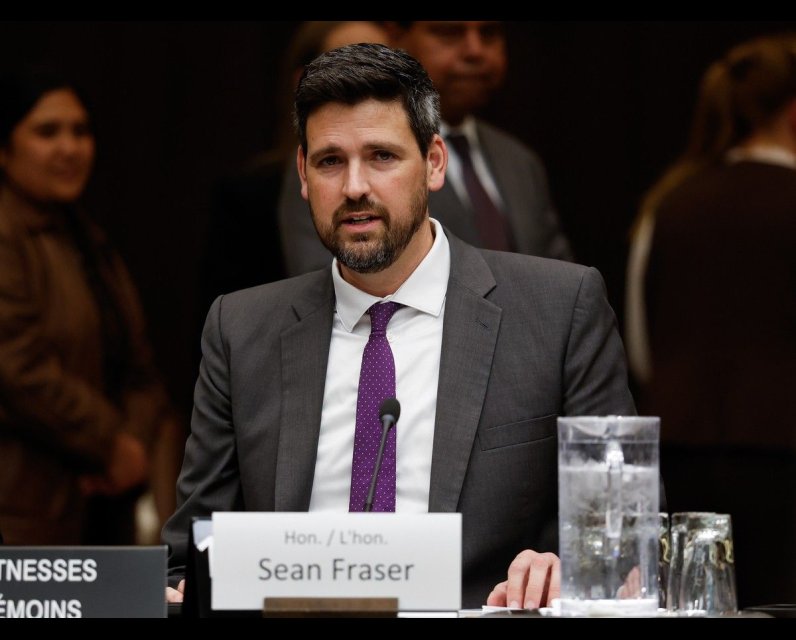
The legislation, known as Bill C-9, was introduced back in September by federal Justice Minister Sean Fraser with an eye to respond to the police-reported rise in antisemitism and other hate-related incidents by creating new obstruction and intimidation offences around places of worship and other buildings where an identifiable group gathers.
Since its introduction, Muslim advocacy groups and other civil liberties associations have raised concerns over its proposal to criminalize the display of symbols linked to designated terrorist organizations, citing the risk that protesters could be targeted by police that cannot differentiate between actual terror-related symbols and Islamic phrases and images that may be co-opted by certain groups.
The Liberals’ decision to accept a Bloc Quebecois amendment to remove the religious defences provision from the Criminal Code in exchange for the Quebec party helping the government pass it through the House of Commons drew further controversy, with Muslim and many other Christian organizations, including the Canadian Conference of Catholic Bishops, warning the removal could lead to a chilling of teaching and preaching religious text. The government has sought to address these concerns by amending the bill with a certainty clause and emphasizing religious freedoms remain protected under the Charter of Rights and Freedoms.
The backlash has led groups to organize fierce letter writing campaigns. A memo distributed to senators on Wednesday, which was obtained by National Post, informed them of a “bulk shipment” of around 200,000 unsorted postcards were able to be viewed, with staff instructed “to retrieve the postcards addressed to them.”
Eric Gagnon, the director of parliamentary affairs, said in an email it was never the Senate’s intent “to withhold or conceal correspondence from Canadians” and that the postcards in question were “identical,” adding that “both electronic copies and physical samples” were sent to senators’ offices, so they knew what they said.
This week, the Senate committee on human rights sought to change the bill even further, by amending it to criminalize the “condoning, denying, or downplaying the Indian residential school system.”
Sen. Nancy Karetak-Lindell, who says she and her siblings attended residential schools, brought forward the amendment, citing how the committee heard from First Nations witnesses that called for such an offence to be added to target what they warned was a rise in ant-Indigenous hate.
Senators must still debate and vote on the bill on Thursday, where the amendment could be reintroduced. Any changes the Upper Chamber makes would then have to return to the House.
A spokesman in Fraser’s office said on Wednesday that provisions to include residential school denialism extends beyond the bill’s original intent.
“The Combatting Hate Act was introduced to respond to the rise in hate by protecting access to places of worship, schools, cultural centres, and community spaces from intimidation and obstruction, and by strengthening laws against hate crimes,” Jeremy Bellefeuille wrote.
“Indian Residential School denialism is a serious and distinct issue that does not fit within the scope of what the Combatting Hate Act was designed to do. Our government has consistently said this issue warrants dedicated further parliamentary study, developed in genuine consultation and cooperation with Indigenous peoples.”Anaïs Bussières McNicoll, director of the fundamental freedoms program at the Canadian Civil Liberties Association, said she had concerns about the lack of consultation on having included the provision targeting residential schools, given it was not initially part of the bill.
She also warned that the language of the amendment targeting residential school denialism was “vague and overbroad” as it also included the act of “downplaying” or “condoning.”
“This gives rise to concerns of vagueness and over breadth,” she said, adding it raises “a lot of questions.”
“Could this new prohibition capture someone who recognizes the historical reality of the residential school system for the atrocity that it is, but who argues that other historical atrocities were worse?” she said in an interview on Wednesday.
The wording of the proposed offence had mirrored the existing one for the promotion of antisemitism, which targets the “condoning, denying, or downplaying” of the Holocaust.
Thousands of Indigenous children were forced to attend Canada’s church-run government-funded residential school system, where many survivors later testified to experiencing sexual and physical abuse, as well as malnutrition.
The federal government under former prime minister Stephen Harper apologized to survivors in 2008. In 2021, the announcement by the Tkʼemlúps te Secwépemc, a First Nation in British Columbia, that ground-penetrating radar that discovered 215 unmarked graves at the site of the former Kamloops Indian Residential School, shone a further spotlight on the children who died while attending this institutions.
Terry Teegee, B.C. regional chief of the Assembly of First Nations, which advocates for more than 600 First Nations across Canada, told the senate committee studying the bill that the B.C. First Nation has been the subject of threats and harassment, with leaders having to hire security to prevent individuals attempting to trespass seeking to exhume the site.
Karetak-Lindell, whose office said she was not available for an interview on Wednesday, told the committee while presenting her amendment earlier this week that the proposed change followed recommendations made by the Upper Chamber’s committee on Indigenous Peoples that recognized the growing concerns around residential school denialism.
“There is no question in my mind that residential school denialism has placed doubt among Canadian citizens and have paved the way for outright racism towards Inuit, First Nations, and Metis peoples,” she said.
National Post
Our website is the place for the latest breaking news, exclusive scoops, longreads and provocative commentary. Please bookmark nationalpost.com and sign up for our politics newsletter, First Reading, here.

Unpublished Newswire


Comments
Be the first to comment