
Stay informed
Unpublished Opinions



Canada and America Are Drifting Apart. The Pentagon Just Made It Official
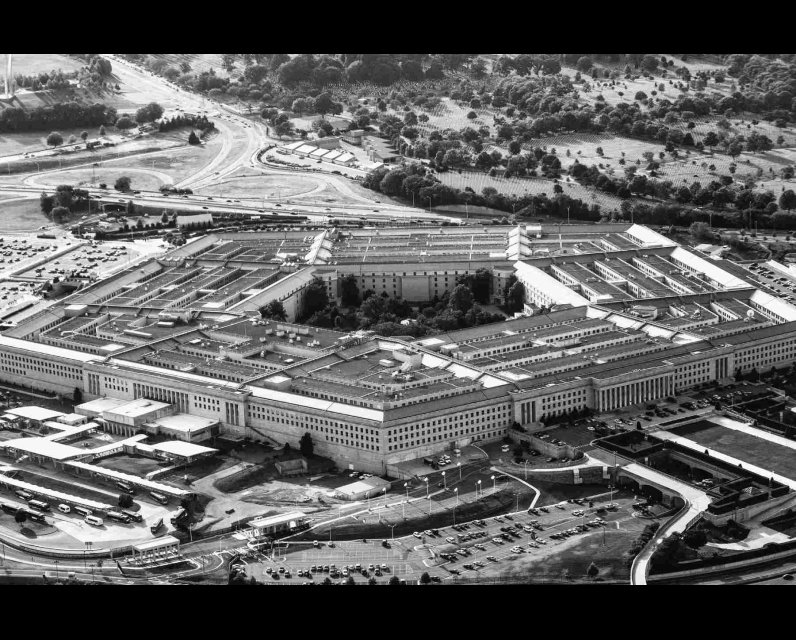
In a post on X on May 18, Elbridge Colby, the under secretary of defence for policy at the Pentagon, announced that the United States would pause its participation in the Permanent Joint Board on Defense (PJBD) to “reassess how this forum benefits shared North American defense.” The under secretary pointed to Canada failing to make credible progress on its defence commitments as well as to Canadian rhetoric, a jab at Prime Minister Mark Carney’s speech in Davos about middle powers co-operating in the face of hegemonic powers, as the reasons for the US decision. The move comes barely six weeks ahead of the mandatory joint review of the US–Mexico–Canada Agreement (USMCA), which Canada is heavily reliant on, as well as amid a climate of worsening bilateral relations since President Donald Trump’s own rhetoric about making Canada the fifty-first state and the imposition of tariffs on Canadian trade.
Below is a Q&A briefing put together by the Center for Strategic and International Studies, with contributions by Christopher Hernandez-Roy, Mark F. Cancian, Jamie Tronnes, Richard Shimooka, Christopher Sands, and Philippe Lagassé. It explains how suspension of the PJBD exposes deeper tensions over defence, trade, and sovereignty, threatening a key mechanism for managing Canada–US security co-operation.
What is the PJBD and what does it do?
The PJBD is the oldest formal Canada–US defence co-operation mechanism and serves as the principal advisory body on continental security. Created in 1940 under the Ogdensburg Agreement between Prime Minister William Lyon Mackenzie King and President Franklin D. Roosevelt, the PJBD was established to coordinate the defence of the north half of the Western Hemisphere and study problems related to sea, land, and air, including personnel and matériel. In 1947, the two countries agreed that the board would continue in the postwar period for peacetime joint security purposes.
The PJBD brings together senior civilian and military representatives from both countries to discuss strategic defence priorities, continental security, Arctic issues, critical infrastructure, military modernization, and emerging threats. During the Cold War, the PJBD played an important role in shaping many pillars of North American defence co-operation, including the development of the North American Aerospace Defense Command (NORAD), the Distant Early Warning (DEW) Line and North Warning System for Arctic surveillance, defence industrial coordination, and major infrastructure projects, such as the Alaska Highway and St. Lawrence Seaway.
Some analysts argue that the PJBD lost influence after the creation of NORAD in 1958 and especially after the United States Northern Command (USNORTHCOM) was established following the September 11 attacks. Co-operation and coordination, they argue, is located in the tri-command arrangement consisting of NORAD, USNORTHCOM, and Canadian Joint Operations Command (CJOC), even if no overarching true central structure exists to provide unity of effort and command for North America. Others, however, contend that the PJBD’s importance has been as a discreet, high-level forum for strategic dialogue, trust building, and policy coordination between the two countries, away from public visibility or operational command authority, to allow Canada and the United States to more candidly address sensitive defence issues. Canadian scholar P. Whitney Lackenbauer argues that renewed geopolitical competition and a recognition that the “homeland is not a sanctuary” make the PJBD increasingly relevant to today’s bilateral defence relationship.
The administration’s stated reason for the hiatus is that Canada is not spending enough on defence. Is that true?
That was true in the past but is no longer the case. Canada now meets the 2 percent North Atlantic Treaty Organization (NATO) goal for defence spending, though some commentators have said the government has relied on some creative accounting methods in calculating its military spending. In any event, it’s a dramatic increase from where Canada was when the goal was announced in 2014. For many years after the end of the Cold War, Canada was a defence-spending laggard at about 1 percent of gross domestic product. The level has increased since 2014 and is now slightly over the 2 percent goal (2.01 percent).
Because Canada has a relatively large economy, spending 2.01 percent on defence produces one of the largest defence budgets in NATO. Only five of the thirty-two NATO members spend more. In fact, Canada spends about as much as the fifteen smallest NATO defence budgets put together. Canada has also pledged to meet the new NATO 5 percent goal.
In dollar terms, Canada spent $63 billion on defence in 2025, the “single largest year-on-year increase in defence investment in generations,” according to Prime Minister Carney. A major priority is the Arctic and the defence of North America’s northern approaches. Investments are being directed toward Arctic forward-operating locations, support hubs consisting of improvements in roads and infrastructure at northern ports and airfields, surveillance systems, sea-floor monitoring sensors, NORAD modernization, and upgraded radar and early warning systems. These investments ease demands on US forces.
At the same time, Ottawa is investing heavily in naval modernization, including the construction of fifteen new destroyers through the River-class Destroyer Project and the purchase of twelve new conventionally powered, under-ice capable submarines under the Canadian Patrol Submarine Project, along with expanded shipbuilding capacity and naval infrastructure. Air capabilities are also being modernized through the acquisition of F-35 fighter aircraft, drones, and long-range missiles, though because of recent trade tensions, the size of the F-35 purchase is under review. Armoured vehicles, ground-launched drones, and precision fires will enhance army capabilities.
Much of the spending is aimed at rebuilding military readiness after years of underinvestment. Canada is increasing pay for members of the Canadian Armed Forces and considering increasing trained reserves to 100,000 troops and adding a lightly trained citizen soldier force of 300,000.
What about the administration’s other stated reason to pause the PJBD?
As for the complaint about Canada’s “rhetoric,” one of the authors of this piece has argued that when it comes to Prime Minister Mark Carney, the pen is mightier than the sword, in the sense that his speeches have piqued the White House more than Canada’s former status as a defence laggard. Colby’s social media announcement may come from a feeling of shock at the gall of Canadian grandstanding on the world stage, while Canada is still largely relying on the United States for military defence. The prime minister’s remarks at the World Economic Forum Annual Meeting in Davos, which portrayed a harsher geopolitical environment and called on middle powers to band together to resist economic coercion from hegemons, upset the White House and contributed to a tougher stance toward Canada. Indeed, in President Trump’s own Davos speech, he said that “Canada gets a lot of freebies from us, by the way. They should be grateful also, but they’re not . . . Canada lives because of the United States. Remember that, Mark, the next time you make your statements.”
President Trump subsequently revoked Canada’s invitation to participate in his Gaza “Board of Peace” initiative; threatened Canada with a 100 percent tariff if the country solidified a trade deal with China, after initially saying it was a good thing to sign a trade deal; and later threatened to block the planned opening of the Gordie Howe International Bridge connecting Windsor to Detroit, accusing Canada of treating the United States unfairly during construction of the bridge and in other trade matters.
The Davos speech represents the international dimension of what Prime Minister Carney is trying to do within Canada; diversify its economy away from the United States, in addition to reducing Canada’s military dependence on it. The prime minister recently declared that “the days of our military spending seventy cents of every dollar to the United States are over.” The review of the F-35 purchase is consistent with this goal, as is Canada’s new Defence Industrial Strategy. Canada’s international rhetoric and its intentional distancing from the United States on military purchases likely contributed to the decision to pause the PJBD as much as the continuing perception in Washington of Canada as a laggard on defence.
Why is the United States taking this action now?
Canada has yet to demonstrate that its defence projects result in genuine deterrence or lethality as part of the spending, a point not lost on the Pentagon. Further, the pause is likely intended to remind Canada that catching up to the previous NATO standard is old news. The US ambassador to Ottawa, Pete Hoekstra, speaking after the PJBD suspension was announced, said that he has heard of no plan from Canada’s finance minister to get to 5 percent. The timing is also likely intended to push Canada to make a final decision to purchase the F-35 fighter jet, as well as to move more quickly on other priorities the Americans are pushing Canada to procure to shore up the defence of North America.
Further, Canada has yet to make changes to its military procurement processes to allow for faster spending allocations. If the US procurement system is considered antiquated, Canada’s procurement system is positively byzantine. Getting the large expenditures tied to procurement priorities actually spent will require Canada to modernize its procurement processes and get the timing down from years—in some cases, decades—to months. The prime minister, to his credit, has designated a minister responsible for modernizing military procurement. Unfortunately, no reported changes or progress have been reported thus far aside from the announcement of the newly created Defence Investment Agency overseen by Secretary of State Stephen Fuhr, though the legislation would give the new minister far more discretionary powers to invest and procure, speeding up timelines.
With this in mind, it is not surprising that the under secretary took the opportunity to give Ottawa a reminder of US expectations for meaningful defence spending, not just spending planning.
One other reason for the timing is likely the forthcoming renewal of the USMCA, due on July 1. The United States has made it clear to Canada that renewal of the agreement is partially contingent on shouldering more of the burden for continental defence. This is nothing new, as former President George W. Bush’s ambassador to Canada, Paul Cellucci, famously said twenty years ago, for the United States, “security trumps trade.”
What impact will the pause have on US–Canada co-operation?
The United States has built an unmatched architecture for securing US national interests globally. Its design includes myriad agreements and institutions. Many operate quietly and receive attention only when they fail. The value of such institutions lies less in crisis management than in creating habits of consultation before crises arise.
The PJBD was created to plan continental defence co-operation with Canada and as a means of encouraging Canada to align its defence planning with US strategic priorities. The PJBD institutionalized that process at the civilian and political level. Suspending participation may therefore put at risk one of Washington’s own mechanisms for shaping Canadian defence choices over time.
The United States benefits from institutionalized Canadian co-operation because it helps ensure that Canada plans alongside US priorities rather than drifting toward more autonomous or Europe-centred defence planning.
Washington also gains leverage and predictability through regular consultation. The PJBD is not charity toward Canada; it is a forum for shaping Canadian defence behaviour early, quietly, and strategically. Recent reporting that Washington presented Ottawa with a classified list of US continental defence priorities, and was dissatisfied with the Canadian response, illustrates the limits of unilateral demands absent the habits of consultation and consensus building that institutions like the PJBD were designed to foster. Arguably, the PJBD has been more successful than other planning processes in securing Canadian defence investments to complement those the United States makes to secure itself.
Finally, the United States has a strong interest in maintaining bilateral—not merely multilateral—continental defence planning. NATO cannot fully substitute for a North American framework because the US continental and Arctic approaches involve distinct operational and political considerations. In the same way the Five Eyes intelligence collaboration exists alongside US bilateral intelligence sharing with allies like Israel, Japan, and Germany, US national security benefits from a diverse array of partnerships structured for specific purposes and relationships that complement each other. Removing one element from this architecture does not mean other institutions automatically assume its functions. The more likely result is a lacuna in Washington’s threat awareness and response options.
These risks exist even if one accepts the administration’s frustrations with Canada—weakening the institutional architecture of bilateral defence consultation carries costs for the United States as well.
Because the United States has characterized its position on the PJBD as a pause, and not as a termination of the board, there is a time factor to weigh in assessing its potential impact. There will be a limited operational impact in the short term as the contributions of the PJBD are realized over a longer period. In the medium and long term, a prolonged pause would lead to an erosion of planning culture and political trust, with strategic consequences, including reduced alignment on Arctic and continental priorities.
What effect will this action have on Canada and the United States?
The PJBD was established because the United States and Canada recognized a reality that has not changed: the defence of North America requires close coordination and co-operation between the two largest countries on the continent. Prime Minister Carney played down the PJBD announcement, in part because it hasn’t met since 2024, but he clearly understands the significance of the move. But playing this down misrepresents the utility of the PJBD and the role that ongoing discussions play in even the closest alliances. Indeed, the importance of the PJBD is increasing as the Canada–US relationship fractures under the second Trump administration.
Immediately after the suspension of the PJBD was announced, former members and observers of the board contacted one of the authors recounting the various topics and thorny issues that the board has helped address over the decades. Unlike NATO, which is an alliance with military and diplomatic components, NORAD is a squarely military command. NORAD does not offer “good offices” that are vital when countries are working through problems. The PJBD is one of those “good offices.” The PJBD has provided a forum to explore new avenues of co-operation. In so doing, it has complemented the work of Canadian and US diplomats and political leaders. More importantly, the PJBD has been quite valuable when the Canada–US relationship has been going through difficulties, such as when Ottawa declined to join the 2003 Iraq War and the US missile defence system in 2005. Frank exchanges between PJBD members were relayed back to Ottawa and Washington, allowing both countries to better understand each other’s positions.
Canada–US relations are currently in the worst state they have been in living memory. There is deep distrust and animosity between their respective governments. Geography, however, prevents the two countries from breaking up. They must live with each other, and as was the case when the PJBD was established in 1940, they have a vested interest in defending the continent together. Bodies like the PJBD will be essential as Canada and the United States look to reset their damaged relationship in the future. Ideally, the PJBD would also be meeting now to help keep the rift between the two allies from becoming larger.
The longer the PJBD is suspended, the longer the two countries will be missing a “good office” that could help them better understand each other, and that will be needed to repair their alliance when the time comes. That is bad for Canada and bad for the United States.
Reprinted, with permission, from the The Center for Strategic and International Studies.
The post Canada and America Are Drifting Apart. The Pentagon Just Made It Official first appeared on The Walrus.
Unpublished Newswire


Comments
Be the first to comment