
Stay informed
Unpublished Opinions

A Legacy of Love and Conservation
“You don’t have to look for it, you have to find it.” This is one of Rudi Blatter’s guiding philosophies, loosely influenced by Herman Hesse’s Siddhartha and the Thai expression “Mai bpen rai,” which roughly translates to “it’s okay,” “no worries,” or “never mind.”
It means being open to possibilities, aware of opportunities, and recognizing when something feels right. This philosophy is woven throughout Rudi’s life, guiding his decisions and helping him stay true to his values. It’s led him to some truly remarkable places along the way, including, in 2020, partnering with WWF-Canada to honour the legacy of his late wife, Karine.
Rudi and Karine met in 1983 and were married three years later, beginning 33 years of shared adventure. As newlyweds, the couple moved to Thailand, where they spent four and a half years and welcomed two children, Eric and Sylvie. South Korea was next, then France, before the family finally arrived in Canada in 1995. Toronto would remain their home for the next 25 years; Rudi says simply, “We knew we found it.”
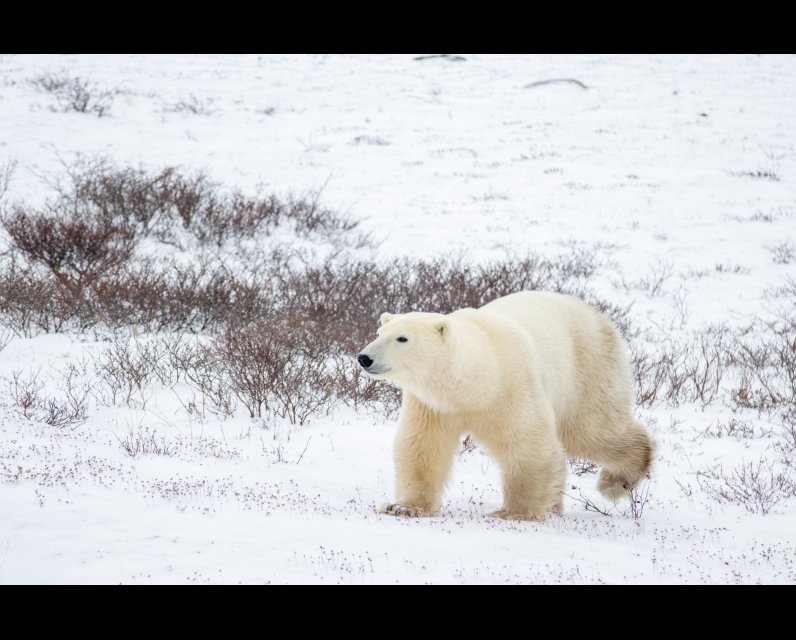
Karine was dearly loved and deeply devoted to her family and the environment. She adored animals, particularly polar bears. “It was one of those things where you see polar bears on TV, and you think they’re cuddly animals, but you would like to understand more about them,” Rudi explains with a laugh. In 2013, for Karine’s 50th birthday, the pair decided to take a trip to Churchill, Manitoba, with WWF-Canada.
The trip was about five days long, but it left a profound impact on Karine and ignited a deep connection with the Canadian Arctic. “When we were there in Churchill and saw these polar bears, it was something fascinating,” Rudi says. “It was like love at first sight.”
The Blatters had always wanted to return to the north, but in 2019, Karine passed away before they had the chance. While navigating the loss of their beloved wife and mother, Rudi, Sylvie, and Eric found a way to honour Karine’s legacy and keep her memory alive. Together, they created the Karine Blatter Arctic Fund.
The Karine Blatter Arctic Fund
The Blatters established the Karine Blatter Arctic Fund at WWF-Canada through the family’s ELPIS Foundation, named for the spirit of hope in Greek mythology. The Fund is designed to support long-term, Inuit-led conservation work in the Canadian Arctic, with a focus on the polar bears Karine loved so much.
Eric and Sylvie have helped shape their mother’s legacy through their work with the ELPIS Foundation and the Arctic Fund: organizing annual fundraising golf tournaments, the inaugural ELPIS Arctic Spirit dinner in Toronto, and designing the ELPIS Foundation logo using Karine’s handwriting and her favourite colour, light blue. In the past five years, the Karine Blatter Arctic Fund has raised $1 million for Arctic conservation and has committed an additional $1 million over the next five to seven years. WWF-Canada’s Lead Arctic Specialist, Paul Okalik, knows how vital that support will be.
Learn More aboutREGENERATECANADA
Regenerate Canada is WWF-Canada’s 10-year plan to get Canada’s natural future back on track. By combining Indigenous-led conservation and scientific analysis, WWF-Canada’s efforts will be directed toward:
Restoring lost or degraded ecosystems to help regenerate vital habitats
Stewarding ecosystems so they can support wildlife and communities
Reducing carbon emissions by protecting carbon stores and restoring carbon-rich habitats
Okalik speaks candidly about the challenges facing Canada’s northern regions, including rising temperatures, resource extraction, and increased shipping activity. Growing up in Pangnirtung, Northwest Territories (now Nunavut) during the 1970s, Okalik says the sea ice would freeze solid in October, creating the perfect hockey rink. Now, ice often doesn’t form until mid-December — this year, he says, people were still boating in January.
Diminishing sea ice has led to more polar bear encounters as the animals venture into local communities in search of food. Okalik says human activity has also impacted other wildlife, with heavy shipping traffic dispersing local marine mammal populations and mining roads diverting caribou’s migratory paths. “These mammals and animals are our lifeblood,” he says. “Respect has to be shown to the animal and to the people who depend on them for survival.”
The Karine Blatter Arctic Fund at WWF-Canada supports several Inuit-led conservation efforts to address these issues and protect Arctic wildlife, ecosystems, and communities. At the request of Whale Cove, a 470-person community on the western coast of Hudson Bay, the Fund supports polar bear patrollers who help reduce human-animal conflict by discouraging the bears from entering the community. The Fund has also helped monitor local wildlife, support research, and assess human impacts on local environments.
Over the next five to seven years, the Karine Blatter Arctic Fund will further Karine’s legacy by supporting the establishment of the Aqviqtuuq Inuit Protected and Conserved Area in Taloyoak, while continuing to invest in local communities and protect polar bear habitats.
Okalik applauds the Fund’s work and says Rudi’s hands-on approach is especially meaningful: “He really took the time to travel to Taloyoak to learn more about the community and understand the challenges that we face up here. That’s truly inspirational to see.”
Philanthropy as a Catalyst for Change
The Government of Canada reports about $23 billion in annual giving from individual citizens to charities, and while they don’t report which charities receive the bulk of the funding, organizations like Environment Funders Canada estimate only 2% of charitable giving goes to environmentally-focused organizations.
Donors like Rudi recognize this gap and understand that they can have a profoundly positive impact by protecting and stewarding nature in Canada with their philanthropy. “We do it because we believe it’s good for the environment, it’s good for the animals, it’s good for humankind,” he explains, “I think [Karine] would be proud of that.”
As governments and corporations reduce funding for conservation efforts, philanthropic support becomes increasingly essential. In 2025, just 8 per cent of WWF-Canada’s total revenue came from corporations and 11 per cent from government, while donations from individuals and foundations accounted for 68%.
Partnering with WWF-Canada felt right to Rudi, who credits the organization’s trusted reputation and ability to connect donors with the expertise to make a difference — something he and Karine saw firsthand. “[The WWF experts] explained everything about the Arctic,” he says. “Not just the polar bear itself, but the connections between the bear and Inuit, the bear and the land, and the importance of this massive land animal in the area where it lives. It’s an ecosystem, and I understood this much better.”
WWF-Canada’s work emphasizes long-term, community-led conservation, supporting initiatives and priorities identified by Indigenous partners. “Beyond protecting wildlife, our collaborative and holistic approach has the unique ability to drive change,” says Simone Hicken, WWF-Canada’s Vice-President of Philanthropy and Donor Engagement. “We work to protect and restore nature in ways that provide benefits for wildlife and the people who depend on them.”
In Nunavut, funding locally driven conservation projects can create a ripple effect. Supporting the community of Taloyoak in its goal of creating Canada’s first Inuit Protected and Conserved Area has inspired the neighbouring communities of Kugaaruk and Gjoa Haven to explore similar initiatives. Through the Karine Blatter Arctic Fund, this work continues, demonstrating how philanthropy can help turn community priorities into lasting impact.
Rudi will soon be giving back in a new way, serving as campaign chair for WWF-Canada’s Regenerate Canada campaign. The initiative supports the organization’s 10-year plan to expand habitats, reduce atmospheric carbon, and lower industrial impacts to reverse wildlife loss and combat the rapidly accelerating climate crisis. WWF-Canada is hoping to inspire others to follow in Rudi’s footsteps and invest in Canada’s future.
Visit wwf.ca/philanthropy to learn how your support can help Regenerate Canada.
The post A Legacy of Love and Conservation first appeared on The Walrus.
Unpublished Newswire


Comments
Be the first to comment