
Stay informed
Unpublished Opinions



Big Tech needs 'to come to the table' to figure out social media ban: Canada's heritage minister
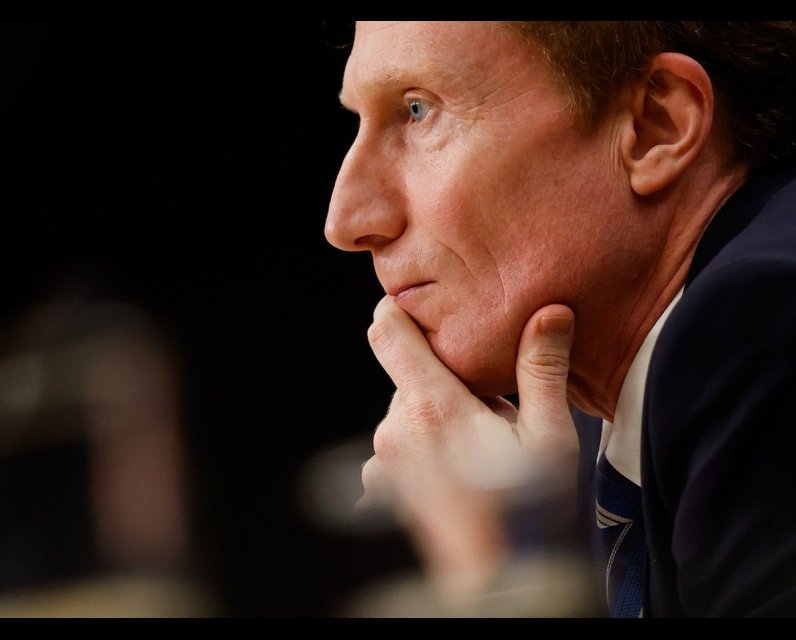
OTTAWA — Heritage Minister Marc Miller says he expects the timeline for when the government will impose a ban on social media for children under 16 to be “rapid” once its bill introducing an online safety regime becomes law.
His comments come amid concerns from at least one industry group that months, if not years, could pass before companies seeking an exemption under the proposed rule could have a path to secure one, removing the incentive to improve safety.
Miller, who this week tabled Bill C-34, otherwise known as “Safe Social Media Act,” said he sees the proposed ban as a “protective layer” that responds both to what science warns has been the impact of younger children spending time online and to the concern of parents, although he acknowledges such a measure is not “100 per cent impermeable.”
That has been the experience in Australia, the first jurisdiction in the world to enact such a ban, which others have since followed.
A report from the country’s eSafety Commissioner, the regulator tasked with implementing the policy, flagged as of March that “a substantial proportion” of Australians under 16 have bee able to bypass the ban and platforms’ age verification systems to keep their accounts or open new ones.
Deciding what age verification methods would be used in Canada would be left to future discussions between the government and companies. The legislation outlines how the methods must be “effective” and collect someone’s personal information for no other reason than to verify their age.
Naming which social media platforms would be subject to age restrictions will also be decided at a future date by cabinet, along with the initial criteria for exemptions, according to the bill.
Miller said that in the meantime, the message to industry is that “they need to come to the table.”
“If they have products that are safe by design, and the younger the age group, the different categories need to apply, then they can perhaps have an exemption to that minimum age restriction.”
He pointed to the example of YouTube Kids, designed to include only videos deemed as appropriate for young children and feature more parental controls.
While Australia’s ban applies to YouTube, YouTube Kids was left off its list, which includes others like Reddit, X, Twitch, TikTok and Instagram.
“They have design features that limit a number of things,” Miller said of YouTube Kids. “Are they sufficient? Are they adequate? That’ll be a question that will inevitably be resolved with an important dialogue with the regulator that will be set up.”
Officials who briefed reporters as well as stakeholders this week outlined that getting a new regulator fully up and running is expected to take 18 months. Department officials also acknowledged that there would likely be a gap from when the government puts the ban into effect, to when the commission would be able to grant exemptions.
Josh Tabish, senior director for Canada at Chamber of Progress, a coalition funded by such tech companies as Google, Apple and OpenAI and Robolx, said in a statement that means teens could be living under a ban without new safety standards being in place.
“They also confirmed there is no way to set temporary standards while the new regulator is being built, giving platforms little reason to invest in safety now if they don’t see a clear path to earning an exemption from the ban.
“ We know age bans aren’t super effective. Teens will find a workaround, get back on the platform, and see little has changed while the new regulator slowly gets up and running,” said Tabish.
His statement also pointed to how the CRTC, the regulator for traditional broadcasting, has taken more than three years to implement the country’s Online Streaming Act.
While Miller acknowledged it would take upwards of 18 months for a new regulator to be fully operational, he said it would be “incorrect” to suggest that nothing would happen until then.
“There will be a phased implementation of the commission, and we expect a set of priorities to be set, obviously about important issues around enforcement and compliance,” he said.
“I assume one of their tasks will be that discussion with industry.”
He nevertheless defended the timelines being placed on the tech industry.
“Between the balance of inconvenience here, I think given what’s been going on in the past years with a number of these platforms, people will forgive us for taking a little more time to make sure that these things are compliant, and if they’re not, then they can’t open up accounts for kids.”
Miller said he expects the “usual suspects” to find their way onto the government’s list, listing off Facebook, Instagram, Snapchat and X.
“There are usual suspects here, obviously, that we would expect if they don’t change their behavior will go on, and they can fully expect to be on that list, barring evidence to the contrary.”
He defended the proposed timeline, saying that acting responsibly online falls to platform operators and characterized how the government wants to act with “caution.”
“I would expect the commission to move as quickly as possible, but it could be that if companies don’t satisfy the requirements, they will have to impose an age restriction until they do prove it, so it could be well over 18 months,” Miller said.
“Companies that are acting in good faith, moving quickly as possible, but it could be up to 18 months until they get exemption.”
Taylor Owen, a digital governance expert and founding director of The Centre for Media, Technology and Democracy at McGill University, who also served on the government’s advisory panel for developing its online safety regime, says he sees the way the government is proposing to apply an age restriction as an “incentive for compliance.”
He said getting companies to follow what is known as an “age-appropriate design code” has proven difficult in other jurisdictions.
“It’s a tool to get compliance in an age-appropriate design code, to incentivize it, so that I think is an interesting twist on age-restrictions.”
He said examples of age-appropriate measures seen in other jurisdictions include disallowing a stranger to be able to contact a minor and the removal of auto-play algorithms that automatically recommends what video or content plays next for a user.
As for the proposed rollout, Owen said seeking perfection carries its own set of risks.
“There will be some platforms that are prepared for it and comply fully in a responsible way, there will be others that push the boundaries of this, and there will be others that opt out entirely,” he said. “I think that’s just the nature of these kinds of policies.”
Suzie Dunn, a law professor at Dalhousie University and expert in technology-facilitated violence, does anticipate there to be a level of public confusion around timelines, but that’s expected anytime a new law comes into force.
“This isn’t the first country to implement an age verification ban, so they’ve been through this process before,” she said of companies.
National Post
Our website is the place for the latest breaking news, exclusive scoops, longreads and provocative commentary. Please bookmark nationalpost.com and sign up for our daily newsletter, Posted, here.

Unpublished Newswire

Comments
Be the first to comment