
Stay informed
Unpublished Opinions



Ottawa tables new law requiring importers to prove no forced labour used in goods
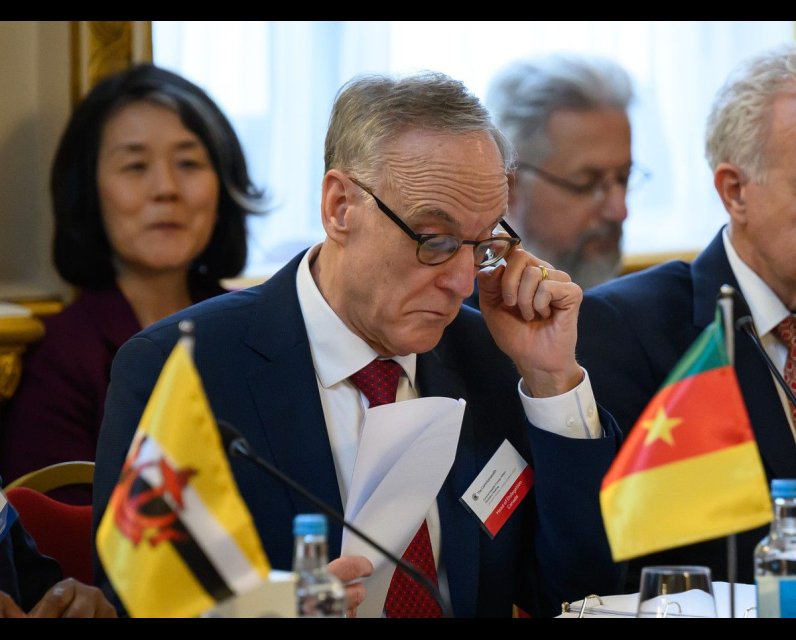
OTTAWA — The federal government will put the burden on importers, instead of customs officials, to prove that the products they bring into Canada are not produced with forced labour, according to new legislation tabled Friday.
Prime Minister Mark Carney had promised that his government would be tabling a new bill to reinforce its current laws to stop the import of goods made with forced labour. His comments came after the Trump administration threatened earlier this month to impose new tariffs on Canadian sectors not covered under a free trade deal, claiming there is a lack of policing in Canada against questionable goods in the supply chain.
The new bill, C-35, proposes that the minister of foreign affairs establish a list of goods for which there are reasonable grounds to suspect they were produced wholly or in part by forced labour. That list will be produced with the input of ministerial colleagues and the Canadian Border Services Agency (CBSA).
Rob Oliphant, parliamentary secretary to the minister, said that CBSA officers will have access to that list and will be able to target the specific goods that are imported into Canada to better follow up with importers as to whether forced labour was involved.
“We now have a targeted approach,” he said.
Oliphant said that if certain imports are on the government’s list, then the importer will have the responsibility to give evidence that these products were created or produced in factories or other work environments with fair labour standards.
“Those steps will be taken, hopefully proactively, by importers before this happens, so they’ll do their due diligence, because they don’t want to be left with (illegal) shipments,” he said.
Oliphant said he would not comment on hypotheticals, but the CBSA has noted that past shipments that were either intercepted or detained for suspicions of forced labour have included solar panels, automotive parts, textile goods and frozen seafood. In 2024, a group of U.S. senators, which included now U.S. Secretary of State Marco Rubio, called on the U.S., Canada and Mexico to take more action to stop trade in slave-made goods, especially by minority Uyghurs in China’s Xinjiang region.
Oliphant said this approach is about Canada competing on an even level playing field.
“We believe that this legislation will — I’m not using the word harmonized, but — be in line with expectations coming from Mexico, coming from the United States, but also with our European partners, and anybody who would want to do business with Canada,” he said.
Oliphant however said the newest tariff threats from the U.S. are not the main reason why Canada is acting to strengthen its current ban on imports made with forced labour.
“Canadians have continued to ask for stronger legislation, and so this is what we’re doing. We believe at the same time, concurrently, this will satisfy any concerns that any other country would have, including the U.S.,” the parliamentary secretary said.
Oliphant said the current system had put the onus on CBSA which he claims did not have the adequate resources to do its job, so the government is adding 1,000 new officers.
The government intends to consult publicly about Bill C-35 over the summer.
National Post calevesque@postmedia.com
Our website is the place for the latest breaking news, exclusive scoops, longreads and provocative commentary. Please bookmark nationalpost.com and sign up for our newsletters here.

Comments
Be the first to comment