
Stay informed
Unpublished Opinions



Letting B.C. charge tolls on new Alberta pipeline is trade barriers 'on steroids,' say critics
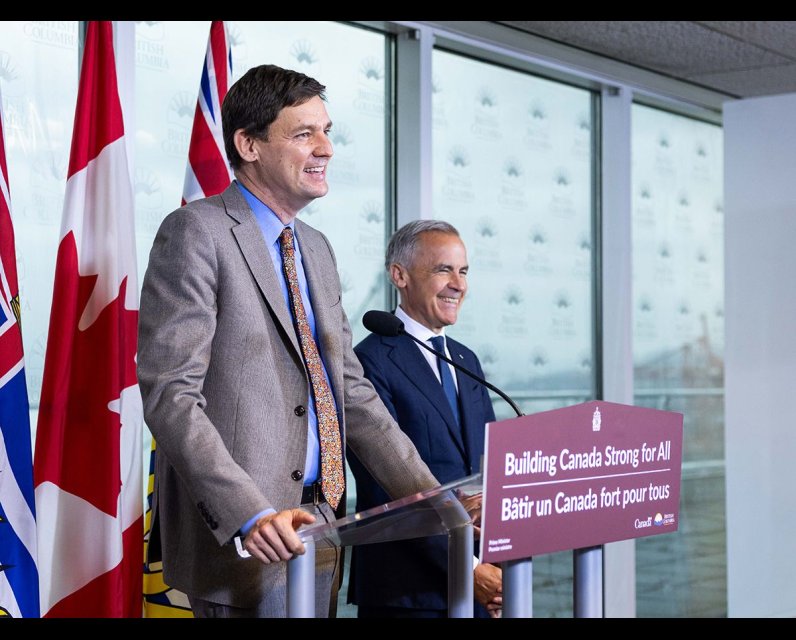
The federal government’s decision to allow British Columbia to collect royalties from a proposed new pipeline to the West Coast sets a dangerous precedent for internal Canadian trade by allowing one province to charge a toll for the transportation of goods from another province, analysts warn.
Allowing B.C. to charge a pipeline operator for passing through its province, they say, could establish a new framework where provinces could also start charging each other for other types of commercial traffic, perhaps including even transport trucks or rail cars that travel through another province on their way to other markets.
“It’s such a bad precedent,” said Jack Mintz, an economist and the President’s Fellow of the School of Public Policy at the University of Calgary. “It has no logic to it, outside of being extortion.”
Ottawa last week announced the Canada-British Columbia Cooperative Prosperity Agreement that states that the province will “share meaningfully” in the economic benefits if a newly proposed pipeline from Alberta to the B.C. coast is built. In addition to the province receiving federal support for a number of infrastructure projects and compensation for assessed environmental risks associated with the pipeline, it also stands to get an undetermined annual royalty payment from the pipeline.
In exchange, British Columbia Premier David Eby said his NDP government would not oppose the pipeline. Under his predecessor, John Horgan, the NDP government had tried to fight the Trans Mountain Expansion pipeline almost a decade ago. But interprovincial pipelines are a federal responsibility, and Horgan was ultimately unable to override the federal government’s constitutional authority, even though B.C. did win financial compensation from the Trans Mountain Expansion in 2017 before it was purchased by the federal government.
The difference between that deal nine years ago and the agreement announced earlier this month is that the previous deal called for B.C. to receive “an environmental and social licence fee” from what was then a private company for a period of 20 years; it did not offer royalty payments for Alberta energy simply travelling through B.C., said Ian Lee, a professor at Carleton University in Ottawa who specializes in trade.
Lee and other trade watchers said this new deal could become a greater barrier for interprovincial commerce than the existing provincial barriers that are usually designed to shelter local or provincial business from competition. In this case, Lee added, the goods are effectively being taxed for just travelling through B.C., and not even being sold there.
“This is interprovincial trade barriers on steroids.”
Critics say the fact that the new deal will compensate B.C. is a big problem because it may tempt other provinces to try to profit from the transportation of goods across their jurisdictions. That temptation will grow in the coming years, Lee said, as provincial finances worsen.
The Canada-B.C. deal also sets a precedent for provinces and even smaller jurisdictions to engage in more parochial behaviour at a time when the country is under threat from the United States and separatists in Alberta and Quebec, said Heather Exner-Pirot, director of natural resources, energy and the environment at the Macdonald-Laurier Institute think tank.
Other provinces are going to see this Canada-B.C. deal and insist on their own “pound of flesh” any time the federal government wants to advance a project that is in the national interest, or perhaps for commercial traffic, she said.
“We are on a slippery slope,” she said. “This B.C. deal slipped us a bit more.”
The deal also comes at a time when the federal government has called to reduce or even eliminate interprovincial trade barriers, with mixed co-operation from the provinces . Economists say those barriers, which raise prices on a wide range of goods and services and make it more difficult for businesses to grow, cost the Canadian economy dearly, perhaps as much as five per cent of its annual gross domestic product.
Mintz called the proposed payments to B.C. a tariff and “a step backward” for the Canadian economy.
Even though Ottawa has jurisdictional authority over interprovincial pipelines, Prime Minister Mark Carney had previously emphasized that he would not impose a pipeline project on B.C. or any other province .
Carney had made his announcement with Eby last Thursday hours before he flew to Calgary to announce a plan with Alberta Premier Danielle Smith to build a new 1,200-kilometre crude oil pipeline from Alberta to the Pacific Coast with support from the federal government. The proposed route would largely follow the existing path established for the Trans Mountain pipeline, and would end at the Roberts Bank terminal in Delta, B.C.
The pipeline proposal, which will still require federal approval, calls for Ottawa, Alberta and a consortium of Crown corporations to own the project, with a minority stake held by Pembina Pipelines, an Alberta energy company, and another stake reserved for Aboriginal participants. The project is expected to cost between $35 and $44 billion.
The southern route was not Alberta’s first choice, as the province had preferred an outlet on the northwest coast closer to Asian export markets, which would require adjusting a 2019 moratorium on oil tankers on the northwest coast, something Carney had said he would consider doing.
The B.C. government was against the idea of a new pipeline, but Carney was evidently able to use federal incentives to negotiate a compromise.
In exchange for not opposing the deal, B.C. gets a promise to keep the tanker ban and billions of dollars in federal investments for a range of projects, including a new eight-lane tunnel, an expanded electrical transmission line, an expanded mine, LNG projects, and a port expansion. The deal also includes federal money for whale protection and child care.
While many technical and financial details are still to be ironed out, B.C. may also be able to renegotiate the existing revenue-sharing deal from 2017 so that it also extracts royalty payments from Trans Mountain, which was purchased by the federal government in 2018.
The federal government is expected to provide quick approval of the new pipeline proposal and help to reduce the environmental impact.
Gerard Kennedy, a constitutional specialist who teaches at the University of Alberta’s faculty of law, said the federal government already has authority over interprovincial pipelines and trade but that doesn’t mean that it’s out of bounds for Ottawa to negotiate a deal where a province is compensated for a pipeline running across its land.
It’s possible that other provinces could follow suit and start demanding compensation for other goods travelling through their jurisdictions, Kennedy said, but that a pipeline and a truck filled with agricultural goods or auto parts, for example, do not leave the same footprint.
“It’s a political issue, not a legal issue,” he said.
Brian Lee Crowley, Macdonald-Laurier Institute managing director, said landing a pipeline deal is positive overall, but that it was a mistake for Ottawa to negotiate a royalty for B.C.
“This is a loss for Canadian federalism,” he said. “You don’t need B.C.’s permission — it’s federal jurisdiction.”
Crowley said he doubts if British Columbians will be pleased if this new framework leads to lumber or other products from their province being tariffed as they’re transported east through Alberta and onto other Canadian markets.
National Post
Our website is the place for the latest breaking news, exclusive scoops, longreads and provocative commentary. Please bookmark nationalpost.com and sign up for our daily newsletter, Posted, here.

Unpublished Newswire


Comments
Be the first to comment