
Stay informed


Canada-U.S. trade war: A timeline of Trump's tariffs and Canada's response
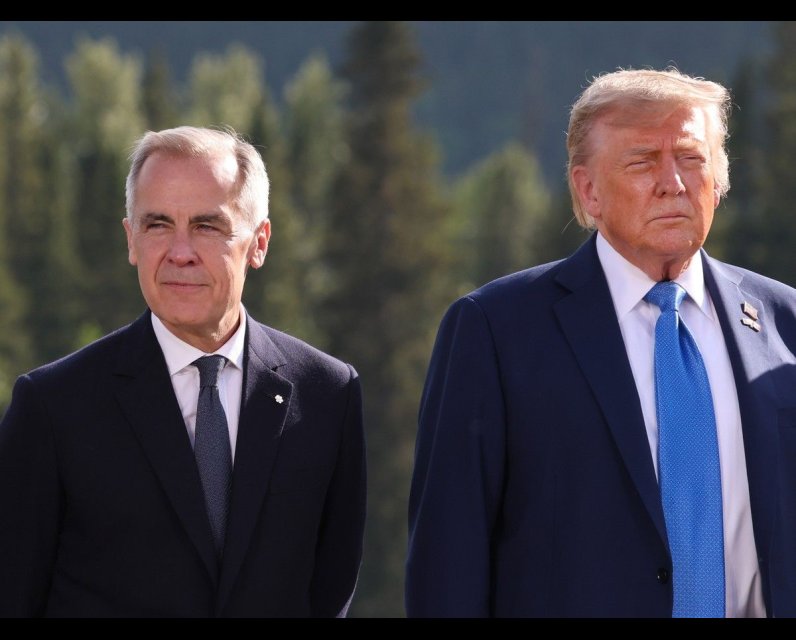
On July 20, U.S. President Donald Trump announced plans to impose a new 50 per cent tariff on Canadian goods , including dairy, honey, essential oils, hockey equipment and several alcoholic beverages.
Currently, the new tariffs are set to take effect on Aug. 19 and, unlike previous tariffs, would include some goods previously exempted under the Canada-U.S.-Mexico Agreement (CUSMA).
On Thursday, Canada, along with 59 other countries, was hit with additional new tariffs . These were imposed following a forced labour investigation launched in March, U.S. Trade Representative Jamieson Greer announced.
The announcement marked the latest escalation in more than a year and a half of shifting trade policies, as Trump has repeatedly imposed, suspended and revised tariffs. Canada has responded with retaliations and negotiations, and Prime Minister Mark Carney said Thursday that Canada is now “in a stronger position” than when the trade war started 18 months ago.
Below is a timeline of the key moments in the Canada-U.S. trade war.
January 2025 — The “American First Trade Policy”- Jan. 20: Trump begins his second term and signs an executive order to enact an “American First Trade Policy,” directing his administration’s departments and agencies to address “unfair and unbalanced trade” and investigate “large and persistent” trade deficits, with a deadline to recommend “appropriate” measures, such as tariffs, by April 1, 2025. In Trump’s inaugural address, he made clear his intention to “tariff and tax foreign countries to enrich our citizens.”
- Feb. 1: An executive order imposes 25 per cent tariffs on Canadian goods entering the U.S., known as the International Emergency Economic Powers Act (IEEPA). The order claimed the tariffs were being imposed to stop fentanyl coming across the border into the U.S. Canada retaliates with two rounds of counter tariffs, one of which is imposed immediately and targets a range of U.S. exports, including alcohol. In a press conference at the time, former Prime Minister Justin Trudeau chose to speak directly to Americans, saying Trump’s tariffs “will harm Canadians. But beyond that, it will have real consequences for you, the American people.”
- Feb. 3: Both Canada and the U.S. temporarily pause the implementation of tariffs for a month, after Canada agreed to deploy its $1.3 billion plan to secure the northern border and address fentanyl trafficking.
- Feb. 10: Trump announces a plan for 25 per cent tariffs on steel and aluminum.
- Feb. 13: The U.S. Reciprocal Trade and Tariffs Memorandum announces plans for reciprocal tariffs on all countries that impose tariffs and taxes on imports of U.S. goods.
- March 4: Following the month-long pause, U.S. tariffs come into effect in Canada, along with Canada’s 25 per cent retaliatory tariffs. In a speech at the time, Trudeau said Trump’s decision to launch a trade war was a “really dumb thing to do” and vowed Canada would retaliate as long as necessary.
- March 6: Trump writes in a Truth Social post that he believes Trudeau is using the tariffs “which he has largely caused” in order to run again for Prime Minister, despite Trudeau having already announced his resignation. Trump added: “So fun to watch!”
- March 7: A U.S. executive order provides an exemption on U.S. tariffs for CUSMA-compliant goods, and Canada pauses its second wave of retaliatory tariffs in response.
- March 12: Tariffs on steel and aluminum come into effect and Canada retaliates by imposing 25 per cent tariffs on select U.S. products imported into Canada.
- March 14: Mark Carney becomes Prime Minister. He says his new government will protect Canadian workers from President Trump’s tariffs and that he plans to grow Canada’s economy by “putting more money in Canadians’ pockets”.
- April 2: Trump dubs April 2 “Liberation Day” and imposes 10 per cent tariffs on all imports to the U.S., with higher rates imposed on some countries. In a speech from the White House’s Rose Garden, he claimed that the U.S. has been “looted, pillaged, raped and plundered by nations near and far.” However, the new measures did not affect goods from Canada or Mexico.
- April 3: Trump’s 25 per cent auto tariffs take effect, and Canada matches this with retaliatory tariffs for non-CUSMA-compliant vehicles made in the U.S.
- May 28: The U.S. Court of International Trade strikes down Trump’s IEEPA tariffs on imports from Canada, Mexico, and China, ruling they were beyond the authority granted by IEEPA. On Truth Social, Trump calls the decision “so wrong, and so political!” adding, “Hopefully, the Supreme Court will reverse this horrible, country threatening decision, QUICKLY and DECISIVELY.” A U.S. federal appeals court issues an emergency stay on the tariffs, leaving them imposed.
- June 4: Increased tariffs of 50 per cent on aluminum and steel come into effect.
- June 29: Canada announces plans to cancel the Digital Services Tax, a three per cent tax on revenue generated by tech companies within Canada, in order to resume trade negotiations with the U.S. Carney said in a statement at the time that rescinding the tax to better Canada’s relationship with the U.S. was in “the best interests of Canadian workers and businesses.”
- July 31: Trump signed an executive order increasing tariffs on Canada to 35 per cent for CUSMA noncompliant goods. The same day, the U.S. president wrote on Truth Social that “Tariffs are making America GREAT & RICH again,” claiming that his measures had transformed America from a “dead” country to the “‘hottest’ in the world.”
- Aug. 1: The 35 per cent tariffs on Canadian goods take effect, as well as 50 per cent tariffs on copper imports.
- Aug. 29: The “De Minimis” treatment for low-value imports coming into the U.S., including from Canada, is suspended, meaning such shipments lose their duty-free status.
- Sept. 1: Canada drops some retaliatory tariffs imposed in April, but keeps them in place for U.S. tariffs on steel, aluminum, and automobiles.
- Oct. 7: Carney meets Trump at the White House and the President praises the PM, saying Carney will leave the round of trade talks “very happy.”
- Oct. 24: But Trump later ends talks with Canada because of an Ontario government TV advert featuring former U.S. president Ronald Reagan. Trump wrote that the ad was “fraudulent” and “fake” on Truth Social, while the Ronald Reagan Presidential Foundation and Institute said that it “misrepresents” the late president’s radio address, in which he discussed tariffs. Ontario Premier Doug Ford said he will stop running the advert in response, but only after it aired during the first two World Series games between the Toronto Blue Jays and L.A. Dodgers.
- Jan. 20: Carney delivered a speech at the World Economic Forum in Davos, Switzerland, which drew rapturous applause for his rallying cry for Western nations to stand up to great powers or “be on the menu.” The same day, Trump shared an AI-generated image to Truth Social with the U.S. flag imposed over Canada, Venezuela and Greenland.
- Jan. 21: Trump strikes back at Carney’s speech when he said “Canada lives because of the United States” in his own address, adding: “Remember that, Mark, the next time you make your statements.”
- Feb. 20: The Supreme Court rules against Trump’s IEEPA tariffs on Canada, Mexico and China, prompting the White House to end certain tariff actions. Tariffs on steel, aluminum, autos, copper, lumber, furniture, heavy vehicles and semiconductors remain in effect. Trump lashed out at the court following the decision, telling reporters at the White House that he was “absolutely ashamed” of the six justices who formed the majority in the decision, calling them “very unpatriotic and disloyal.”
- The U.S. then imposes a temporary 10 per cent tariff on global imports for 150 days, though this does not apply to CUSMA-compliant goods.
- June 2: The U.S. announces findings of investigations into forced labour and says that 60 countries, including Canada, have failed to enforce bans on imports of goods produced with forced labour, creating unfair competition. The U.S. Trade Representative (USTR) proposes tariffs of 10 to 12.5 per cent for these countries.
- June 11: In response to the new tariff threat, Ottawa tables a bill to prohibit the importation of goods produced by forced labour.
- July 1: July 1 marked the final date for Canada, the U.S. and Mexico to sign an agreement to extend the CUSMA trade pact. The U.S. declined to agree to a 16-year extension of the deal in its “current form.”
- July 19: Trump tells reporters that he is considering hitting Canada with new tariffs in response to smoke from wildfires being blown across the border. Both he and Carney attended the FIFA World Cup final in New Jersey, where the President claimed he told Carney, “You’ve got to stop these fires from coming in and poisoning our air.” Doug Ford later called the threats “rubbish” and said: “Maybe President Trump would offer his closest allies and friends some support rather than sit there and threaten tariffs.”
- July 20: Trump announces a new 50 per cent tariff on a range of Canadian goods, including paper products, cement, wood products, dairy, honey, essential oils, hockey equipment and several alcoholic beverages. The new tariffs have no exemptions for CUSMA-compliant goods, and came in response to what the U.S. administration views as discriminatory trade practices by Canada, including Canadian tariffs on American autos, U.S. alcohol bans in some provinces and dairy import limits.
- July 23: The U.S. hits 60 countries, including Canada, with new tariffs between 10 and 12.5 per cent folloing the forced labour investigation. At a first ministers meeting in Charlottetown, Carney said Canada would not respond to the tariff threats before they take effect. His calls for unity were supported by the premiers, and the PM also said that it’s “clear that we are in a stronger position than we were when this trade war started 18 months ago.”
Our website is the place for the latest breaking news, exclusive scoops, longreads and provocative commentary. Please bookmark nationalpost.com and sign up for our newsletters here.

Unpublished Newswire
Comments
Be the first to comment