
Stay informed


The Whisky War: The (booze) battle over Hans Island still holds lessons
Battered by fresh U.S. threats of tariffs and annexation, Canada is turning toward Europe, with speculation among some that we might one day even join the European Union.
After all, Canada does share a land border with an EU country.
This is the story of Hans Island, the “Whisky War” and how Canada and Denmark resolved a major disagreement over territory in the Arctic without firing a shot. Or at least not the kind that comes from a firearm.
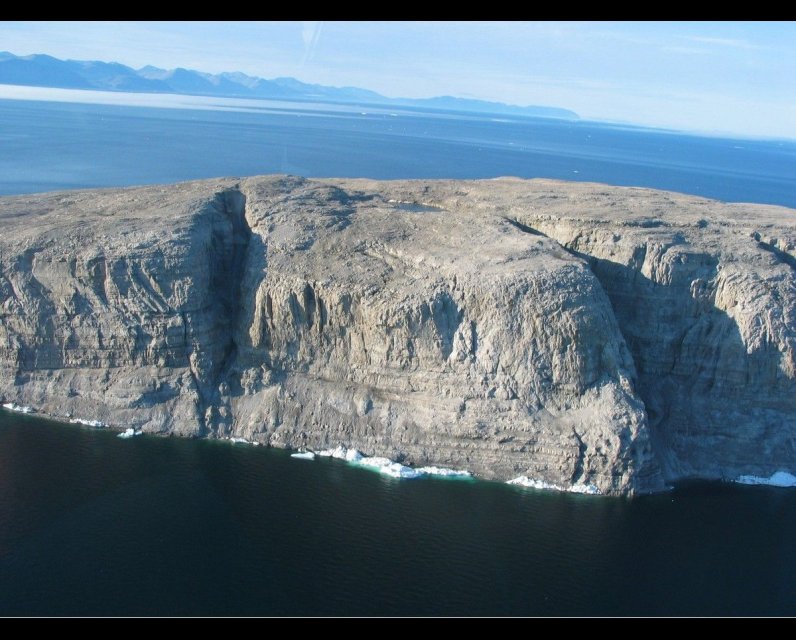
The unassuming little land mass in question is called “Tartupaluk” in Greenlandic. It sits in the Kennedy Channel of the Nares Strait, between Denmark’s semi-autonomous Greenland and Ellesmere Island, Nunavut, about 18 kilometres from each.
“Tartupaluk is a barren and uninhabited, rock island of approximately 1.2 square kilometres … It’s an icy rock,” Danish Ambassador to Canada Nikolaj Harris told National Post. The island has limited raw material or strategic value, he noted.
Keith Dewing, a research scientist for the Geological Survey of Canada who has visited Hans Island, describes it this way: “It’s all limestone, fairly flat-lying, dipping slightly.”
No one’s idea of a vacation spot.
Be that as it may, for nearly 50 years, between 1973 and 2022, Denmark and Canada skirmished diplomatically over ownership of the tiny island.
Britain transferred its Arctic territories in 1880 to Canada. Hans Island was never directly mentioned, though the Inuit in Northern Canada used the island for traditional hunting.
But so did Greenlandic Inuit.
“The island was historically used by Greenland Inuit as a landmark, and also as a stopping point during travel and hunting journeys, when crossing from Greenland to Ellesmere Island,” said Harris.
In fact, Hans Island was named posthumously after a Greenlandic Inuk, Hans Hendrik, who assisted Arctic expeditions in the mid-1800s.
In 1933, The Permanent Court of International Justice awarded Hans Island to Denmark, though, according to The Canadian Encyclopedia, Canada placed a temporary scientific base on Hans Island during the Second World War. Then the court disbanded in 1946 (so much for permanence), leaving the isolated slab of rock with no clear owner.
In 1973, Canada and Denmark decided to define their borders through the Nares Strait, agreeing to decide Hans Island’s ownership later.
But how would they do so?
There is disagreement over who asserted the first claim. Some sources (including Danish Ambassador Harris and the United Nations ) say Canada took the initiative. Other sources, such as the Canadian Encyclopedia , The Guardian and Business Insider , say Denmark made the first move to declare ownership of the island.
Here’s Harris’s version: “(W)hen a Canadian delegation visited the island, they placed a Canadian flag and a bottle of Canadian Club whisky, and when the Danish Navy came by, they removed the whisky and the Canadian flag and they placed instead a Danish flag and a bottle of schnapps.
“(T)hese actions were intended to reinforce the parties’ respective sovereignty claims, but they didn’t really contribute to solving the legal dispute.”
The booze battle flowed for years. The only shots fired in the dispute were shots of alcohol.
Whisky, Canada’s weapon of choice in the fracas, was deliberately chosen. “It (whisky) really does have a lot more cultural significance and symbolic meaning than just, oh, we’re just giving someone a means to get drunk. It’s, we’re giving someone something that recognizes sociability and recognizes our shared kind of community,” said Dr. Dan Malleck, a professor in Health Sciences at Brock University.
Schnapps is equally significant for the Danes.
“When we have schnapps. It’s normally at festive meals such as our very traditional Christmas lunches … it’s a thing for the Danes during December,” said Harris.
In 2001, Dewing and another researcher with the Geological Survey of Canada, Chris Harrison, surveyed and visited Hans Island after they had done some mapping on Ellesmere Island.
“The thing that was weird to us is that if you’re on Ellesmere where we were mapping, the rocks are all tilted, like they’ve been heavily faulted and it looks like the Rocky Mountains, but when you go to Hans Island, [it] is flat lying,” said Dewing. Dewing didn’t see any bottles or flags during the 15 minutes or so that he was on the disputed island.
The “war” ratcheted up some years later. In a National Post article in 2022, Rob Huebert, an associate professor of political science at the University of Calgary, wrote : “In 2002, the exchange of booze and flags that had characterized the dispute was completely upended when the Danes used an ice-capable frigate, HDMS Vaedderen, to land troops on the island. Despite Canadian pleas not to repeat these escalatory actions, they did it again in 2003 with her sister ship, the Triton.”
As a result, in 2005, then-Canadian defence minister Bill Graham arrived on Hans Island to officially claim it as Canadian territory after the Danish incursions. This was actually difficult to do, Huebert writes, since Canada had no real “ice-capable vessels” at the time.
Eventually, the two NATO allies issued a joint statement that acknowledged their differences and pledged a peaceful resolution.
Still, diplomacy can proceed — pardon the pun — at a glacial pace.
In 2018, “a joint Canadian Danish Greenland task force was formed,” Harris noted. The Whisky War finally concluded on June 14, 2022, with Hans Island divided 60-40 between Denmark, which got the larger portion, and Canada.
Consequently, Canada now has a land border with Europe.
“[I]t was signed at the headquarters of the Royal Canadian Geographical Society in Ottawa, by the two foreign ministers, from Canada and Denmark and the premier of Greenland … And during the ceremony … they also exchanged a bottle of whisky and a bottle of schnapps,” said Harris.
As minor as the decades-long dispute seems, its peaceful conclusion showed the effectiveness of diplomacy in border disputes.
“The efforts deployed to reach this outcome demonstrate their leadership in the region and commitment to resolve disputes peacefully and in accordance with international law,” said Global Affairs Canada spokesperson Charlotte MacLeod.
As well, “We all took it as a clear reference to Russia’s sort of full-scale and illegal invasion of Ukraine earlier the same year,” said Harris.
Both Canada and Denmark now fight together against threats in the Arctic and elsewhere.
For example, “Canada and Denmark both are present with troops, in the multinational brigade in Latvia to defend NATO’s eastern flank … Also, we signed (a) defence agreement this year and we are in the process now of implementation,” said Harris.
The relationship continues to strengthen – at a time when both countries have been directly targeted by U.S. annexation threats: Canada over the 51st state and Denmark over the future of Greenland.
“The land boundary on Tartupaluk reflects the strong historic and cultural relations between communities in Canada and Greenland. It paves the way for stronger cooperation and the establishment of an even closer partnership between them, including the establishment of a Canadian consulate in Greenland in 2026,” wrote MacLeod.
“Our relations never have been better and closer,” said Ambassador Harris.
Amid the diplomatic camaraderie, Hans Island itself still appears to be of little actual use to either country.
“Tartupaluk is not permanently occupied… and it has no settlement or permanent installation, border post or other sort of infrastructure,” Harris summarized.
Our website is the place for the latest breaking news, exclusive scoops, longreads and provocative commentary. Please bookmark nationalpost.com and sign up for our newsletters here.

Unpublished Newswire


Comments
Be the first to comment