
Stay informed


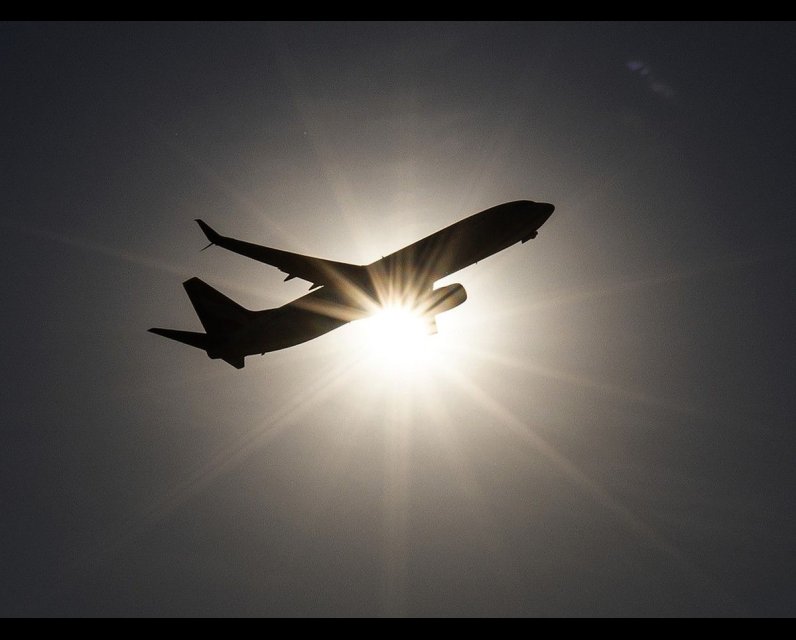
How 9/11 changed Canadian airport security
A travelling parent with kids cannot take a 460-millilitre jar of peanut butter through airport security. It’s not an allergen issue, but rather it is too large: a spreadable food, treated like a liquid. But any number of containers of it less than 100 ml is OK.
At one airport, a blazer comes off; at another, it stays on. The same thing with shoes and laptops, all according to the rules that can look arbitrary or capricious to onlookers.
For Margaret Bloodworth, the former deputy minister of transport who helped manage Canada’s response on Sept. 11, 2001, that apparent regulatory mismatch is not entirely a design flaw.
“In any human system, there’s going to be some inconsistencies,” Bloodworth said. And in airport security, she argues, the reality is that the machinery itself keeps changing: newer equipment can see things older equipment cannot, while smaller airports may not have the same technology as Toronto or Vancouver.
Still, many travellers’ questions remain: Why must so much of flying now involve a hodgepodge ritual of belts, bins, scans, re-scans and Ziploc-ing bite-sized toothpaste tubes? It goes to the heart of how Canada built a modern security apparatus in a crisis, what trade-offs it accepted, and whether a system designed during an emergency has adequately distinguished genuine protection from permanent habit.
Though the inconsistencies are real, so is the risk that a perfectly standardized system becomes perfectly learnable.
“If you are predictable, then it’s dangerous,” said Jacques Duchesneau, the Canadian Air Transport Security Authority’s founding president and CEO, who led CATSA from 2002 to 2008. “If you are predictable, you are unsafe.”
Security can look different from one airport or lane to another, because officials do not want a would-be attacker to know precisely what to expect, he told the Post.
“We’re not searching people,” he said. “We’re saving lives.”
The post-9/11 system was born in a fog of fear, urgency and incomplete (at the time) information. Bloodworth, who later became national security adviser to then prime minister Stephen Harper, said that officials had to make urgent calls, with little certainty about the scale of the threat.
“We really did know very little to begin with,” she said. “And yet had to make decisions, first of all to land planes, then what we do when we get them on the ground, and then when do we let them up, and on what grounds do we let them fly again?”
David Collenette, then the federal transport minister, was one of the few people with statutory authority under the Aeronautics Act to issue the orders that grounded and redirected aviation traffic over Canada. He estimates that roughly 500 flights and 85,000 people were involved as aircraft were told not to proceed into the United States and, in many cases, to return across the Atlantic.
The attacks did not reveal merely a gap in airport screening. They exposed a seismic change in the threat model. Earlier aviation-security regimes had been built to confront hijackers seeking leverage, or bombers placing luggage on an aircraft while remaining behind. Air India and Lockerbie had already taught governments the necessity of matching bags to passengers and removing unaccompanied baggage.
Then came 9/11 and attackers prepared to die with the aircraft and turn it into a weapon.
“That required another rethink,” Bloodworth said. “You had to think, ‘Well, okay, we’ve got to watch people that want to get on a plane. They not only want to bring the plane down; they’re prepared to go down with us.’”
The changes were swift. Canada created CATSA in 2002 as a publicly funded national authority to screen passengers, baggage and non-passengers entering restricted airport areas. Before that, Bloodworth said, airlines often hired local screening companies themselves, producing uneven training and standards.
“It might be the commissionaires of the office building down the street,” she said of the pre-9/11 arrangement. CATSA and the U.S. Transportation Security Administration were meant to replace that patchwork with common training, specialized equipment and centralized accountability.
New decisions were required, and at breaking speed. Collenette said a regulation that would normally take “about two years of consultation” was reviewed within two weeks. He recalls a scramble to obtain baggage-screening equipment that had to be manufactured quickly. Canada also hardened cockpit doors, an obvious vulnerability in retrospect, but one that had encountered resistance before the attacks.
A year prior, Collenette said, he had raised concerns about open cockpit doors. At the time, “it was the world of goodwill.” Children might be invited forward to see the cockpit; pilots might allow visitors in. “I had an uneasy feeling,” he said.
In the weeks and months that followed, governments expanded airport screening, and new province-wide offices with expanded mandates. New money, powers and institutions flowed to the RCMP, CSIS, the Canada Border Services Agency and other parts of the federal apparatus. Anne McLellan, Canada’s first minister of public safety and emergency preparedness from 2003 to 2006, said the post-9/11 challenge was to build an architecture that had been missing pieces — and, above all, to get agencies to cooperate in exchanges of crucial data.
“Agencies were not sharing relevant information,” McLellan said. The priority was building the capacity and culture for intelligence and law-enforcement bodies to share it “in real time” and get it “to the front lines where people could use it.”
By McLellan’s account, agencies did not always mesh smoothly. She described the relationship between the RCMP and the newly created CBSA as “not a frictionless relationship.” At one point, she said, CBSA officers sought to be armed while the RCMP opposed it, creating a substantial dispute.
More fundamentally, McLellan recalled resisting pressure to make a new screening system serve a broader policing purpose. Police wanted access to screening information to identify people wanted for any offence. Her response was sharp.
“We’re protecting planes,” she said. “We’re not trying to find pickpockets here.”
McLellan says ministers and legislators must continually balance safety gains against the risk of eroding rights and privacy. “That is a constant tension,” she said. “It has to be managed.”
Duchesneau’s perspective is, the system must react to real threats, even when the reaction later looks to some as over the top. One example: A 2006 transatlantic aircraft plot was thwarted, as terrorists tried to detonate liquid explosives disguised as soft drinks on multiple flights travelling from the United Kingdom to the United States and Canada.
With it, aviation security around the world changed almost overnight, he said. He was called at 2 a.m.; by 5 a.m. new liquid-and-gel directives were in place across Canada. Thus, no inflight peanut butter jars for the kids.
“We always need to wait for something bad to happen to put measures in place,” Duchesneau lamented. “We were, let’s say, fighting the last war instead of being proactive.”
The passenger who sees a rule as irrational may be looking at the fossil of a plot, an attack, an intelligence warning or a technological limitation. Security is “reactive by nature,” Duchesneau said, and “when you react, you’re always one step behind.”
Yet the official case for the system is not solely based on fear or history. CATSA says its mandate is to detect, prevent and respond to threats while keeping people and goods moving through the air-transportation network. In its statement to the Post, CATSA said 96 per cent of passengers at Canada’s busiest airports waited less than 15 minutes for screening in 2025-26; 91 per cent reported a positive screening experience and 89 per cent expressed confidence in security screening.
Transport Canada says aviation security is now a multi-layered system involving CATSA, the RCMP, CBSA, CSIS, local authorities and international partners. It points to measures including non-passenger screening, U.S. preclearance, the Passenger Protect Program, Verified Traveller lanes, cargo targeting and computed-tomography X-ray technology for carry-on baggage.
And still, not everything’s in sync. Bloodworth notes that the first explosive-detection equipment was expected to be overtaken technologically within five years. A quarter-century later, airports are using “different generations of machines,” often within the same country.
All of the hoops, the regulations, the minutia, are “sort of like the price of admission,” Collenette said. “If you want to fly, you have to be prepared to accept the security regime.”
Our website is the place for the latest breaking news, exclusive scoops, longreads and provocative commentary. Please bookmark nationalpost.com and sign up for our daily newsletter, Posted, here.

Unpublished Newswire

Comments
Be the first to comment