
Stay informed
2025 was the year of the tariff. The U.S. Supreme Court will decide if 2026 is the year some tariffs die
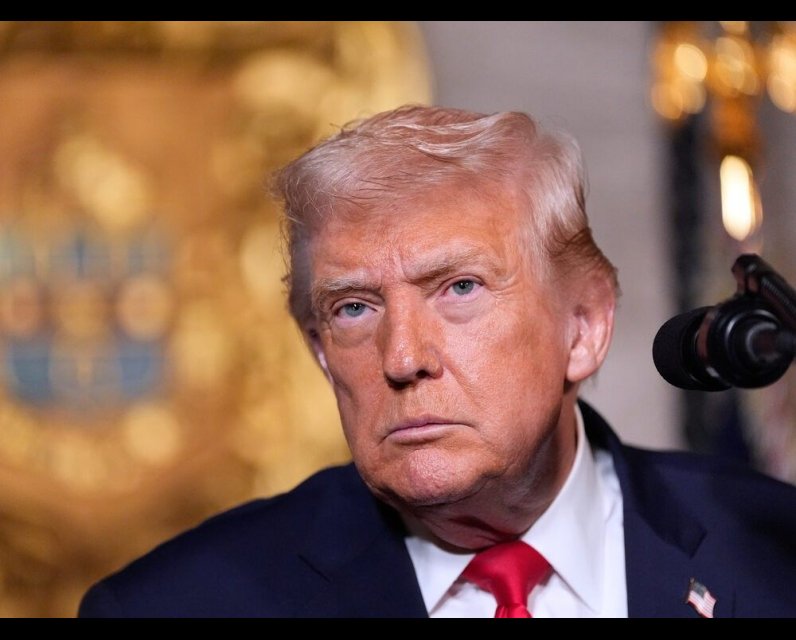
WASHINGTON, D.C. — ‘Tis the season for renaming – everything from a cultural hub dedicated to a beloved slain president to new destroyers to 2025 itself. No, President Donald Trump hasn’t labeled the year with his name, but his U.S. Trade Representative, in a new op-ed, just dubbed it the “year of the tariff.”
“The year 2025 will be remembered as the year of the tariff, regardless of one’s economic ideology,” Jamieson Greer wrote. “International trade is neither good nor bad — it just is. The real question is whether trade patterns serve the national interest. For President Donald Trump and his administration, that means a trade policy that accelerates re-industrialisation.”
This year, Trump declared national emergencies related to fentanyl trafficking and the trade deficit as justification for his tariffs under the International Emergency Economic Powers Act (IEEPA), and litigants — and businesses and consumers around the globe — are awaiting a Supreme Court ruling over whether these tariffs are constitutional.
The high court fast-tracked litigation to hear oral arguments this autumn, and a verdict is now expected early next year. So will 2026 be the year the IEEPA tariffs die, and if so, what will it mean for Canada and Trump’s trade war?
Reading the signalsWhile the administration has said it expects the court to rule in the president’s favour, most trade experts do not.
Clark Packard, a research fellow in the Cato Institute’s Herbert A. Stiefel Center for Trade Policy Studies, believes there are indications the Supreme Court will rule against the president.
“I think there’s a skepticism on separation of powers grounds — that the president shouldn’t have this much (power),” Packard said, noting how the justices have referred to a tariff as a tax.
“If it’s a tax, then that power resides with Congress to set those rates.”
Packard noted that the betting markets see the decision going this way, but he acknowledged the court might rule in favour of Trump.
Andrew Hale, a senior policy fellow at Heritage Foundation in Washington, D.C., doesn’t see any chance of a win for the White House.
“It’s a foregone conclusion,” he said. “They’re going to vote down IEEPA.”
Hale noted the economy has begun to feel the effects of the tariffs and that it will only get worse. Republicans, no matter how loyal they are to Trump, are getting burned by tariffs, he said, noting how he’s even heard from a Heritage Foundation donor and Republican fundraiser about having to lay off people because of the costs of the tariffs.
When asked to consider the court ruling for the president, Hale said he couldn’t even try.
“I can’t even envision that,” he said. “It’s so fundamentally illegal, and I think that the way the justices of the Supreme Court were questioning the lawyers for the administration, (suggests opposition to it).”
Packard, on the other hand, could, and he suggested that it would be bad news for America’s trading partners, particularly Canada and Mexico.
Winning and losing“If the administration wins this case, my general sense is that these will serve as a baseline for tariffs,” Packard said, suggesting that today’s rates would grow.
With the renegotiation of the Canada-U.S.-Mexico Agreement (CUSMA) getting underway next summer, Packard also noted that continued IEEPA tariffs would be bad news for Canadian and Mexican negotiators.
“It sort of poisons the well in terms of those negotiations,” he said, because “the president could pivot pretty quickly to announce more national security tariffs.”
“If the IEEPA tariffs remain in place, I think it makes those negotiations way more difficult.”
Trump and Greer have both publicly suggested that the U.S. could undermine or end the CUSMA, which has left stakeholders in all three countries on edge.
But CUSMA was deemed the “gold standard” of trade deals under the first Trump administration, Hale pointed out.
“He’ll make the threat, but … (CUSMA is) going to get passed in some form,” Hale said, noting how Canada is already ramping up Canadian military spending in response to U.S. demands.
Those demands, however, are likely to continue.
“That’s going to be a recurring theme throughout this process. They’re going to weaponize it in other ways,” he warned, pointing to likely requests for more defence expenditures and pipelines.
But even a loss for the administration wouldn’t necessarily mean relief for businesses or consumers hit by the tariffs.
Beyond IEEPAKevin Hassett, director of the National Economic Council, has said that a verdict against the president, which would make the administration liable for repaying roughly $100 billion, is unlikely to lead to widespread refunds.
Hale said he thinks the litigants in this case — educational toy importer Learning Resources, Inc. and importer V.O.S. Selections, Inc. — will get their tariff money back. But he thinks the administration will refuse others, leading to more litigation.
“It’ll be up for the others to make claims,” he said, pointing to Costco’s recently filed claim.
Whatever the Supreme Court decides, the White House has made it abundantly clear it will pull other levers at its disposal to impose tariffs.
Packard points to Section 122 of the Trade Act of 1974, which the president can use to address balance‑of‑payments deficits, imposing global tariffs of up to 15 percent for 150 days. This can be extended by Congress, but Packard said the White House may opt to let it lapse and then reimpose it, letting it go on indefinitely.
Section 301 of the Trade Act of 1974 could be another arrow Trump pulls from his quiver. “It allows the United States to pick an individual trading partner and then document what it believes are unfair practices that discriminate against American commerce, and then the United States can respond.”
The legislation allows the president to impose tariffs without a statutory maximum rate on the total value of affected goods.
“Those are the two statutes the administration has cited,” said Packard, but his “biggest fright” is that Trump’s team will dust off Section 338 of the Tariff Act of 1930, the Smoot-Hawley Tariff.
It has been blamed for worsening the Great Depression, and it was supplanted by Section 301 but remains on the books.
Using Section 338 would let the president impose tariffs up to 50 per cent on imports that the U.S. deems discriminatory against its commerce compared to other countries. While the U.S. would struggle to prove that Canada — or any other major trading partner — was discriminating in such a matter, the law is ambiguous and allows for a high tariff.
Legal mattersEverything from getting IEEPA refunds to fighting the potential use of Section 338 tariffs would require filing suit in U.S. courts, so it seems that 2025 and 2026 (and perhaps beyond) will also be the years of tariff litigation.
Hale said we should welcome these battles.
“I expect a lot of litigation, and it’s necessary because we don’t want to set these dangerous precedents that future presidents can abuse this kind of power, because it is an abuse of power,” he said.
“No matter what, more litigation.”
National Post
Our website is the place for the latest breaking news, exclusive scoops, longreads and provocative commentary. Please bookmark nationalpost.com and sign up for our newsletters here.

Unpublished Newswire


Comments
Be the first to comment