
Stay informed



Toronto lawyer linked to mortgage fraud that led to double murder-suicide fails to get suspension lifted
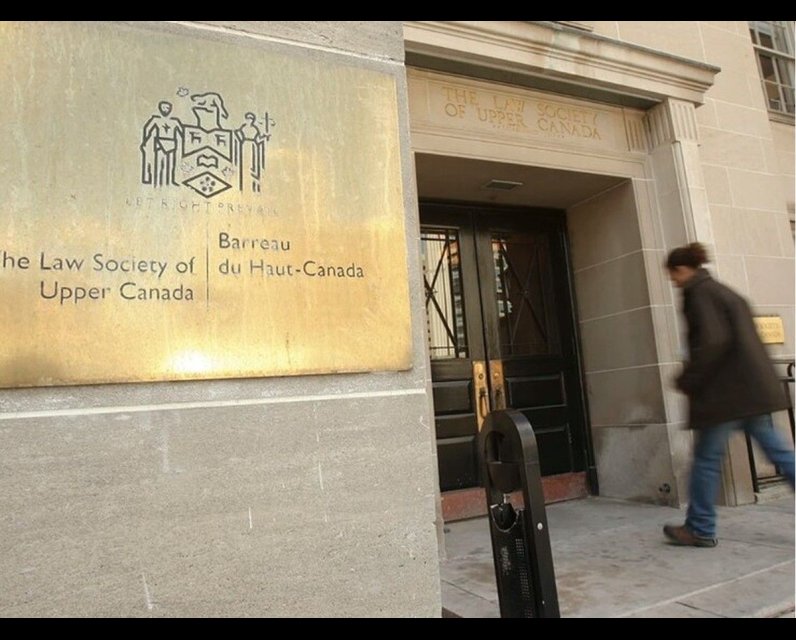
A Toronto lawyer linked to a mortgage fraud later cited as motive in a deadly 2024 triple shooting has failed to convince the Law Society of Ontario to lift his suspension.
Shahryar Mazaheri represented real estate broker Samira Yousefi, who in 2022 helped Alisa Pogorelovsky and her husband, Alan Kats, borrow $1,375,000. The couple thought they were going to invest in syndicated mortgages, but Mazaheri and another lawyer, Fred Yack, were “alleged to have acted with at least constructive knowledge of the fraud,” according to a recent decision from the Law Society Tribunal, which suspended Mazaheri’s licence on an interlocutory basis in November 2024. Yack consented to an interlocutory suspension.
In a recent decision, the tribunal denied Mazaheri’s request to cancel or vary his suspension. It indicated none of the arguments he advanced “would likely result in a different order if that information had been available to the panel that issued the interlocutory suspension of his licence,” according to a Feb. 12 tribunal decision.
The tribunal heard that Yousefi “recommended” that Pogorelovsky invest $850,000 in a syndicated first mortgage loan and $400,000 in a private first mortgage loan.
“This money was deposited in (Mazaheri’s) trust account. The transactions turned out to be a sham,” it said.
“Instead, Arash Missaghi, a known fraudster, gained control of the money through two companies that he controlled. He used the money to acquire outstanding mortgage interests in a property that was owned by another company that he controlled.”
Pogorelovsky and Kats “did not see the returns they expected on their investments,” said the tribunal.
“In June 2024, when Pogorelovsky’s husband found out that he was the victim of fraud, he killed Missaghi and Yousefi, and then killed himself.”
Kats, 46, left a note for his wife before setting off for the North York office where he found Missaghi and Yousefi.
In it, Kats blamed his own death on the two people he killed and the two lawyers who facilitated the transactions.
“Stop these criminals from destroying peoples lifes,” said his note, handwritten with misspellings in blue ink on a folded sheet of paper.
Mazaheri “did not deny that a fraud had occurred,” said the tribunal. “He said that he had no knowledge of and no part in it. His position is that he always acted on the instructions of his then client, Yousefi.”
In November 2024, the tribunal suspended Mazaheri’s licence, noting his “integrity has been materially impugned,” said the decision.
“It concluded that restrictions on his licence would not sufficiently mitigate the risk of harm to the public.”
The panel that suspended Mazaheri’s licence indicated “there were reasonable grounds to believe that (he) would not honour his professional obligations to avoid assisting in fraud and to use his trust account properly. This posed a significant risk to the public.”
Mazaheri “was aware of Missaghi’s history as a fraudster,” said the recent tribunal decision, which notes he “had no experience in syndicated mortgage transactions, and limited real involvement with the transaction. This could reasonably support a finding that he was wilfully blind to the fraud.”
It was “also reasonably possible” that Mazaheri “had been used as a dupe in the fraud,” said the decision. “Had Mr. Mazaheri testified, the panel might have been able to come to a firmer conclusion. But he didn’t.”
The tribunal pointed out that when Mazaheri “brought a motion that asked us to exclude some evidence submitted by the Law Society, and to disqualify ourselves on grounds of bias” the “factum he submitted was generated using artificial intelligence. It contained references to tribunal decisions that don’t exist. There were also references to tribunal decisions that do exist but don’t have the remotest connection to the legal propositions set out in the factum.”
Mazaheri’s submission “was totally incoherent,” according to the decision.
“Once this was discovered, Mr. Mazaheri admitted that he had used artificial intelligence and had not verified its output.”
The tribunal notified Mazaheri that it could consider his “submission of a hallucinated factum in deciding this motion.”
It pointed out that the original panel that suspended his licence “noted that, on the evidence before it, Mr. Mazaheri’s integrity was impugned. We consider that his use of artificial intelligence has only compounded that concern. In other words, his conduct since the interlocutory suspension was imposed has only made it less likely that the original order would be cancelled or varied.”
The tribunal advised Mazaheri “that we will consider his use of artificial intelligence when addressing the question of costs related to this motion.”
It ordered Mazaheri to make his submissions on cost by March 12.
Our website is the place for the latest breaking news, exclusive scoops, longreads and provocative commentary. Please bookmark nationalpost.com and sign up for our daily newsletter, Posted, here.

Comments
Be the first to comment