
Stay informed


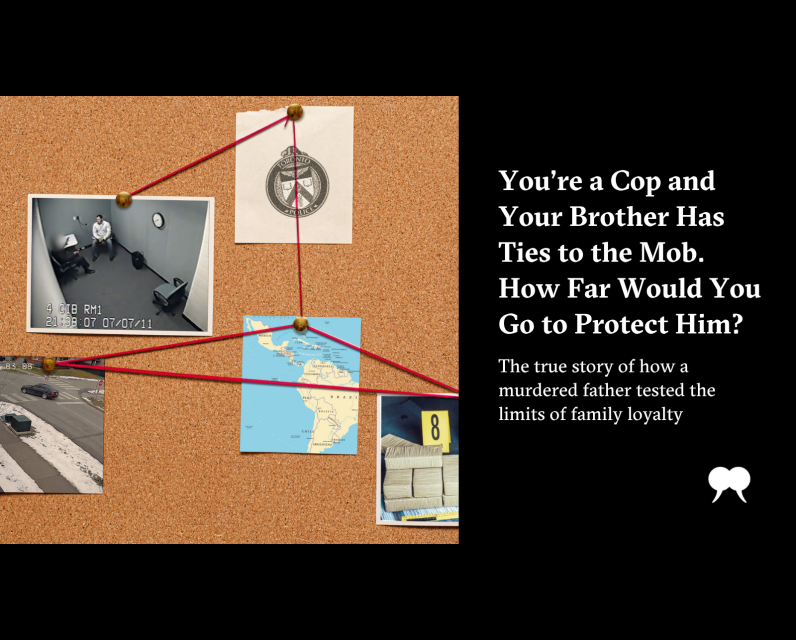
You’re a Cop and Your Brother Has Ties to the Mob. How Far Would You Go to Protect Him?
.main_housing p > a { text-decoration: underline !important; }
.th-hero-container.hm-post-style-6 { display: none !important; }
.text-block-underneath { color: #333; text-align: center; left: 0; right: 0; max-width: 874.75px; display: block; margin: 0 auto; } .text-block-underneath h4{ font-family: "GT Sectra"; font-size: 3rem; line-height: 3.5rem; } .text-block-underneath h2{ font-size: 0.88rem; font-weight: 900; font-family: "Source Sans Pro"; } .text-block-underneath p { text-transform: uppercase; } .text-block-underneath h3{ font-family: "Source Sans Pro"!important; font-size: 1.1875rem; font-weight: 100!important; }
.flourish-embed { width: 100%; max-width: 1292.16ppx; }
.th-content-centered .hm-header-content, #primary.content-area { width: auto; } .entry-content p, ul.related, .widget_sexy_author_bio_widget, .widget_text.widget_custom_html.widget-shortcode.area-arbitrary { margin-left: auto; margin-right: auto; } .hitmag-full-width.th-no-sidebar #custom_html-45.widget { margin: auto; } @media only screen and (max-width: 768px) { .img-two-across-column{ flex-direction: column; } .img-two-across-imgs{ width: auto !important; max-width: 100%!important; padding:0px!important; } .main_housing, .text-block-underneath { margin-left: 25px !important; margin-right: 25px !important; } .text-block-underneath h4{ font-family: "GT Sectra"; font-size: 35.2px; line-height: 38.7167px; } } @media only screen and (min-width: 2100px) { .main_housing, .text-block-underneath { margin-left: 32% !important; margin-right: 32% !important; } } @media only screen and (max-width: 1200px) { .main_housing, .text-block-underneath { /* margin-left: 25px !important; margin-right: 25px !important; */ } } @media only screen and (max-width: 675px) { .main_housing, .text-block-underneath { margin-left: 10% !important; margin-right: 10% !important; } } .hero-tall {display: none;} .hero-wide { display: block; } @media (max-width:700px) { .hero-wide { display: none; } .hero-tall { display: block; } } JUSTICE You’re a Cop and Your Brother Has Ties to the Mob. How Far Would You Go to Protect Him? The true story of how a murdered father tested the limits of family loyalty BY RACHEL BROWNE AND BRIAN FITZPATRICK
Published 6:30, JUNE 17, 2026 Screenshots from Ontario Criminal Court exhibits / iStock / Wikimedia Commons / Ana Luisa O.J.
Just after noon on January 18, 2021, two people wearing medical face masks forced their way into a red-brick home on the quiet residential street of Harvest Moon Drive in Bolton, Ontario. Inside, they shot several rounds at a man who lived there, Giovanni Costa, also known as John, as well as his son, Michael Costa.
The assailants fled in a black BMW 3 Series sedan. Shortly after, police cruisers and ambulances descended on the neighbourhood. Giovanni, sixty-five, was pronounced dead at the scene. Michael was injured and taken to hospital but survived and was released.
The arrival and departure of the killers was recorded on a surveillance camera that would later be revealed to have been strategically placed by police on a nearby telephone pole, suggesting authorities were anticipating trouble at the Costa home. It was likely that Michael, who had a deep criminal history and no regular employment, was the real target of the shooting and not his father, according to law enforcement sources.
Giovanni’s death was the culmination of a decade of turmoil for the Costa family and once more put the spotlight on his son, Michael, who has been connected to a trail of chaos and criminality across the Greater Toronto Area. Just two months before the shooting, he had survived a separate murder attempt when he was shot at least twice outside a cafe in Toronto. He had previously told police he had been attacked with a knife.
Michael has not faced significant criminal penalties for his numerous ties to organized crime. His brother, however—an officer with Toronto Police Service—has faced charges and disciplinary issues that have stalked him for years. Daniel Costa, an officer with the TPS’s downtown 23 Division, was charged with perjury and kicked off the force for lying to his own colleagues about Michael’s affairs.
Police sources told reporters in the aftermath of the shooting that they had previously been concerned about the company the late Giovanni kept, including being on friendly terms with people connected to the ’Ndrangheta, the now-global criminal mafia that hails from Italy’s southern Calabria region. The Costa saga raises questions about how thoroughly officers’ backgrounds and family connections are vetted.
It is also a story about two brothers who ended up walking on opposite sides of the law. One on the side of law enforcement, the other belonging to the criminal underworld trying to undermine it. Ultimately, their journeys ended up clashing, with one brother putting everything on the line to protect the other.
“I was concerned when we started making inquiries into the Costas,” one source connected to the investigation into Michael says. “Their dad wasn’t a seriously bad dude, but he was hanging around places that he shouldn’t have been. I had lots of questions about the efficacy of the background checks about [Daniel] getting into TPS. That should have come up, but it didn’t, apparently.”
The Costa family was seen as a “stereotypically loud, sometimes overbearing Italian” one, extended members of the family noted in court documents. And in a room full of loud, outspoken people, Daniel was always the quiet, sensitive, and calm one.
One cousin described Daniel in court records as having a sensitive and caring heart. Daniel had long dreamt of being a police officer and role-played being a cop even as a kid, enforcing the rules of games they were playing to make sure it was all fair. “I knew there was no job more fitting for Daniel,” his cousin wrote.
When Daniel and his siblings were under the age of fifteen, their mother, Anna, was diagnosed with leukemia. “Daniel developed a great deal of strength through this time, supporting his mother and family with the soft and caring heart we all know him to have,” court documents read. Anna eventually beat her cancer, and Daniel went on to pursue his career in policing.
Daniel met his wife in 2000. He went on to work as security at the Woodbine Racetrack in Toronto. They married in 2010. Months prior to their wedding, Daniel learned that his mother’s cancer had returned; Anna died eight days before they were supposed to be married. “Our lives were truly shattered, but we picked up the pieces and carried on together,” Daniel’s wife later recalled in court records.
Shortly after, Daniel graduated from Police College, and in May 2010, he was assigned as a new recruit to 23 Division, “A” Platoon. He impressed his superiors with his ability to speak fluent Italian. But troubles for the Costa family began shortly thereafter, dating back to at least 2011.
At around 10:30 p.m. on July 2, 2011, a thirty-seven-year-old man named Alexander Kucovic was gunned down—“execution-style”—near his upscale home in Vaughan, Ontario. Kucovic was reportedly a multi-millionaire who ran a high-end jewellery store in a wealthy neighbourhood in Toronto. On the side, Kucovic imported cocaine. According to the Toronto Star, he was known to drive several high-end vehicles, including a Maserati, Bentley, Mercedes, and Lexus.
Prior to coming to Ontario, Kucovic went by Kosto Barjaktarovic and lived in Vancouver, where he stole cars to order for the Johal-Benji organized crime group, led by the brash gangster Bindy Johal, before turning against them as a witness in a 1995 Vancouver double murder case. Barjaktarovic became Kucovic, left British Columbia, and entered the Royal Canadian Mounted Police witness protection under his new name and what could have been a fresh start, the Star reported. Yet, upon moving to Ontario, Kucovic re-entered a life of crime. Within three years, he was sentenced to two-and-a-half years in prison for cocaine trafficking and possession of an assault rifle.
In their investigation into Kucovic’s death, York Regional Police turned their attention to Michael, who was deemed a “person of interest” to be interviewed, though not a suspect in the murder itself. Police were eager to speak with Michael upon learning there was a love triangle between the two men: Michael was romantically involved with Kucovic’s wife at the time of his death. The pair were regularly spotted walking around Toronto’s entertainment district.
According to court documents, immediately after Kucovic’s death, Michael called Daniel, who, by this point, had been with the Toronto police for two years as a third-class constable. At Daniel’s place, Michael, through tears, disclosed that he’d been in a relationship with Kucovic’s wife and that Kucovic had just been killed. He told Daniel he was worried for his own safety. “He came over, started crying, telling me somebody was after him,” Daniel later told police. “I didn’t know what the hell he was talking about. He said ‘watch the news, somebody got killed . . .’” Daniel recalled his brother asking, “Someone killed him, and I don’t know if they’re after me; what do I do?”
Fearing a “hit on his head,” Michael was growing desperate. He said he did not believe that the police could protect him. Three days after Kucovic’s murder, on July 5, Daniel bought Michael a one-way ticket from Toronto to Rome to depart two days later. On the afternoon of July 7, investigators showed up at Michael’s home, where Daniel was too. Michael agreed to sit down for an interview with Detective Alan Cooke of the York Regional Police.
Michael told Cooke he was “terrified.”
“Why would you be scared?” Cooke asked.
“Because I was having an affair with his wife,” Michael admitted, referring to Kucovic’s wife.
“I don’t even know if this is going to affect me,” Michael later added, “but I’m scared of him.”
“But he’s dead now,” Cooke replied.
“Yeah, but that doesn’t mean anything,” Michael said.
In explaining how he was scared of those around Kucovic, and how he now wanted to stay as far away from Kucovic’s widow as possible, Michael said he wasn’t “dealing with lawyers and doctors.”
“I’m a witness that has a lot to lose,” he told Cooke, without elaborating on what he had witnessed.
“What do you have to lose?” Cooke asked.
“My life,” Michael replied. “You watch what you say to police . . . If I throw a name at you it’s going to draw eyes. ‘Oh, how did you get this name? Mike Costa told me.’ Then I have to hide in a fucking hole.”
After the interview, Daniel drove Michael to the airport to catch his evening flight to Rome. By this time, according to court records, Daniel was in a “difficult emotional state.” He hadn’t slept for days over fears for his brother’s life and the danger he felt he might be exposing his own family to. Later that night, around 9:30, Daniel met with York homicide investigators to be interviewed. In that interview, Daniel denied six separate times, under oath, that he knew where his brother was, despite having just dropped him off at the airport to catch a flight he bought for him.
Video of the hour-long interview shows Daniel denying all knowledge of his brother’s troubles, beyond saying that he had shown up at his door after the Kucovic killing, worried that he could be next. “All I know is that my brother was apparently dating his wife,” Daniel said, adding that he had met Kucovic’s wife on three occasions. “He’s coming to me scared. That’s all I know.” In the interview, Daniel comes across as evasive when asked about his brother’s alleged criminal career.
“Word on the street is your brother’s moving some big stuff around,” the detective said to Daniel. He goes on to ask Daniel why he never questioned his brother’s source of income: “He’s a big man on the street. You don’t question your brother; he’s driving around in a $100,000 car? No? He’s a big player. (Everybody) we’ve been talking to (says) ‘Oh Mike Costa, big player on the street in Woodbridge.’”
But what particularly struck the detectives as curious was the fact that, when investigators had showed up at Michael’s home that afternoon, Daniel did not identify himself as a police officer of the TPS. The officers had no idea he was one of their own. “Today, at around 2:30 p.m., we were at your brother’s place. You saw us there. Why didn’t you tell us who you were then? Did you recognize who we were?” a detective says to Daniel.
“Yeah,” Daniel replied.
The detective continued: “And you wouldn’t say, ‘Hey guys, what’s up, I’m a cop from Toronto. What’s going on, this is my brother’?”
“I dunno, he introduced me as his brother,” Daniel said.
“I’m surprised you didn’t introduce yourself as a fellow officer,” the detective stated.
Daniel tried to excuse his behaviour. “I would have, but I didn’t want to interfere with anything,” he said. “I knew you guys were there to talk to him because he was dating this girl. So I figured . . . (you guys) talk . . . I don’t need to interfere.”
Police officer Daniel J. Costa leaving courthouse during trial (Colin McConnell / Toronto Star via Getty Images)The next day, while Michael was arriving in Rome, Daniel got a lawyer involved. He also changed his story. His lawyer told police that Daniel had provided inaccurate information and that he indeed knew where Michael was. Daniel was “justifiably frightened and upset about the prospect of a threat to his brother’s life,” Daniel’s lawyer later stated at a hearing.
It was also revealed that a review of Daniel’s computer activity showed that, in January 2011, six months before Kucovic’s murder, Daniel searched a database called the Canadian Police Information Centre for something “other than official police business.” The search he made, records show, was for information about Michael.
That fall, Daniel was suspended from his duties with the TPS with pay. He was criminally charged with perjury and accused of lying to York police officers about Michael’s whereabouts during the investigation. Daniel’s clean record with police had become officially tarnished.
“If Constable Costa could not be relied upon to be truthful in circumstances when the jeopardy was high in that an armed person who had committed a homicide was at large, I question how he could be relied upon in the future. Constable Costa’s actions in searching databases demonstrated poor judgement, poor decision making, and a willingness to violate Service procedures,” the presiding TPS inspector would say during a police disciplinary hearing for Daniel, who had admitted to counts of deceit and insubordination.
The inspector noted: “Constable Costa minimized (his) misconduct by characterizing his repeated lies during the interview . . . as having provided inaccurate information. I am not convinced that Constable Costa has fully recognized the seriousness of the misconduct or has demonstrated the potential for rehabilitation. His guilty pleas and admissions, while positive steps, do not offset the fundamentally aggravating nature of the misconduct especially when coupled with his characterization of that misconduct . . . I also have concerns that due to his minimization and characterization of the misconduct, the gravity thereof has not been sufficiently acknowledged.”
Daniel was given seven days to resign. He appealed to what was then the Ontario Civilian Police Commission, arguing that the hearing officer had made several errors in his decision making, including relying on “speculation or findings unsupported by or inconsistent with the evidence,” like, for example, the claim that Daniel had tried to minimize the serious nature of his misconduct. The commission’s decision would determine whether Daniel would be reinstated to the force.
In a statement to The Walrus, the TPS declined to comment “on the specifics of the case, the officer’s employment history, or matters relating to personnel,” noting that broadly the service “maintains a comprehensive background screening process for all applicants. Background investigations consider a wide range of factors and continue to evolve over time to reflect legislative requirements, best practices, and emerging risks. We are committed to continually reviewing and strengthening our screening and hiring processes to help ensure we recruit individuals who meet the high standards expected of our members.”
Sometime after he fled to Rome, Michael’s lawyer was contacted by a York Regional Police officer, according to official documents, who advised the lawyer that Michael should stay away from Canada for the time being due to credible information that his life would be endangered if he returned. The officer was unnamed in court records.
While he was in hiding, Michael kept busy, preparing for the future. “He was everywhere,” one police source said of Michael’s initial time on the run. “He had a network. He had somebody setting up (fake) ID for him; he was able to travel.” The source said police had traced Michael not just to Europe but also Latin America during this period, six months after the killing.
By early 2012, despite the warnings that he would be in danger, Michael returned to Canada from hiding. For months, the killing of Kucovic and the perjury case involving Daniel had made headlines in the Toronto Star and other outlets. Michael agreed to sit down for another interview with Cooke and the York Regional Police over the Kucovic murder, in which he lashed out, accusing the police, or the media, of ruining his name.
“Why is my name in the paper?” Michael asked, according to a transcript of the interview. “Why is everyone making eyes at me?”
“I said I would help you guys, but then you guys have done nothing but put me in greater danger than I already was.”
“Who’s to blame for ruining my name?” he demanded of Cooke, asking whether it was “police” or “the papers.”
“I come back, and I can’t even get a haircut. My haircutter didn’t even allow me . . .”
Michael says he believes police have a voice recording of someone saying they want him dead, but Cooke says there is no recording. “We have someone saying word on the street is people want to come after Mike Costa because they believe he had something to do with murdering Alex Kucovic,” Cooke says.
The investigation into Kucovic’s death ran cold, and Michael drifted back into the criminal world. It did not take long for trouble to find him again. In March 2014, undercover RCMP officers began to focus their attention on Gary Meister, a suspected drug trafficker from Halifax, and his business partner Jahanbakhsh “John” Meshkati, a criminal based in BC with ties to Iranian organized crime. Part of the undercover investigation was dubbed Operation Harrington. That same month, according to court records, a police informant deliberately introduced Meister to “Joe,” an undercover RCMP officer whose ruse was that he was an importer in charge of vessels that could bring cocaine to Canada from Latin America.
Soon, Meister had given Joe his own phone with PGP encryption software, on which to communicate with the group. Meister told Joe that he was ready to import 1,000 kilograms of cocaine into Canada as a test run, before eventually building up to 5,000 kilograms. The cocaine, Meister said, was being supplied by a Colombian cartel and financed by an Italian group. Meshkati, he said, would travel to Mexico to arrange the deal.
In April 2014, Meister introduced Joe to Meshkati—and also to Michael. A test run of 500 kilograms, with the goal of getting to 10,000, was confirmed. The drugs were to be delivered to Newfoundland, before going to Halifax, Montreal, and Toronto. At the end of the month, Michael flew to Mexico, court records allege, and was picked up by Meshkati upon his return to Toronto. A week later, Michael returned to Mexico once more. In May, the group discovered that their Colombian supplier had been arrested by United States authorities, and the shipment was halted.
Beyond this point, court records do not shed much light on what became of Michael and his inadvertent dealings with the undercover RCMP man as part of Operation Harrington. Meshkati, for his part, continued working with Meister as well as with Joe, with the aim of securing a new cocaine supplier.
That August, Meshkati was murdered in Burnaby, BC. Joe continued to deal with Meister in Meshkati’s absence, and before long, he had been introduced—via a Sinaloa Cartel associate named Philipos Kollaros, based in Montreal—to Ryan Wedding, the Canadian Olympic snowboarder and alleged drug kingpin recently arrested in Mexico.
On April 20, 2015, Michael Costa was charged with cocaine trafficking along with Meister and thirteen others who were accused of drug trafficking and importing offences following Operation Harrington, which probed the flow of illicit drugs into Canada via Mexican and Colombian cartels. Also accused as part of this operation was Wedding who, by this point, was believed to be connected to the Sinaloa Cartel.
In court documents, a $400,000 surety for Michael’s $1,468,000 bail was provided by the wife of Joseph Catroppa, a convicted killer who was gunned down in Mexico in September 2020. Catroppa had made headlines the previous year when an organized crime figure linked to members of the ’Ndrangheta crime group was shot dead in Toronto. Catroppa had been with the man, Antonio “Scratch” Fiorda, at the time. Catroppa was believed to have set Fiorda up to be murdered, according to law enforcement sources.
By June 13, 2017, all charges against Michael were stayed. Though Michael’s charges were stayed, Operation Harrington court documents and police sources raise further questions about his underworld connections. Within four years, his father, Giovanni, would be shot dead, and he would be injured in the attack in Giovanni’s home in Bolton.
Attempts to reach Michael directly for comment, including via a cellphone number listed in court documents, were unsuccessful. Brian Greenspan, a lawyer who previously represented him, said in an email to The Walrus: “We do not act for Mr. Costa nor do we have any current contact information.” No police forces contacted by The Walrus offered comment on his whereabouts.
In January 2022, at the one-year anniversary of Giovanni’s death, Ontario Provincial Police held a press conference and offered a $50,000 reward for any information regarding the shooting that led to an arrest. “We want to bring resolution to [Giovanni’s] family and ensure those who committed this crime can pose no further threat to anyone in the communities we serve,” Detective Inspector Kurtis Fredericks said in a statement. The police also released a photo of the BMW sedan they believed to be the getaway car.
A year after the shooting, a twenty-year-old man from Scarborough named Jordan Andall, who owned the getaway BMW at the time, was charged with accessory after the fact to murder. As reported in the Caledon Enterprise, shortly after the murder, a vehicle matching the description of Andall’s car was disposed of, a wrecking yard employee would later testify in court. The employee testified that the same BMW was sold for parts about five days later.
Andall was ultimately convicted of destroying evidence, including a set of licence plates taken from the car, in Giovanni’s murder. In early 2025, Andall was sentenced to an eighteen-month conditional sentence. The Costa family declined to file a victim impact statement or otherwise communicate with the court, records show.
During Andall’s sentencing, the judge noted that the Crown prosecutor was “very restrained during the trial, which was based on circumstantial evidence and some wiretaps from a probe installed in a car that Mr. Andall used after the fact.” The judge continued that Andall participated in the destruction of the evidence in the case, knowing that a serious crime had occurred, but “may have come to know exactly what the crime was later.” (A lawyer who previously represented Andall did not respond to a request for comment.)
Five other men have recently been charged with the murder of Giovanni and attempted murder of Michael, with court proceedings beginning to run their way through the system. Among those charged is Damion Ryan, forty-five, a full-patch Hells Angels member. Ryan has also been charged in the US over allegedly plotting with members of an Iran-based crime group to murder two Iranian citizens in Maryland. The pair had fled Iran for the US after one of them defected.
The Ontario Provincial Police told The Walrus that the investigation into Giovanni’s death “remains ongoing,” noting that two individuals (Filmon Fesshaghirgis and Waheed Barakziye, both of London, Ontario) remain wanted. The OPP added: “As this is an active investigation, it would not be appropriate for us to provide any details in order to protect the integrity of this ongoing investigation, the court processes, and the family’s personal safety.” The $50,000 reward concerning Giovanni’s murder, the OPP said, is still available.
Michael’s whereabouts are unknown. He is suspected by some law enforcement sources to have been spending time in Latin America or Europe. Though Daniel pleaded guilty to deceit and insubordination at his disciplinary hearing, he was acquitted of his criminal perjury charges and fought his dismissal from the TPS. He was eventually reinstated to the TPS, albeit with a pay decrease and demotion. He remains an officer today, assigned to traffic services.
In a statement to The Walrus, through a representative from the Toronto Police Association, Daniel said: “Since I took an Oath, I have been a dedicated Toronto Police Officer. I acknowledge the mistakes I have made in the past and have paid for them through the disciplinary hearings. After my father was tragically killed, I have made the decision to eliminate any and all communication with Michael. There is no longer a connection between him and myself.”
This story was reported in partnership with the Organized Crime and Corruption Reporting Project (OCCRP), a global collaborative investigative journalism nonprofit.
The post You’re a Cop and Your Brother Has Ties to the Mob. How Far Would You Go to Protect Him? first appeared on The Walrus.
Unpublished Newswire


Comments
Be the first to comment