
Stay informed

What We Lose When Question Period Becomes Performance Art
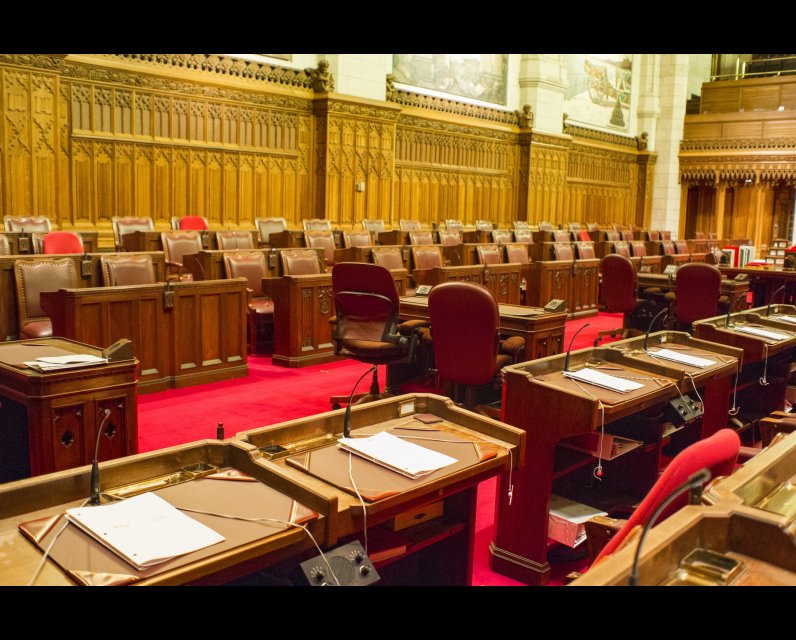
In the current Parliament, it can be easy to forget that life in the opposition is meant to be more than a viral performance. The job is not simply to wound the government, but to prepare a government-in-waiting. And yet, there are days when it seems the benches across from the prime minister operate in a permanent state of escalation, where every exchange is calibrated for maximum outrage.
I know something about that—and about the temptation to score points. I spent nine years on the “wrong” side after being elected in 1984 alongside only thirty-nine other Liberals. I wanted desperately to be in government, but I found my time across the aisle very formative. I participated fully in the parliamentary experience. I was made a critic, served on committees, asked questions, took part in debates, and addressed audiences at functions across the country. Serving in opposition taught me how to accomplish tasks with relatively little support or financial firepower. I sharpened my speaking skills and refined my political instincts without being surrounded by a plethora of ministerial staff. It was an ideal way to learn and grow and to be seen.
Michael Wilson, a former Tory member of Parliament from Etobicoke and a highly competent finance minister under former Prime Minister Brian Mulroney, had the identical view to mine. In his book Something Within Me, he describes his time in opposition as anything but wasted. “It resembled in many ways an apprenticeship; a period to absorb knowledge and hone skills. When we won power, I was prepared to deal with challenges in a far more capable manner than I would have had I still been a rookie to Parliament.”
That conception sits uneasily beside today’s opposition strategy, which treats the job not as preparation for governing but as a daily content factory, engineered for clips, clicks, and confrontation. The compulsion to attack is easy to understand—I learned that the hard way. New cycles prize conflict. But precisely because the impulse is so powerful, it needs to be checked: a politics built on reflex leaves no space for the apprenticeship Wilson described and little capacity to govern once the noise subsides.
If your party is in opposition, then the fundamental responsibility is to keep the government accountable by various parliamentary processes. Question Period is the most visible of these. Accordingly, you’ll normally be assigned a role as a critic or shadow cabinet member. As the title suggests, the latter role can be a training ground for potential ministers. Sharp, feisty opposition critics are considered people to watch, so it’s worth investing seriously in these responsibilities.
Don’t waste the opportunity. Your obligation as a critic will be to review and critique the policies and decisions of a specific minister and ministry. That will grant you the opportunity to participate during Question Period, take the lead in the respective parliamentary committee, and speak in parliamentary debates, while steadily building expertise and recognition.
Time spent in opposition is a valuable political internship, but that doesn’t mean the life isn’t without its peculiarities. You’ll have limited resources, so you have to be as creative as possible to effectively do your job. Every day the House was in session, Question Period was our strategic highlight as the Liberal opposition party. It was the most visible way of keeping the government’s feet to the fire.
That was the theory. The real objective, however, was to trip up the government and cause embarrassment in the hope of revealing its shortcomings. And so, my colleagues and I tried to foster as much negative press for the governing party as possible. Knowing that governments eventually defeat themselves, we wanted the Conservative Party to enter the next election with heavy baggage that the electors, hopefully, wouldn’t forget nor forgive. As such, when the media pursued the issue you raised, that was like winning a lottery.
So important was press coverage to our strategy that, in preparation for Question Period, our caucus leadership met early each morning to review the day’s media clippings. We pored over the headlines and determined the day’s leading questions, based largely on what we thought would sell with the media. In short, the media largely drove our approach to Question Period. When I look back, that seems superficial, but it’s still the reality today.
At the conclusion of our morning session, our House leader called the consensus and laid out the six or so themes to pursue that day. Each question was assigned to specific members, usually the critics responsible for those policy issues. They were expected to research the issues and develop tight, accurate, and provocative questions. Over the lunch hour, these members gathered to rehearse their questions in front of the House leader. The aim was to ensure the questions were on target.
Often, edits were proposed, and the member asking the question re-worked it and returned for an additional audition. At 2 p.m., it was showtime. We marched into the House loaded for bear and fired away. Not every question scored, but when the volleys hit their targets, they drew political blood, the government squirmed, and the media zeroed in. Then, following Question Period, the MPs who had posed the questions headed into the foyer of the House of Commons to “scrum” with the media. The opposition members promoted their allegations to whomever would listen, all in the hope of making the evening news and creating headlines in the newspapers the next morning. Today, in an age of social media and a twenty-four-hour news cycle, good questions can get immediate notoriety and run all day.
After Question Period, we individually monitored the news to see if our strategy had paid off. The next morning, the cycle repeated itself, with a fresh batch of newspaper articles and a new list of questions. If yesterday’s questions hit a bull’s eye, we usually followed up in an effort to broaden interest. And on it went every day.
Members competed rather aggressively to ask questions during Question Period. Herb Gray, our House leader at the time, submitted a list of names to the speaker of the House who, in turn, recognized those members. But Gray was only granted so many questions, since other political parties and government backbenchers were also given their share of slots. As well, Gray assigned some spots to members who had successfully scored the day before, so as to amplify the controversy. Consequently, there was always a backlog of frustrated MPs waiting their turns to hammer the government, causing friction and frustration. The House leader had to navigate these difficult waters by striking the right balance.
During my years in opposition, the Liberal Party had a group of young, aggressive members who attacked the government with a vengeance. They were exciting to watch, but they were also controversial, since not everyone agreed with their “take-no-prisoners” approach. They became known as the “rat pack.” The charter members were Sheila Copps, Brian Tobin, Don Boudria, and John Nunziata. I was considered an “honorary” member. Sometimes I went to the dark side, while, on other occasions, I found a more moderate path.
The rat pack definitely got under the skin of Prime Minister Mulroney and his cabinet members. They viewed their behaviour as unbecoming and dishonourable and often appealed to the speaker to rein them in. Points of order and privilege regularly flew back and forth, and the poor speaker had to constantly figure out how to keep order and decorum. Often, he ejected members for unparliamentary language. But inadvertently, that only furthered the drama. The wild scenes contributed to a greater degree of incivility in the House and no doubt deepened public cynicism.
What distinguishes our actions today is not their tone but their purpose. Yes, our time in opposition included calculated “gotcha” moments. But those tactics were nested within a broader conception of opposition as a means to build governing capacity.
That said, there were many times we got overly caught up in the moment and crossed the line. I often worried the public would dismiss all of us as loonies. Yet, at the same time, after being decimated in the 1984 election, the rat pack provided the Liberals with some much-needed energy. I was often asked if I thought the rat pack helped or hurt us. On the whole, I think it assisted our opposition efforts and morale, especially when you factor in the drubbing we took in the 1984 election. However, the definite loser in this equation was parliamentary decorum.
Sadly, the overly aggressive mindset contributed to a poorer political culture. It created a race to the bottom. When the government went low, we in the opposition went lower. Everything seemed to constitute a scandal. It was a vicious circle, leaving most of the viewing public largely unimpressed. One popular Question Period theme, which continues today, revolves around the use of government aircraft by the prime minister and ministers. Opposition members, then and now, constantly monitor the use of these planes to determine if anyone is abusing them. Often, during Question Period when we Liberals were in opposition, we made mountains out of molehills, which was a real pity.
A particular attack from the Liberal benches was notable for the wrong reasons. On this occasion, my colleague Don Boudria, who was a competent and dedicated representative, rose to ask Prime Minister Mulroney about a recent flight he’d taken on a government Challenger. “Mr. Speaker,” Boudria thundered. “During his last Challenger trip, can the prime minister confirm whether Canadian or French wine was served to all the passengers aboard?” What?
The prime minister didn’t get up. Instead, his House leader handled it and dismissed the question as baseless and ridiculous. On his supplementary question, Boudria went back at the prime minister. But again, Mulroney declined the bait, leaving his House leader to repeat the first answer. I personally viewed this effort as frivolous, so afterward, I approached Boudria and asked about the question’s purpose. He looked at me, somewhat perplexed. “Sergio, don’t you get it? He should only be serving Canadian wine.”
“Yes, I understand that part,” I retorted, “but was it that important for the country that we used one of our questions to pursue the matter?” Of course, it wasn’t. To be sure, prime ministers, ministers, and MPs should promote Canadian products and brands whenever they travel. But if the odd French, Italian, or South African glass of wine was served on a government aircraft, was that such a crime? I also reminded Boudria that Mulroney didn’t drink alcohol, that he’d sworn off booze many years ago. On top of it all, when his Challenger landed next to other world leaders’ aircraft, it was destined to be the smallest of the fleet. So, really, what was the big deal?
I concluded our conversation, telling Boudria that we were creating a disturbing precedent. “Don, if we ever get to the promised land of government, the opposition will undoubtedly rake us over the coals, as well.” And that’s precisely what happened.
After we formed government in 1993, cabinet ministers initially avoided using the Challenger fleet for fear of political and media retribution. Whenever you procured an aircraft, it had to be registered in a National Defence log that could be accessed through freedom-of-information requests. The media regularly combed through these registers. Consequently, ministers abstained from using the aircraft fleet for about a year.
It was ridiculous. Canadians and our media need to accept that being a G7 country necessitates travel costs. Nobody in Washington blinks an eye at the United States president flying with two 747 planes and a political, press, and security entourage dwarfing even the biggest Team Canada mission. Indeed, when former President Bill Clinton attended the Asia-Pacific Economic Cooperation meeting in Vancouver, in 1997, his delegation numbered 1,500 people. We assigned them an entire hotel and then some!
These planes were and remain a legitimate tool for criss-crossing a large country and travelling internationally. While they shouldn’t be abused, they’re there for a reason: to make travel more convenient and time efficient. Moreover, while we avoided using the fleet, the pilots were compelled to fly them empty in order to register their hours, so as to keep their licences up to date. What a waste!
There was another incident that involved Boudria and planes. A rule existed that when ministers booked commercial aircraft, they weren’t allowed to travel first class. On one hastily organized trip, the then Conservative minister for foreign affairs Barbara McDougall needed to urgently fly to Hong Kong. When her staff proceeded to book her flight, all the business-class seats were taken. It was either first class or economy. Because of the length of the trip and her need to read her briefing book and review her speeches, they opted for first class. It was the right call. But after this news made it into the media, Boudria raked her over the coals. It wasn’t his fault, really. The opposition culture and mentality were to blame. Juvenile, right?
Criticizing the government for using the Challengers and other similar, frivolous attacks led to a deterioration of relationships between MPs. Many ministers took the accusations personally, trust between parties suffered, and it became more difficult to find agreement and accommodation. As well, the continued muckraking increased voter cynicism and no doubt discouraged some Canadians from becoming candidates for public office.
Many people would argue that the political environment has deteriorated even further in recent years, and I’d agree. The levels of division, shrill accusations, and nastiness have risen, resulting in an often toxic discourse. Worse still, this affliction has spread beyond the House to parliamentary committees. Years ago, committees tried to avoid the harsh partisanship of the House in favour of producing unanimous reports and studies. Indeed, in the old days, despite the theatre of Question Period, away from the camera, there was considerable co-operation between the government and opposition parties.
Today, committees are just another venue for partisan politicization. Our political leaders need to seriously think about where our politics is heading.
Adapted and excerpted, with permission, from Pursuing a Public Life How to Succeed in the Political Arena by Sergio Marchi, published by the Dundurn Press, 2025. All rights reserved.
The post What We Lose When Question Period Becomes Performance Art first appeared on The Walrus.
Unpublished Newswire

Comments
Be the first to comment