
Stay informed



'Frozen' iguanas fall out of trees amid plunging temperatures in Florida
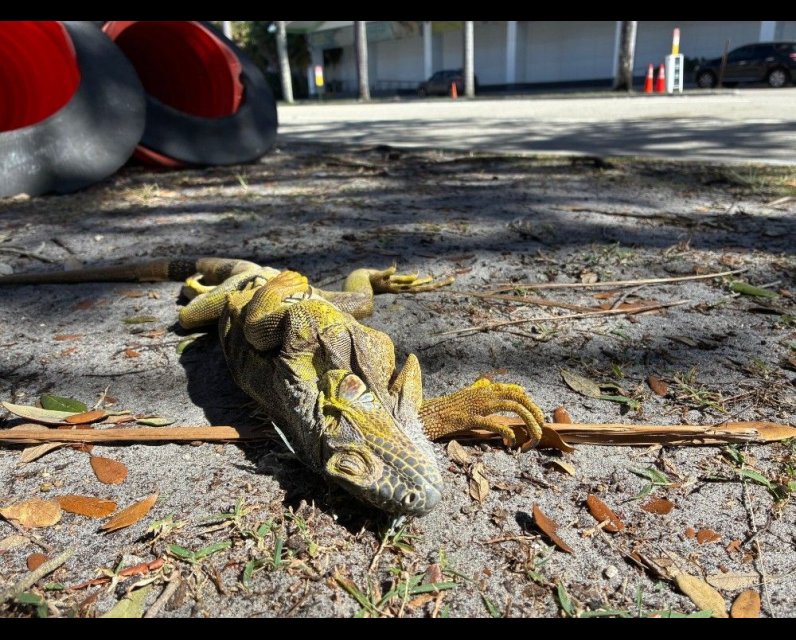
Cold-stunned iguanas have been falling out of trees in Florida, appearing to be dead, amid unusually plunging temperatures in the Sunshine State this week.
Miami, Fort Lauderdale and West Palm Beach hit record lows, reaching -1 degree Celsius, or as low as 30 degrees Fahrenheit, on Sunday, according to the Weather Channel . It’s the coldest weather south Florida has seen in 15 years.
“When temperatures drop and sustain to near-freezing or below, reptiles and amphibians, including nonnative green iguanas, can go into a state of torpor, where they temporarily lose muscle control and appear ‘frozen’ — sometimes even falling out of trees,” said the Florida Fish and Wildlife Conservation Commission (FWC) in a statement .
An executive order has been issued, allowing residents to remove the cold-stunned green iguanas without a permit and bring them directly to five designated FWC offices until Feb. 2. Green iguanas are considered an invasive species in the state. According to FWC, they have “adverse impacts on Florida’s environment and economy.”
Residents are otherwise not allowed to have green iguanas in their possession without a permit, even temporarily, for transportation.
The iguanas that are brought to an FWC facility will either be killed humanely, according to the FWC, or transferred to permittees for live animal sales.
Male green iguanas can grow up to five feet long and weigh up to 17 pounds. The reptiles can live up to 10 years in the wild or 19 years in captivity. They are adaptable, able to swim in both saltwater and freshwater, and can live in rural and urban environments.
“Green iguanas cause damage to residential and commercial landscape vegetation and are often considered a nuisance by property owners,” the FWC says. “Iguanas are attracted to trees with foliage or flowers, most fruits (except citrus) and almost any vegetable.”
They can also cause damage by digging burrows that “erode and collapse sidewalks, foundations, seawalls, berms and canal banks.”
Zoo Miami communications director Ron Magill told CBS News that the cold-blooded creatures can become lethargic when the temperature goes below 10 degrees Celsius. But once the temperature gets to around 7 degrees Celsius, they reach the cold-stunned states. It’s a protective measure so they can survive until the weather gets warmer.
FWC urged residents to wear gloves, pants and longe-sleeve shirts to handle green iguanas.
There were cold weather and frost advisories for south Florida expected to be in place on Monday night until Tuesday morning, according to local news outlet WPBF .
Our website is the place for the latest breaking news, exclusive scoops, longreads and provocative commentary. Please bookmark nationalpost.com and sign up for our daily newsletter, Posted, here.

Unpublished Newswire

Comments
Be the first to comment