
Stay informed



Alberta judge discounts 'violent' sexual assault sentence for ex-football player with Indigenous roots
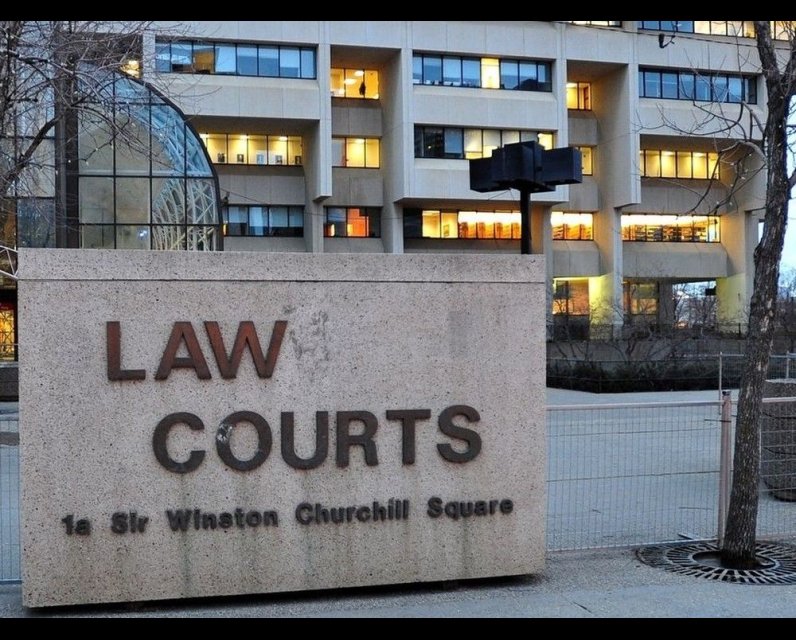
An Alberta judge recently discounted the prison sentence for a former university football player with Indigenous roots who bled profusely while sexually assaulting a woman, despite her repeated protests over the attack.
An Edmonton jury found Aaron Moore Minshull, whose mother is Indigenous, guilty of the July 18, 2020, “major sexual assault.” A Court of King’s Bench judge sentenced him to three years in prison.
“In deciding on this sentence, I have taken into account the mitigating factors regarding Mr. Moore (Minshull’s) rehabilitation efforts, his Indigenous heritage and his mental health struggles, along with the collateral consequences that will be visited on him and his new family by a lengthy prison sentence,” Justice Christopher D. Simard wrote in a recent decision out of Edmonton.
“Without those mitigating factors, the fit and appropriate sentence would be significantly longer than three years. However, a sentence below three years would simply not be proportionate to the gravity of this major sexual assault, and Mr. Moore Minshull’s very high degree of moral blameworthiness.”
Similar cases have warranted three-and-a-half to four years in prison, Simard said in his Jan. 26 decision.
“Considering the circumstances, the gravity of this offence is very high. Mr. Moore Minshull’s degree of responsibility is also very high,” said the judge.
The woman “told him repeatedly that she did not want to engage in sexual contact. He persisted regardless. She tried to evade and escape him. He used his much greater size and strength to physically and forcefully overcome her resistance,” Simard said. “This was a violent and forceful sexual assault. This was not sexual touching in the context of confusion or mixed signals about consent.”
Moore Minshull, now 36, used “his physical strength to overpower her attempts to resist, and impose his will on her forcefully to satisfy himself sexually. He treated her as an object for his gratification. This was a gross and serious violation of (her) physical, sexual and emotional integrity,” said the judge.
The identity of Moore Minshull’s victim is protected by a publication ban. The two knew each other and were drinking together at the time of the sexual assault.
“Moore Minshull did not use a condom when he sexually assaulted (her) and he ejaculated inside her vagina. Due to a tear in his frenulum (a sensitive band of tissue on the underside of the penis that connects the foreskin to the glans) he also bled profusely at the time of the assault, on her and probably also inside her,” said Simard.
“The failure to use a condom is a serious aggravating factor because unprotected penile-vaginal penetration exposed (her) to greater risk of unwanted pregnancy and disease.”
Moore Minshull, whose university football career was cut short by injury, “forcibly overcame (the woman’s) physical resistance, ignored her repeated indications of non-consent over a prolonged period of time, and physically restrained her to facilitate his assault,” said the judge, noting that was an aggravating factor.
Moore Minshull’s victim was “devastated” by the sexual assault, Simard said.
“She describes herself before the assault as having been an independent, adventurous and confident person. She now feels broken and describes having lost all her self-worth, her excitement and passion for life, her ability to feel happy or excited, and her ability to trust others. She now experiences anxiety, nightmares, depression and post-traumatic stress disorder,” said the judge.
The victim told the court her life has felt like she’s in a prison. “It has taken all my strength and energy these five years to hold this person accountable. (Moore Minshull) took my body, my voice, and my quality of life.”
During interviews for a Gladue report, Moore Minshull told the author “he grew up mostly in Toronto. His mother is Indigenous and his father is non-Indigenous. His mother’s grandparents attended residential school. Mr. Moore Minshull has had no exposure to his Indigenous heritage.”
Gladue principles were set out in a Supreme Court of Canada decision over a quarter century back and indicate sentencing judges must consider the unique circumstances of Indigenous offenders, as well as systemic issues like the impact of residential schools, to address the over-representation of Indigenous people in Canada’s prisons.
“There were some traumatic events during (Moore Minshull’s) childhood and young adulthood. A younger sister was given up for adoption because of the family’s financial struggles. His parents separated at least once. Another sister ran away, and she was pregnant when she returned to the family home,” said the decision. “She was later placed in foster care after complaining about physical abuse in the family.”
When Moore Minshull was 21 years old, “his cousin died by suicide,” said the decision.
“There were also positive experiences in Mr. Moore Minshull’s youth. His family, particularly on his father’s side, were very social and he has good memories of large family gatherings.”
Moore Minshull finished “high school and attended university on a football scholarship. Football was his passion, but his football career was ended prematurely through injury. It appears that he did not complete a university degree but hopes to earn a business degree in the future.”
Before he was sentenced Moore Minshull worked as a security guard and delivery truck driver, said the decision. “His total income is around $40,000 per year.”
Moore Minshull is “now in a committed, long-term romantic relationship with (the mother of) three teenaged children from a previous relationship, and she and Mr. Moore Minshull have just had their first child together, a baby boy,” said the decision. “He plays an important role in this new family, as a father figure and economic provider.”
Moore Minshull “reports suffering from depression, and he has previously contemplated suicide,” said the decision. “He is not being treated for mental health conditions. There may be a family history of mental illness.”
Moore Minshull told the author of his Gladue report “that he uses marijuana daily. He appears to also use alcohol somewhat frequently, as he told the author of the Report that he last had an alcoholic drink the day of their meeting. He also uses cocaine, but apparently less frequently. He has attended a substance abuse rehabilitation program, but it is not clear whether he did that voluntarily or as a result of an intervention by his sisters. He says that he was sober for one year after completing this program, but the goal of the program was not to achieve complete sobriety. He thinks that his rehabilitation was successful and his relationship with drugs and alcohol is now more healthy and that he controls his alcohol use. ”
Alcohol “played a major role in his commission of this offence and I fear that he might be underestimating its continuing role in his life and his prospects for full rehabilitation and reducing the risk of reoffending,” said the judge.
Moore Minshull “attributes his commission of this offence at least in part to bad decisions … and alcohol consumption,” said Simard, who questioned “whether Mr. Moore Minshull is genuinely remorseful about the significant harm he has caused (his victim) and to society more generally by committing this very serious offence.”
Moore Minshull had no prior criminal record.
“He obviously is surrounded by a large, loving and supportive extended family group, who all state that they want to help him improve himself and continue to make positive changes in his life,” said the judge.
“The authors of the numerous support letters describe Mr. Moore Minshull as an extremely committed hard worker and someone who is very warm, compassionate, loving, caring, dependable and who devotes himself to helping and supporting others and putting their well-being before his own. They describe him as working hard to improve himself.”
Moore Minshull appeared to deflect “responsibility for his own actions,” and his evidence contains elements of “victim-blaming,” said the judge.
“This is a theme that is repeated by some of the people who wrote support letters for Mr. Moore Minshull, who also said that his poor decisions leading to this offence must have resulted from the negative circumstances and individuals with whom he was involved at the time.”
Our website is the place for the latest breaking news, exclusive scoops, longreads and provocative commentary. Please bookmark nationalpost.com and sign up for our daily newsletter, Posted, here.

Unpublished Newswire


Comments
Be the first to comment