
Stay informed



Could U.S. rate cuts bring sunnier economic days to Canada? Don't count on it
WASHINGTON, D.C. — Nothing zaps consumer and investor confidence quite like a trade war.
U.S. President Donald Trump’s tariffs have slashed Canadian exports, idled some auto plants, depressed manufacturing, and slowed GDP growth, with signs pointing to the economy contracting further.
The Bank of Canada, meanwhile, has signalled it will hold interest rates this year, while the U.S. Federal Reserve has adopted a wait-and-see approach.
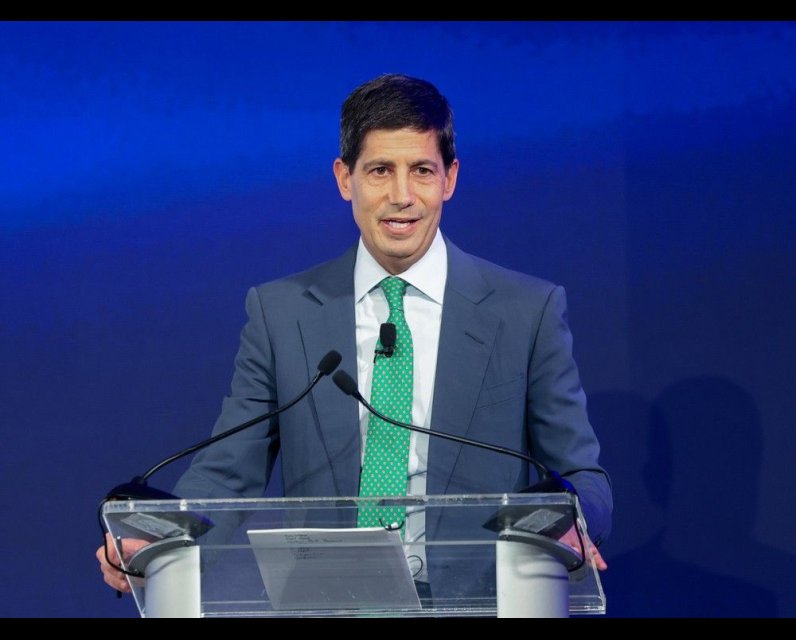
Trump recently nominated Kevin Warsh to replace Fed Chair Jerome Powell later this year. Because Warsh has praised Trump’s tariffs and criticized Powell’s hesitancy in dropping rates, some had speculated that he might align with Trump on lowering interest rates.
But Warsh’s nomination sparked fears of the opposite: Gold and silver tumbled on Friday because Warsh has been historically hawkish on keeping rates higher, opting for inflationary control over monetary policy easing.
So are the Fed cuts Trump has so loudly demanded likely in 2026? And, if so, could they bring sunnier days to Canada?
“Typically, anything that’s good for the U.S. economy is generally good for the Canadian economy,” said Michael Davenport, senior economist at Toronto-based Oxford Economics.
“So to the degree to which rate cuts boost the U.S. economy, and sort of support demand in the U.S. economy, that should flow through and have some modest positive benefits for Canada’s economy,” he added.
A Warsh?Twelve voting members on the Federal Open Market Committee decide U.S. monetary policy, and while there is plenty of debate over the sanctity of Fed independence in the Trump 2.0 era, ultimately it’s the votes of 12, not one, that matter.
Traditionally, the chair has either helped push for consensus or joined the majority.
“Unilaterally, Warsh [would] not dictate U.S. interest rate policy; he would need to get a lot of members of the Fed on board to accomplish that,” said Jason Daw, head of North American Rates Strategy at RBC Capital Markets.
If confirmed, experts believe Warsh and the Fed will be driven by inflationary and labour market figures throughout 2026, rather than presidential demands.
“My read right now,” said Michael Madowitz, principal economist at the New York City-based Roosevelt Institute, “… is that data is going to play a bigger role than a new Fed chair in whether we get rate cuts in 2026.”
Warsh, meanwhile, is seen as a good choice by many conservatives.
“[He] is a solid pick,” said Andrew Hale, fellow at Washington-based Advancing American Freedom, noting that Warsh “doesn’t instinctively support lowering interest rates, backs an independent Fed, and is more hawkish than Powell.”
Trump counterintuitively picked Warsh after lambasting Powell for not lowering rates because he’s “impressed with Warsh’s big money background” — and because “he cares what Wall Street thinks of him,” Hale added.
If inflation plummets and the labour market softens significantly, that may change the calculus. But, for now, Madowitz believes that any push for major cuts would more likely come in 2028, when the administration can fill a couple more board seats.
None of the experts I spoke with expect the Fed to make deep rate cuts anytime soon. In fact, estimates range from no movement to the two small 25 bps cuts the markets are predicting.
“We think the Fed’s probably done cutting rates for 2026,” said Daw, referring to RBC’s outlook, noting that a few rate cuts may occur in 2027 and only be moved up if unemployment rises or inflation drops.
“What’s important is that any cuts that the Fed does going forward, regardless of the timing, will probably be adjustment-style cuts, and not the beginning of a large rate-cutting cycle.”
Rebecca Patterson, senior fellow at the Council on Foreign Relations, also doubts there will be cuts in 2026, but Madowitz sides with the markets, noting that data is likely to drive modest cuts in June and again in the second half of the year, despite Warsh’s hawkish past.
Mild mattersSo if only modest cuts are possible, could they move the needle for the U.S. and, in turn, the Canadian economies?
If the Fed makes modest cuts while the Bank of Canada keeps its main rate at 2.25 per cent, as expected, the gap between them narrows and slightly strengthens the Canadian dollar, making imports a bit less expensive.
This, in the pre-Trump 2.0 era, would have boosted U.S. import demand, benefitting Canadian exporters.
“That can provide some modest offset to inflationary pressures for imported goods,” said Davenport.
But he also noted that his colleagues do not think there will be significant tailwinds to U.S. demand from these interest rate cuts — and thus no significant pickup in Canadian exports.
Canadian government bond yields, meanwhile, and borrowing rates generally priced off of Canadian government bond yields will actually drift higher despite Fed cuts — owing to fiscal sustainability concerns and global trade tensions, he explained.
“We think that is going to continue to push up Canadian long bond yields and that will flow through to higher mortgage rates, but also higher corporate borrowing rates.”
But the market has already priced in two small cuts, so any impact is likely to be minimal.
Overall economic growth is not expected to be impacted much by Fed cuts. Oxford Economics estimates U.S. GDP of between 2.3 and 2.8 per cent for 2026, fuelled by productivity gains, investment in AI, tax cuts, and the resulting consumer spending boost.
Canada has a more complicated outlook, said Daw, owing to immigration curbs and its slashed population growth, which impacts the labour market. RBC expects the Canadian economy to grow at a modest 1.3 per cent, compared to 2.4 per cent for the U.S.
What Davenport and others are watching for are the results of this summer’s Canada-U.S.-Mexico Agreement review.
The baseline scenario for Oxford Economics, he said, “is that the USMCA is renegotiated after the July 1st review date,” with most U.S. tariffs on Mexico and Canada removed or lowered. Smaller tariffs are expected to remain in place on Canadian steel, aluminum, and dairy, he added.
But that may be optimistic.
Eurasia Group’s Top Risks for 2026 includes a forecast for a CUSMA caught in limbo. The agreement “won’t be extended, updated, or killed,” it says, but will instead “stagger on as a zombie, keeping businesses and governments guessing …”
This chimes with Patterson’s view that big business decisions have largely been put on hold amid Trump’s trade war.
“What I’m hearing from companies … is that if there are some incremental changes they could make at relatively low cost and low risk, they’re making them.”
But they are avoiding moves on big-ticket investments and years-long projects, she said.
Until there is clarity on the future of CUSMA, that uncertainty and the subsequent delays to business decision-making will prevail.
Trumping all elseThe other elephant in the room, of course, is Trump’s ability to wield tariffs like a sword.
Canadian exporters are eagerly awaiting the U.S. Supreme Court’s ruling on Trump’s use of the International Emergency Economic Powers Act to impose global tariffs. Most experts expect the justices to rule against the president, but the decision could be narrow, pertaining solely to the plaintiffs. They could also remand the ruling on refunds to the lower court, a decision that will take time and could be appealed.
In any case, if Trump’s use of IEEPA is deemed illegal, his administration is expected to rely more heavily on the type of Section 232 tariffs already in place against Canadian steel, aluminum, and auto parts.
So, whatever the Fed does in terms of interest rate cuts, don’t expect major boosts to the Canadian economy unless and until CUSMA’s future is secured and the legality of Trump’s use of IEEPA tariffs has been decided.
In the meantime, business leaders are trying to avoid major decisions on years-long projects that might not be finished until well into the next U.S. president’s term. They have understandably grown wary of the risks involved with widely divergent American trade policies.
This explains Madowitz’s “meh!” growth forecast: “For the vast majority of economic activity, we’re expecting that to be pretty flat.”
National Post
Our website is the place for the latest breaking news, exclusive scoops, longreads and provocative commentary. Please bookmark nationalpost.com and sign up for our newsletters here.

Unpublished Newswire



Comments
Be the first to comment