
Stay informed
Acclaimed Canadian Oscar-winning filmmaker pays his rape accuser nearly $2-million settlement
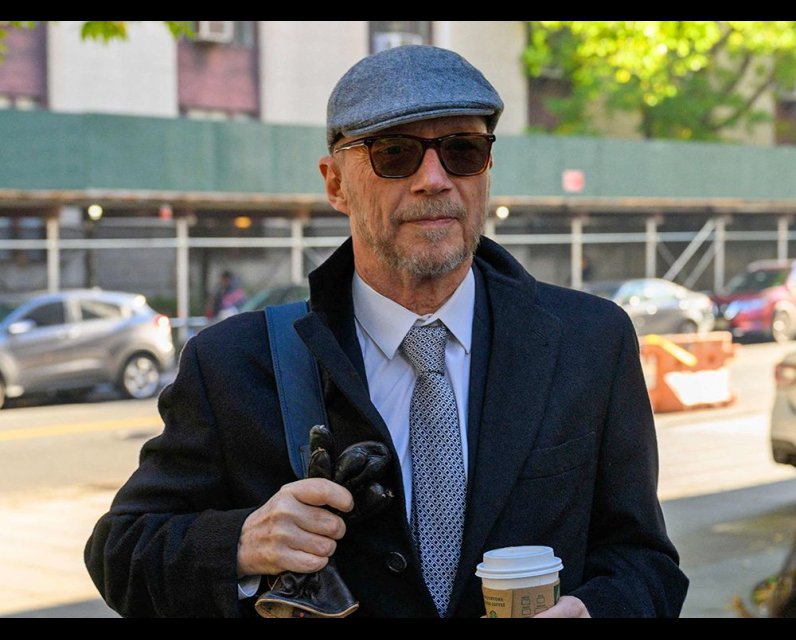
Canadian screenwriter, producer, and director Paul Haggis, who has been behind some of Hollywood’s most acclaimed Oscar-winning films, paid nearly $2 million to a woman who accused him of raping her after a film premiere.
Notification of the payment as full settlement in the case, filed in a New York court on Friday, shows Haggis paid his accuser, Haleigh Breest, an amount significantly less than the US$10 million jury verdict against him in 2023.
Breest’s lawyer did not respond to several requests for comment.
Haggis’s lawyer for the settlement process, Imran Ansari, said Haggis and Breest “agreed to a post-trial resolution to avoid further protracted litigation,” after Haggis appealed the jury’s verdict.
“Mr. Haggis has consistently and vehemently denied the claims against him, and he maintains his belief their interaction was consensual… Without any admission of fault by Mr. Haggis, and acknowledging that he maintains his innocence, the parties have mutually elected to put this matter behind them.”
Haggis’s trial lawyer, however, who defended the filmmaker at the 2022 trial, had a more provocative reaction: “It does not surprise me that she settled for pennies on the dollar because the verdict was an extreme miscarriage of justice that would have imploded on appeal. I hope the world gets that message from this obvious white flag from his accuser,” said Priya Chaudhry.
Breest’s lawyer did not respond to a request to comment on Chaudhry’s characterization.
Court records show an amended judgment for US$1,963,361 plus interest was filed on Thursday, signed by lawyers for both parties, followed on Friday by a sworn statement by Breest’s lawyer declaring “the judgment has been deemed fully paid” with no further action required.
The settlement was hammered out last month when lawyers for Haggis and Breest signed and filed a notice in the Supreme Court of New York saying that “the parties to this action have amicably resolved all disputes between or among them.”
Born in London, Ont., Haggis moved to Los Angeles to pursue a career in entertainment, becoming a writer for big TV shows in the 1980s before gaining global acclaim after winning back-to-back Best Picture Oscars — for 2004’s Million Dollar Baby starring Clint Eastwood and Hilary Swank, and 2005’s Crash starring Sandra Bullock, Don Cheadle and Matt Dillon.
He was the first writer to win consecutive Best Picture Oscars.
Among Haggis’ many other film and television credits are co-writing two James Bond movies and creating Due South, a TV series about a Mountie that was popular Canadian content in the 1990s.
Haggis, 72, now lives in Rome, Italy.
After a four-week jury trial in 2022 in New York for the civil lawsuit Breest filed against the filmmaker, Haggis was ordered to pay his accuser US$10 million in damages. He was later ordered to also pay his accuser’s legal fees of US$2.8 million.
At the trial, Breest, a New York resident, said she was a publicist working for a movie premiere in 2013 at which Haggis was a featured red-carpet guest. The two had met previously at industry events. Haggis offered her a ride home afterwards and then invited her up to his Manhattan apartment for a drink.
There, she testified, he kissed her and asked her: “Are you scared of me?” She said he pushed her onto a bed and she fought while he undressed her before he sexually assaulted and raped her, court heard.
The next day he emailed her asking about photos from the movie event the night before.
Haggis was 59 at the time and Breest was 26.
Breest sued him in 2017 when the #MeToo movement of women speaking out against sexual abuse in Hollywood was raging, fuelled by accusations from women against movie mogul Harvey Weinstein.
Haggis fought the lawsuit and accused Breest of using the moment to go after his money.
The jury heard from four other women who claimed Haggis made unwanted advances on them, to varying degrees, including one claiming rape. The jury unanimously decided in Breest’s favour.
At the time of the judgment, Haggis argued he was broke and that fighting the lawsuit had drained him financially. There were subsequent court proceedings about his assets.
That could account for the negotiated settlement to a lower amount.
In 2022, London city council voted to strip his name from Paul Haggis Park. The park had been named in honour of the famous hometown filmmaker in 2011. The issue was debated for years within city government after allegations against him became public, but removing his name did not pass until after the jury verdict against him.
It is now called Bateman Trail Park.
• Email: ahumphreys@postmedia.com | Twitter: AD_Humphreys
Our website is the place for the latest breaking news, exclusive scoops, longreads and provocative commentary. Please bookmark nationalpost.com and sign up for our newsletters here.

Unpublished Newswire

Comments
Be the first to comment