
Stay informed
Unpublished Opinions



Delays over federal gun 'buyback' program contributed to 'diminished' support, minister says
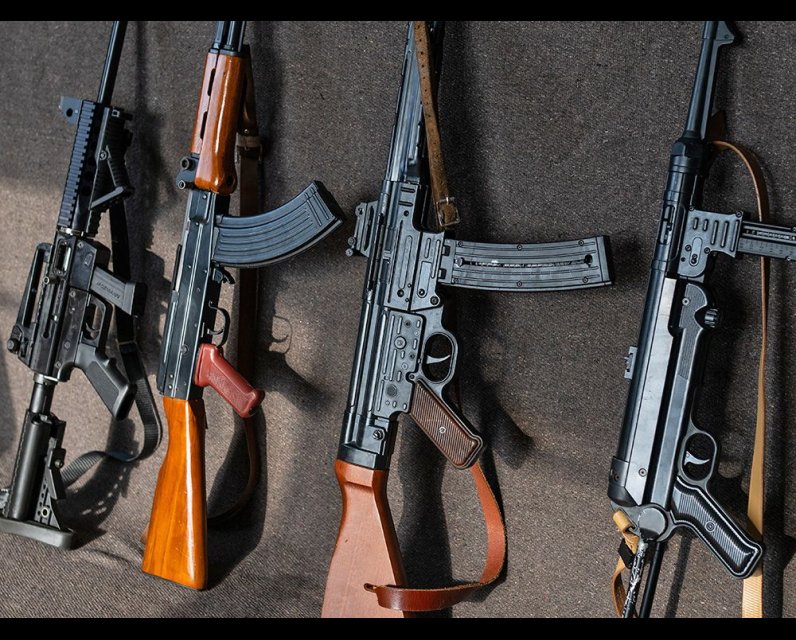
OTTAWA — Canada’s public safety minister says he believes the federal government’s delays in launching its compensation program for banned firearms has partly contributed to the drop in support among police across jurisdictions and sowed confusion among Canadians.
“There’s been a lot of misunderstandings about the program,” Gary Anandasangaree told National Post in a wide-ranging interview on Wednesday.
“Our resolve is to make sure that this program is completed in a timely manner.”
Firearms owners with one of the more than 2,500 makes and models of guns that the federal Liberal government has banned since 2020 have until the end of March to signal their willingness to participate in the federal compensation program, which was launched back in January.
So far, Public Safety Canada, the department responsible for administering the program, has reported that it has received declarations for more than 32,000 firearms, as of Feb.20.
The federal government has earmarked spending $250 million to compensate firearms owners who choose to turn over their weapons in exchange for payment, with money expected to cover up to 136,000 guns.
Anandasangaree has been urging affected gun owners to submit their declarations early should they want a chance at compensation, saying money would be doled out on a first-come-first-service basis and that submitting a declaration does not guarantee payment.
The minister suggested that as people realize the government may not have the resources to provide everyone with compensation, “they may be more inclined to enroll.” He added that he was “quite satisfied” at the progress to date.
Prominent gun advocacy groups and their lobbyists have urged Prime Minister Mark Carney to reverse course on the policy, which was first promised during the 2019 federal election campaign under his predecessor, former prime minister Justin Trudeau.
Some 1,500 models and their variants were first banned in May 2020, such as the AR-15, following the mass shooting a gunman carried out in rural Nova Scotia. Since then, hundreds more makes and models of firearms it has deemed as too dangerous for public use have been added to the list.
Firearms groups also point the to results from a pilot that was run in parts of Cape Breton last year that only amounted to 25 guns being handed out by some 16 individuals, when officials announced it could have received upwards of 200.
“The pilot numbers were not as robust as we had expected,” Anandasangaree said, adding he believed Canadians would nonetheless still take part in the program.
“As we get closer to the deadline, and as people look at rightfully getting compensation for a firearm that they can no longer use, we’ll be registering in higher numbers.”
Regardless of whether impacted firearms owners choose to register their weapon in the hopes of receiving compensation, the federal government has set a deadline of October 2026 for when they must hand their banned firearms over to police or make them inoperable them through deactivation.
That date is when an amnesty period shielding owners of these banned firearms from any liability is set to expire— and is a date that Anandasangaree told National Post the government is not open to extending.
“This has been litigated for about five years,” the minister said, adding it has been the subject of many delays.
Asked whether he believes the government’s delays have impacted its success, the minister suggested it has caused some Canadians to question the program.
“I think people may have been skeptical that whether we’re going ahead with it because of the number of extensions … or the delay in implementing the program.”
Since its official launch, a majority of provinces and territories have publicly indicated they have no plans to participate , with different premiers saying they do not believe targeting lawful gun owners to be the correct policy from the federal government.
Anandasangaree said he believed there was initially buy-in, which has dropped over time.
“I think over time, it diminished, in part, perhaps because it was delayed for so long,” the minister said.
“But ultimately, I will say, notwithstanding their position with respect to the program, they have an obligation. Each police of jurisdiction has an obligation on October 31 to ensure that they enforce law.”
Many municipal police services, including those across Ontario, have rejected taking part.
He reiterated that the federal government has designed the program in such a way that it will be able to collect firearms declared under the compensation program by deploying mobile collection units, which he suggested would happen sometime this spring.
Officials also plan to look to the RCMP. Anandasangaree also reiterated the federal government would not look to pull from existing police resources to carry out collection efforts, but rely on individuals who may be retired or were off-duty.
The minister confirmed issues regarding Saskatchewan and Alberta, which have each taken legislative steps to effectively block the policy, remain unresolved.
Without a resolution, he said firearms owners who have registered to take part in the compensation program will be out of luck.
The Public Safety department reports that as of Feb.20, some 2,700 firearms had been declared in Alberta, as compared to some 450 in Saskatchewan.
Anandasangaree said officials were looking to see whether any exemptions could be provided so gun owners could received compensation.
“They’re essentially disenfranchising law-abiding firearm owners in Alberta and Saskatchewan, who are entitled to compensation from the federal government.”
When it comes to other provinces, the federal government reports that around 13,000 firearms have been declared in Ontario and around 7,300 in British Columbia.
Asked whether he has any regrets about the controversial program, the minister pointed to previous statements that he would have designed it differently from the outset and launched it earlier.
“It’s caused some confusion for Canadians,” he said.
National Post
Our website is the place for the latest breaking news, exclusive scoops, longreads and provocative commentary. Please bookmark nationalpost.com and sign up for our politics newsletter, First Reading, here.

Unpublished Newswire

Comments
Be the first to comment