
Stay informed


Increasingly desperate Iran raises risk of 'last gasp' terror attacks in Canada, U.S.
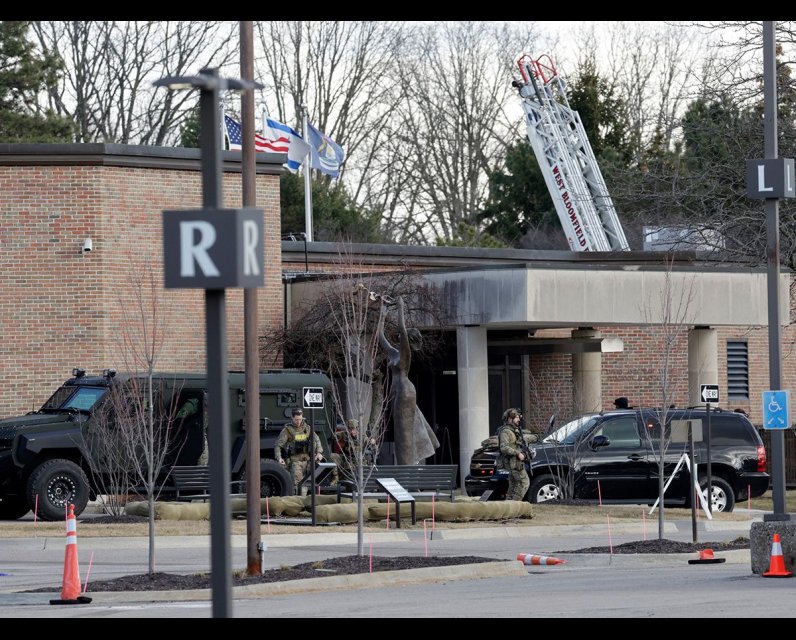
WASHINGTON, D.C. — The risk of domestic terror attacks is rising amid the war with Iran, and both Canada and the U.S. have already seen several incidents in recent weeks, with some directly related to the conflict. These include three people shot dead outside an Austin, Tex. bar on March 1 by a man expressing support for Iran; a March 12 car-ramming attack at a synagogue in the Detroit area by a man whose brother is alleged to have been a Hezbollah commander killed by Israel in the war; a convicted terrorist-supporter killing a man at a Virginian university also on March 12; and drive‑by shootings in Toronto at the U.S. consulate and several synagogues since the start of the war. There was also an attempted attack with explosives by two ISIS supporters at an anti-Islam rally in front of Gracie Mansion, residence of the Muslim mayor of New York City, Zohran Mamdami on March 9.
To assess the risk situation, National Post spoke with Javed Ali, a former FBI counterterrorism expert who previously worked at the U.S. National Counterterrorism Centre and on President Donald Trump’s National Security Council, now professor at the University of Michigan’s Gerald R. Ford School of Public Policy. The interview has been edited for length and clarity.
National Post: We’ve reported on how the war with Iran could lead to more antisemitic attacks and terrorism in North America, and we’re already seeing an uptick in violence. What’s your take on the attacks so far?
Javed Ali: It’s still very early to get a full sense of the range of motivations here. But as I said at the beginning of the conflict, the risk of terrorism tied to this conflict has obviously increased. There are really two ends of that spectrum.
On one end, there’s the potential for Iranian-directed attacks — operations organized and sponsored by the Quds Force, Iran’s unconventional warfare wing. The Quds Force has attempted to launch attacks against the U.S. homeland for the past 15 years. They’ve not only thought about it repeatedly but have actually tried (including several assassination plots). Whether they’ll try again, given the current state of the conflict, that is an open question. But I think the possibility seems higher for those types of operations to once again be attempted because this (war) is an existential threat to the regime. We saw (on Tuesday) that Ali Larijani (a very senior Iranian leader) was killed, right? So the regime is in a really difficult spot in terms of its upper ranks.
At the same time, even when the Quds Force has tried to launch plots here (in the U.S.), they’ve fizzled out. They’ve been disrupted and detected. I think that is because Iran doesn’t have the same ability to have its personnel operate here the way it can in the Middle East and in Europe, Latin America, and Asia — all places where you’ve seen Iran — either unilaterally, or working with Hezbollah — conduct terrorist attacks for decades. But here inside the U.S., it just seems to be a more difficult environment for them.
The other end of the terrorism spectrum involves people’s individual anger over what’s happening. That is completely independent of anything that Iran would try and direct or guide or support. We will probably see a higher level of what one would call lone-offender attacks or lone-wolf attacks. These have their own set of challenges. They’re not backed by a foreign government. They’re not part of a foreign terrorist organization either. But at the same time, you’re dealing with people living inside the United States who may or may not be American citizens who almost never are subjects of prior investigations and are not currently under investigation or surveillance. They haven’t committed crimes. Their behaviours are not alerting others around them like family, friends, or co-workers, who would report them to law enforcement or to a local FBI office.
So if those are all the features of what a lone-offender attack looks like, how do you stop someone from then mobilizing to violent action or terrorism when that external trigger happens?
We’ve already seen a few instances in recent weeks: The Austin, Tex., shooting, which appears motivated by anger over the war; the attempted attack on a synagogue in West Bloomfield, Mich., which I don’t think was planned before but was seemingly triggered by the death of the attacker’s brothers, who were reportedly Hezbollah fighters; the Old Dominion (University in Virginia) shooting; and the pro-ISIS guys at Gracie Mansion in New York. Were they also spurred by the war with Iran, or was there a different set of motivations driving them …? We have four different data points here. They’re all different in their own sort of orientation, and it’s hard to come up with these big judgments about where the trend line is here.
Is it likely that Iran-linked loyalists (such as Iranian Revolutionary Guard Corps members living in Canada) would risk their lives in North America to carry out lower-level attacks like drive-bys or arson?
If people with those ties are here, they haven’t mobilized in large numbers. Even during intense fighting in Gaza, we saw no Hamas-directed attacks in North America. Whether that changes as the conflict deepens remains to be seen.
Could Tehran be blending Hamas-style motivations to create hybrid threats in the West? Could it be behind any of the attacks we’ve seen thus far?
We’re going to have to wait and see what comes out of the investigations, but right now, there’s no evidence of that. If there are Iranian people who’ve been tasked by Iran to conduct operations here, much the way they’ve tried to launch these plots over the past 15 years, no one has been publicly arrested yet. We haven’t seen any other attempted attacks (by Iranian operatives). Maybe that means they actually don’t have an operational presence (here).
So do you believe the attacks thus far are examples of opportunism? Could Iran retaliate through North American networks or proxies?
The regime is under incredible pressure, and I would argue that the loss of Ali Larijani to the regime’s cohesion is probably bigger than even (Ayatollah) Ali Khamenei. He was running the country’s national security enterprise for months, even before this war broke out. He was probably more responsible for how Iran has responded over the past few weeks than anybody else. So with his death, the question now turns to who will replace him and what calculus is going on inside the IRGC in terms of their decision to keep fighting the way they’ve been fighting conventionally, or to flip the page and also start to increase the level of cyberattacks.
There was a successful (Iran-linked) cyberattack here against a company in Michigan last week, which had a significant impact on the firm’s information technology system and disrupted its business operations. On the terrorism side, is the Quds Force now trying to activate a plan to launch terrorist attacks worldwide, either unilaterally or in partnership with a group like Hezbollah? That partnership with Hezbollah is the most dangerous part of Iran’s terrorism playbook. But whether they’re going to use it or not is the $64,000 question.
As for whether Iran is trying to leverage operational networks in North America right now, it is unclear whether the networks are even here. But if they are, what is Iran trying to do with them? Is it just lying low and continuing to collect intelligence and not trying to do anything because now is not the time? Or do they actually try to activate a network if it exists? These are all questions we don’t know the answers to.
Some Jewish groups fear a “Sydney-style” intelligence failure — a large-scale attack on a Jewish site (like the mass shooting at the Hannukah party at Bondi Beach). Is that realistic?
We almost had one in West Bloomfield. We still don’t know all the details about (the synagogue attacker, Ayman Mohamed) Ghazali and his motivation or the timeline for plotting the attack. It could have been worse. It looked like he was basically trying to drive into the (onsite Jewish) school or the synagogue to either explode or ignite (the vehicle) into flames. He wasn’t just trying to kill himself, so it could have been worse (nobody was killed, apart from the suspect).
Is there somebody else out there who’s angry over the war and wants to now act out on that grievance, and instead of trying to attack a target with a truck, will do it with a firearm or weapon? That is plausible, too. We’ve seen two shootings already in the U.S.: the Old Dominion University attack and the bar shooting in Austin, Tex. They weren’t directed at Jewish interests or targets, but is it plausible? Yes. Will it happen? Hopefully not.
What concerns you most about possible Iran-linked violence in North America over the coming months?
As the war continues, it’ll continue to create the risk of the kind of terrorism we’ve seen already. That is, very opportunistic lone-offenders looking for targets of either opportunity or something that was very directed and focused. I do think that will be persistent. I just can’t tell you when and where and who. But at the same time, as the regime continues to face this relentless pressure … I think the potential for Iranian-directed attacks increases even further. That risk has already increased just because of the war breaking out. But in the last gasp of the regime, or the IRGC … if the ship is sinking, then why not launch or try to launch a major act of terrorism against the U.S. or Jewish or Israeli interests somewhere in the world?
National Post
tmoran@postmedia.com
Our website is the place for the latest breaking news, exclusive scoops, longreads and provocative commentary. Please bookmark nationalpost.com and sign up for our newsletters here.

Unpublished Newswire



Comments
Be the first to comment