

Unpublished Opinions
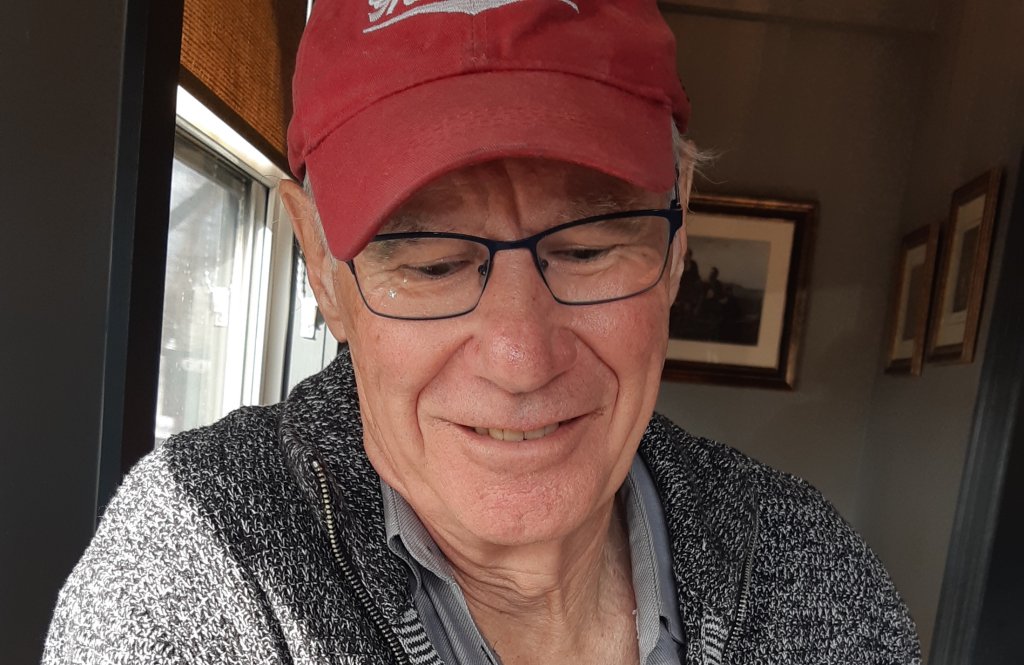
Clive Doucet is a distinguished Canadian writer and former Ottawa city councillor. He was elected for four consecutive terms from 1997 to 2010 when he retired to run for Mayor. As a city politician he was awarded the Gallon Prize as the 2005 Canadian eco-councillor of the year. He was defeated twice by Jim Watson in 2010 and 2018 when he ran for the Mayor’s chair.
Clive Doucet: April Flowers
April is National Poetry Month. It was invented by the American Academy of Poets in 1996 and been celebrated in Canada since 1998. It’s a peculiar celebration because you are not asked to celebrate any place, any particular poet or event. National Poetry Month just asks you to celebrate poetry in a general way; which is a little strange because no one has ever been able to describe exactly what poetry is; not even the brilliant Samuel Johnson the author of the first English dictionary could give a definition of poetry. When asked: Sir what is poetry? He replied: Why Sir, it is much easier to say what it is not. We all know what light is, but it is not easy to tell what it is.
Poetry is everywhere and nowhere at all at the same time, but like light, it brightens the day wherever it lands. Poems are used to celebrate an election; to mourn the passing of loved ones; to remember a forgotten soldier, to celebrate a summer day. It can be heard in the lullaby of a mother’s song to an infant, and the drum beat of a war. Just as a plow turns the soil to plant a new crop, poetry has been a part of the way humans have been humans for a very long time. So why do we need something special called National Poetry Month?
We do because poetry has fallen on hard times. It does not occupy the same place in our communities and nations as it used to do. It wasn’t so long ago that poetry was part of every school curriculum. Students were required to memorize verses and declaim them in class. The first verses of Longfellow’s great poem Evangeline about the Acadian exile used to be committed to memory and declaimed by children all over North America from the Pacific to the Atlantic. Part of a normal education was to learn to be able to stand up and say in a voice that could be heard by your class mates the first verses of Evangeline, A Tale of Acadie:
“This is the forest primeval. The murmuring pines and the hemlocks,
Bearded with moss and in garments green,
Indistinct in the twilight,
Stand like Druids of eld, with voices sad and prophetic.“This is the forest primeval; but where are the hearts that beneath it
Leaped like a roe, when he hears in the woodland the voice of the huntsman
Where is the thatch-roofed village, the home of Acadian farmers?
Men whose lives glided on like rivers that water the woodlands…”
This quote is from a book I have in my library that was inscribed by the first owner, Sara Mc Grasty in a place called Roland Park on February 17, 1897. Children also memorized the first lines of Lincoln’s great Gettysburg Address which are poetic if anything ever was. This doesn’t happen anymore. Sometime after the Second World War educators decided memorizing poetry was a waste of time. This was unfortunate because poetry is meant to be spoken as much as read.
The first Greek poems were all passed on through the spoken word before they were written down. Homer is normally given the authorship of the Iliad, the great account of the Trojan War, but scholars have long been convinced Homer was just the conduit for a poem that had been passed on for centuries from voice to ear. Somebody with writing skills eventually just wrote down what Homer declaimed. This makes perfect sense because the Iliad sounds much better spoken when its grand rhythms and repetitions sing like the chorus of a song, but on the written page it seems lugubrious and repetitive.
Happily, educators are now beginning to reverse their earlier opinion about the importance of declaimed poetry. There is now a school of thought that it is a good thing to memorize and declaim because it triggers parts of the brain that aren’t activated by scrolling on a screen or reading silently. It also connects our species to our ancestors in a way that nothing else does. Evangeline wasn’t just a poem about two star crossed lovers who refused to fight for any side in the French and British colonial wars. Evangeline gave every student who read the poem an unsanitized glimpse of that long war from the point of view of some of its many victims.
In the First World War trenches, both English and German soldiers passed the time by reading poetry. English soldiers carried the Oxford Book of English Verse which contained poems spread over 700 years. For the Germans it was a Protestant Book of Psalms and Goethe’s ‘Welcome and Farewell’ book of poems; that first Christmas in the trenches was celebrated by the troops laying down their arms and simply walking across no man’s land to convey Christmas greetings to the other side. This never happened again because the generals on both sides forbade it.
Sometimes poetry can save a life. It did for some Athenians who lost their war against Sicily (415-413 B.C.) Defeated Athenian sailors and soldiers who could quote some lines from Euripides were sent home. Those who couldn’t died of thirst and slavery in a stone quarry. Poetry has always connected people across time to feelings and events; and given our species a sense of our shared humanity. We need this today, more than we ever had. It’s worth celebrating.
Clive Doucet is a poet and former Ottawa city councillor for Capital Ward. He now lives in Grand Etang, Nova Scotia where he raises bees and writes poetry. His last book of poems was ‘Canal Seasons’ which celebrated the Rideau Canal in Ottawa.

Comments
Clive
Try putting your poems to music like I did.
My words of 30 years were given new life.
https://suno.com/s/qSSpSRQLFFiXykti