
Stay informed



Rising fuel prices prompt Canadians to consider EVs. Here's how much they cost
The continued conflict in Iran is driving oil prices higher, with those increases now reflected at gas pumps across Canada.
At the same time, the prospect of Chinese-made EVs entering the Canadian market is prompting more consumers to consider investing in an electric vehicle.
In fact, a survey by Rates.ca , which was conducted between February 27 and March 2, right as the conflict in Iran began, found that 30 per cent of Canadians are open to buying an EV.
Meanwhile, search volume for electric vehicle models on the Rates.ca insurance quoter has climbed, with EV interest rising by 40 per cent in March compared to the same time last year.
However, cost remains the biggest barrier. The survey found that 59 per cent of Canadians interested in buying an EV cited purchase price as their primary concern.
Erik Johnson, vice president and senior economist at BMO Capital Markets, told Rates.ca that EVs typically cost upwards of $50,000 in Canada.
Meanwhile, 2025 research from Driving.ca found the cheapest new car in Canada was the Nissan Versa, with a base price of $20,798, while the cheapest EV in Canada was the Nissan Leaf, with a base price of $41,748.
However, that may soon change.
In January 2026, Prime Minister Mark Carney announced a trade deal allowing an initial 49,000 Chinese electric vehicles into the Canadian market, lowering a 100 per cent tariff on imports, imposed in 2024, to six per cent.
Chinese EVs can cost $10,000 to $15,000 less than comparable models currently popular in Canada.
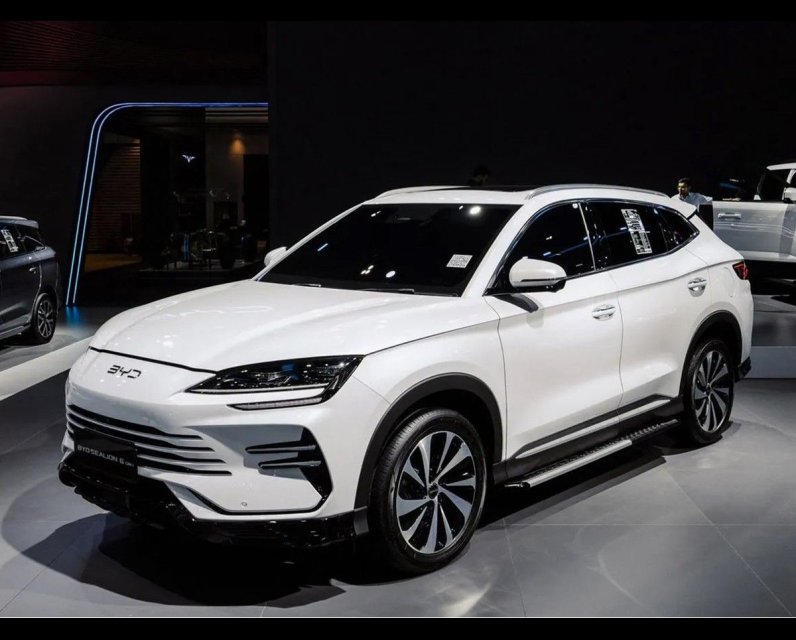
For example, BYD, a Chinese manufacturing company that surpassed Tesla as the world’s top EV seller last year, previously launched its Dolphin Surf model in Europe for the equivalent of US$26,100 .
The Canadian auto market officially opened to Chinese-made electric vehicles on March 1, and BYD has signalled plans to open 20 dealerships nationwide this year.
Starting in 2027, 10 per cent of the EVs from China must be “affordable,” with an import price of $35,000 or less. This quota will increase to 50 per cent by 2030.
However, none of the electric vehicles entering Canada in 2026 will be required to meet this threshold, meaning it may take time before lower-cost models become widely available.
Not everyone is happy about the introduction of Chinese EVs. Ontario Premier Doug Ford previously called on Canadians to boycott Chinese-made vehicles.
In an X post, he said: “Make no mistake: China now has a foothold in the Canadian market and will use it to their full advantage at the expense of Canadian workers.”
Still, the Rates.ca survey found 56 per cent of respondents who were either unsure or interested in purchasing an EV would consider a Chinese-built model.
There are also incentives encouraging consumers to buy Canadian-made EVs.
The Electric Vehicle Affordability Program (EVAP), introduced by the federal government in February 2026, offers rebates of up to $5,000 for battery-electric and fuel cell electric vehicles, and up to $2,500 for plug-in hybrid vehicles.
EVAP eligibility is capped at $50,000, unless the vehicle is Canadian‑built.
Make no mistake: China now has a foothold in the Canadian market and will use it to their full advantage at the expense of Canadian workers.The federal government is inviting a flood of cheap made-in-China electric vehicles without any real guarantee of equal or immediate…
— Doug Ford (@fordnation) January 16, 2026
Meanwhile, fuel prices have reached a national average of more than $1.70 per litre this month , compared to $1.56/L last month and $1.29/L last year.
Some estimates suggest that EVs save drivers $350 per month in fuel costs, including a recent report by Clean Energy Canada .
The report, published on April 9, added that the combination of rising fuel prices with EVAP incentives has widened the cost-of-ownership gap between EVs and gas-powered vehicles.
It said: “Back in January, for example, the Chevy Equinox EV would have saved drivers $22,000 compared to the gas Chevy Equinox over 10 years of ownership. But with the new incentive and March 20 gas prices, savings have now increased to $34,000 — a $12,000 difference.”
On April 8, the federal government announced nearly $11 million in funding to expand charging infrastructure across the country, in a further attempt to encourage more Canadians to adopt electric vehicles.
Our website is the place for the latest breaking news, exclusive scoops, longreads and provocative commentary. Please bookmark nationalpost.com and sign up for our daily newsletter, Posted, here.

Comments
Be the first to comment