
Stay informed
Unpublished Opinions


'Massive risk': Chinese EVs are the first test for Canada’s new strategic partnership with China
OTTAWA — Criticism over Canada allowing Chinese electric vehicles access to Canada’s market is mounting, with industry and geopolitical analysts warning of the risks associated with increased engagement with China.
“It’s a massive risk,” said Brian Kingston, president and CEO of the Canadian Vehicle Manufacturers’ Association.
“Canada’s auto industry depends on our integration with North America and the U.S. specifically, that’s been the foundation of the sector, going all the way back to the auto pact.”
In January, while visiting Beijing, Prime Minister Mark Carney signed a new strategic partnership with China, which included allowing 49,000 Chinese EVs access to the Canadian market, in exchange for the lowering of Chinese tariffs on Canadian canola and seafood exports.
While this was welcome news for the Canadian agri-food industry, it was less welcomed by the Canadian auto manufacturers, who argue it will undercut Canadian industry and workers.
“An estimated hourly wage at a Chinese [Original Equipment Manufacturer] is between two and four U.S. dollars an hour,” said Kingston. “Compare that to a unionized vehicle production plant in Canada, where your average wage is about $45 an hour, and that also includes pensions and benefits and a whole range of other advantages.”
Carney’s government said this was an opportunity to give Canadians a cheaper option in a market that has struggled to provide vehicles at a reasonable price for consumers. The government also said in five years, more than 50 per cent of the vehicles will have an import price of less than $35,000.
But even Joanna Kyriazis, director of policy & strategy at Clean Energy Canada, whose organization would like to see Canadian consumers access more affordable EVs, acknowledged the risk associated with increased trade with Chinese companies.
“It’s clear that this will be a delicate and sometimes difficult relationship to manage, with risks and opportunities that must be carefully weighed, as we heard from the earlier witnesses today,” she said, during testimony in front of the House of Commons committee on science and research on Thursday.
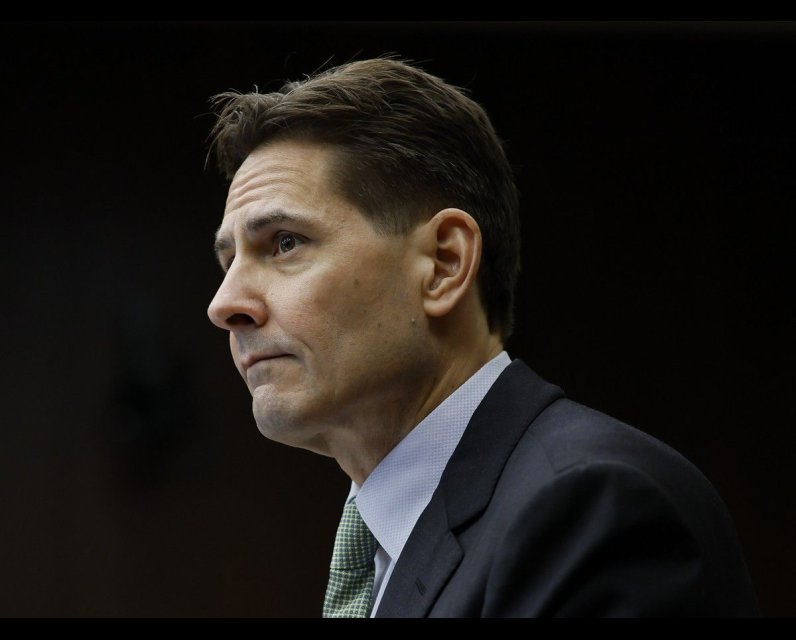
Michael Kovrig, a geopolitical advisor and former diplomat who was detained by the Chinese government for 1,000 days, said he views Canada’s new partnership with “deep concern.”
Kovrig said while he can appreciate the necessity to accelerate the green transition, provide cheaper options to consumers and hedge against an unreliable U.S. administration under U.S. President Donald Trump, he argued China is not the answer.
“Deeper economic entanglement with China is not a long-term route to achieving any of those goals,” he told the committee. “It’s a dead end.”
Kovrig took note of harmful environmental practices and human rights abuses that exist in the supply chains of Chinese EV companies.
Chinese EV company BYD has faced allegations of forced labour in the construction of its factories in both Brazil and Hungary.
A recent report by U.S.-based non-profit China Labor Watch, showed evidence of brutal labour conditions for Chinese migrant workers at its Szeged facility in Hungary.
Recently, Brazil also listed BYD on its registry of employers found to have subjected workers to slave labour conditions. The head of its labour inspection authority was then fired over the move. BYD has new electric vehicle factory at the Industrial Complex in Camacari, Brazil.
Last month during a testimony before a House of Commons committee, former senior bureaucrat Margaret McCuaig-Johnston cited a Human Rights Watch report that said aluminum used in dozens of parts in Chinese EVs are most likely the product of Uyghur forced labour.
BYD is looking at opening dealerships in the Greater Toronto Area.
In early April, China-based Zhejiang Leapmotor Technology Co. was in discussions with Stellantis over potentially building Chinese EVs at its idled plant in Brampton, Ont. The plan involved assembling “knock down” kits, where Chinese parts are shipped to Canada for final assembly by Canadian workers.
Ontario Premier Doug Ford called the plan “unacceptable,” and Industry Minister Melanie Joly outright rejected the plan, noting that any plant production must support the local supply chain.
There has also been concerns raised about the software on the Chinese EVs, which could pose risks to Canada’s data privacy. Joly has said any Chinese EVs sold in Canada will need to have Canadian tech.
When asked if the Chinese state would be able to access Canadian data through Chinese EV software, Privacy Commissioner Philippe Dufresne said it’s a “possibility,” as was the case when he investigated Tiktok, which is owned by China-based ByteDance.
Increased trade with Chinese companies will pose challenges to Canada’s new diplomatic relationship with China, said Vina Nadjibulla, vice president of research and strategy at the Asia Pacific Foundation of Canada.
“I think there are a number of concerns when it comes to this expansion of Chinese companies and their presence in Canadian market,” she said. “And human rights is one element of it, but economic security and national security concerns must also be considered.”
Former ambassador to China Guy Saint-Jacques said Canada’s policy on Chinese EVs should not have been so closely aligned to that of the United States. In 2024, former finance minister Chrystia Freeland announced a 100 per-cent tariff on Canadian EVs in line with the administration of U.S. President Joe Biden.
Saint-Jacques said Canada should set its own rules with Chinese EV makers.
“We should welcome Chinese car manufacturers but set the rules similarly to what GM Canada had to do when it went to Shanghai in 2009,” he told the committee. “We should say, you are welcome to come to Canada, but you will have, after three years, to have about 30 per cent of Canadian content, and after 10 years, it has to be 100 per cent content.”
During Thursday’s committee, Liberal MP Taleeb Noormohamed asked Kovrig whether Europe has struck “the right balance” as BYD electric vehicles have become an important part of the European car market while also maintaining their own domestic car manufacturing.
“There is no balance,” said Kovrig. “I think they are in a long term structural industrial decline.”
“How has Europe managed this, badly and inadequately so far,” he added. “Their duties and their quotas are not going to be strong enough, and their industrial bases are going to be hollowed out.”
Forced labour in supply chains is likely to become a trade issue after U.S. United States Trade Representative Jamieson Greer launched investigations into 60 economies under Section 301(b) of the U.S. Trade Act of 1974, including Canada’s, to determine whether they have failed to impose or enforce bans on imports produced with forced labour.
Carney said there exists legislation in Canada that is designed to force companies to report on their supply chains and combat forced labour elements in the Canadian supply chain.
But critics have questioned the quality of enforcement. Since 2021, it has been reported that the Canada Border Services Agency has stopped just two shipments that contained forced labour, both originating from China.
“The legislation is world class; the enforcement of the legislation is possibly less than world class,” said former Liberal MP John McKay, during a press conference on Parliament Hill alongside academics on Tuesday.
Ultimately, Nadjibulla said as Canada embarks on this new partnership with China, it will need to ensure that principled pragmatism does not result in quite accommodation.
“In the last five years, the government has developed a number of tools to protect Canadian economic interests,” she said, citing the Investment Canada Act which has blocked Chinese companies from gaining access to strategic resources, but also research protection provisions.
“We need to make sure that we’re fully applying them, even as we are now trying to stabilize relations with China.”
National Post
Our website is the place for the latest breaking news, exclusive scoops, longreads and provocative commentary. Please bookmark nationalpost.com and sign up for our newsletters here.

Unpublished Newswire

Comments
Be the first to comment