
Stay informed
Unpublished Opinions



A jolt of energy for Canada's almost-worst performer
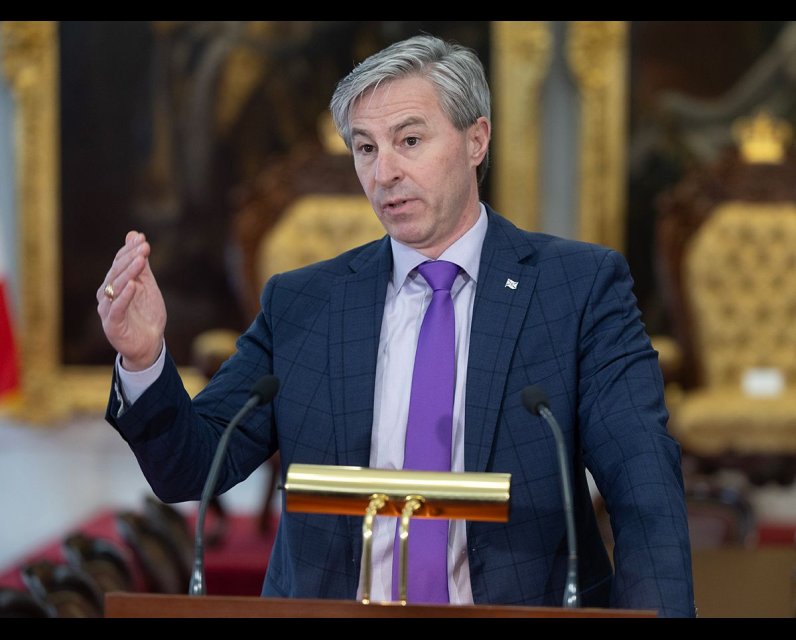
Nova Scotia Premier Tim Houston is hard not to admire. He’s not your typical status-quo accountant or cautious politician.
Houston has no interest in managing Nova Scotia’s decline. He wants to reverse course and spark a genuine cultural shift — “back to a sense that we can build things, we can do things. We just have to have the courage and confidence to do it.”
Last year, he took on the energy minister portfolio himself. This week, he appointed Stephen MacDonald, former CEO of EfficiencyOne, as deputy minister of energy. Together, they will aggressively pitch Nova Scotia as a practical antidote to global energy insecurity — rolling out the welcome mat to investors who can unlock the province’s substantial untapped potential in offshore oil, onshore and offshore natural gas, offshore wind, and geothermal.
His timing is excellent. Nova Scotia sits on one of the largest undeveloped hydrocarbon basins in the North Atlantic, while the world scrambles for reliable, affordable energy.
Yet Houston is smart enough to know that hungry investors alone won’t transform the province. His deeper challenge is rebuilding a culture of confidence and can-do spirit among Nova Scotia’s 1.09 million residents. The boldness of his vision is designed to inspire exactly that.
It’s a tall order. On a per-capita basis, Nova Scotia ranks 59th out of 60 North American jurisdictions (U.S. states and Canadian provinces) according to the latest comparable GDP data from 2024 — one of the weakest performers on the continent.
“It wasn’t that long ago that every single community in our province was thriving, whether it was fishing and shipbuilding, farming or mining,” Houston told me in a recent interview. But over time, he says, “we kind of got away from that, and we started to say ‘no.’ We banned sectors and put moratoriums on.”
The province is now running billion-dollar deficits for the second year in a row. “People want more and more from governments at a time when we’re still spending way more than we’re taking in,” he laments. As a chartered accountant turned premier, Houston knows tough choices are unavoidable. Just this week, neighbouring Prince Edward Island tabled its 2026-27 budget, projecting the largest deficit in its history.
When I asked about this year’s Nova Scotia budget — which included some deep cuts that were partially reversed after public backlash — he was refreshingly candid. “I think we got maybe a little bit too clinical and a little less human in some of the situations.” In an era of political spin, his willingness to admit the government got it wrong and apologize publicly is noteworthy.
Houston’s determination to revive the province’s economy echoes what former Newfoundland and Labrador premier Andrew Furey once said about how offshore oil helped shift the psyche of Newfoundlanders and Labradorians — moving them away from feelings of vulnerability and “have-not” status toward hope, pride and self-reliance.
At 56, Houston speaks with the energy of a younger man and zero cynicism. His vision occasionally sounds like it could come from Prime Minister Mark Carney’s nation-building playbook, but it doesn’t feel scripted. There is real conviction, not desperation, in his drive to put Nova Scotia back on the North American energy map.
In 2025, his Progressive Conservative government lifted both the onshore fracking moratorium and the decades-old ban on uranium exploration and mining. Offshore gas production, idle for seven years, is getting a second life. Last summer, the Canada-Nova Scotia Offshore Energy Regulator opened new exploration licence rounds, with bids due this month.
Early this year, the province opened a data room full of seismic and technical data to help companies evaluate onshore natural gas opportunities. To sweeten the pot and de-risk investment, the government committed $30 million — a big number for Nova Scotia — to a research and development program run by Dalhousie University that will kick-start exploratory drilling this summer.
In March, Houston and Carney jointly spotlighted the ambitious Wind West offshore wind project as a “nation-building” initiative. With potential for more than 40 gigawatts ultimately, and an initial 5 GW phase targeted for around 2033, it could be one of Canada’s largest clean energy developments.
Houston admits challenges remain, especially the $15-billion transmission cable needed to bring the offshore wind power to market, but he’s encouraged by Hydro-Québec’s recent call for expressions of interest to build it. There’s also growing interest in data centres, he adds, helped by the fact that major transatlantic cables from Europe land in Halifax.
This isn’t being directed from behind a desk. Houston is racking up the air miles, personally courting investors and industry leaders. “Saying you’re open for business just doesn’t cut it,” he says. “You have to show up.”
In recent months he’s been at multiple key industry conferences — CERAWeek in Houston, the PDAC mining conference in Toronto, a major offshore wind event in New York. Earlier this month he co-hosted a roundtable with Alberta Premier Danielle Smith. He’s heading back to Texas soon and will attend an upcoming offshore wind conference in Spain.
The conditions for a fresh look at Nova Scotia are encouraging; robust global demand and prices for oil and gas, energy-hungry European markets within reach, and a province that sits on major resources yet produces virtually none while paying high costs to import energy.
Still, Houston harbours no illusions. He is competing for capital in a market that often tilts south. Practical hurdles remain — there are currently no drilling rigs in the province. “One of the major producers told me they have 20,000 drill prospects, just in Western Canada,” he says. “So to get them to focus on Atlantic Canada … it’s a long way away.”
Yet he sees growing collaboration across provinces. He speaks warmly of his partnership with Smith: “We work really closely. They’ve been very helpful. I think they can see the benefits to the country if we have another producer here.”
He is optimistic that some Canadian producers will seize a foothold in Nova Scotia. While neighbouring New Brunswick also sits on significant gas resources, he notes, the province retains its fracking ban.
“I’m investing a lot of political capital in this,” Houston says, “political capital that many people aren’t willing to invest. If we can get the Nova Scotia industry moving in a positive way, then others will follow. They just won’t lead.”
National Post
Our website is the place for the latest breaking news, exclusive scoops, longreads and provocative commentary. Please bookmark nationalpost.com and sign up for our newsletters here.

Unpublished Newswire


Comments
Be the first to comment