
Stay informed
Unpublished Opinions



Trade war thirst? Banning U.S. alcohol sales has reshaped Canadian palates
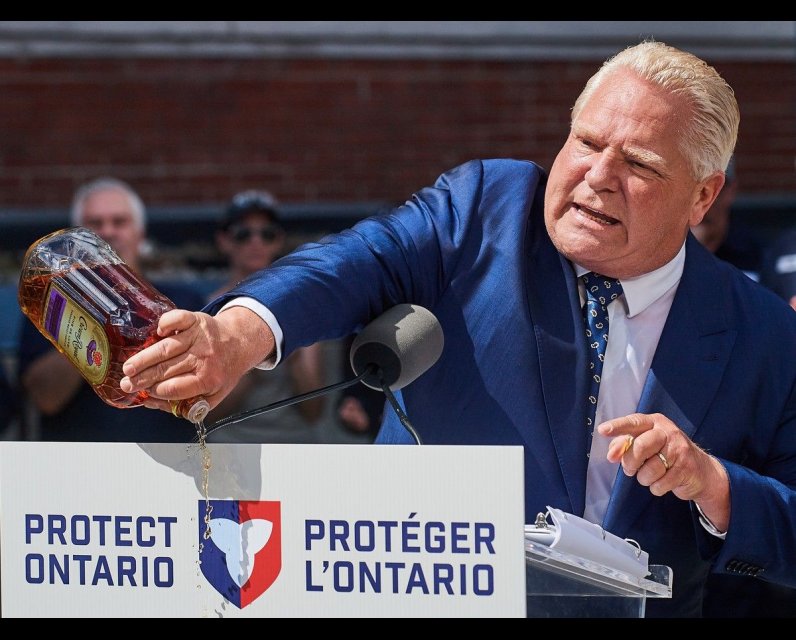
WASHINGTON, D.C. — Canadian provinces said ça suffit to American booze last year, pulling U.S. alcohol from the shelves in response to U.S. President Donald Trump’s threats to make Canada the 51st U.S. state amid a tariff-laden trade war.
Politicians and provincial premiers supported the bans, and Canada’s drinkers have been encouraged to say “Cheers!” with homegrown grains instead.
All but two provinces, Saskatchewan and Alberta, still have bans — and signs encouraging shoppers with pitches like “Buy Canadian Instead” and “For the good of Ontario. For the good of Canada.”
Prime Minister Mark Carney lightheartedly reminded Canadians of this at the Liberal party national convention in Montreal last weekend, joking about the lack of American bourbon in Canada.
“Anyone had any bourbon recently?” he quipped, drawing cheers. But hidden in his joke was a serious reminder to support the national economy.
Canadians have largely done just that. While overall consumption of alcohol is down — a trend that is true worldwide — exports of U.S. spirits to Canada have fallen, while Canadian spirits sales have increased.
The provincial bans and subsequent drop in U.S. exports have left a bad taste in Washington, and the 2026 National Trade Estimate Report released last month by the U.S. Trade Representative makes it clear that the provincial bans will be a sticking point in the upcoming review of the Canada-U.S.-Mexico Agreement this summer.
The Trump administration’s frustration is reflected in some stark trade numbers.
U.S. spirits exports to Canada fell more than 70 per cent year-over-year between March and December 2025, falling from $203 million to $60 million, according to the Distilled Spirits Council of the United States. Statistics Canada’s data show a 68 per cent decline in U.S. alcohol imports.
Once-popular U.S. vodkas, whiskies, and bourbons are nearly impossible to find in most of Canada today. Brown-Forman, the company that owns Jack Daniel’s and Woodford Reserve, for example, reported a 59 per cent plunge in Canadian sales between May 2025 and January 2026.
But the bans haven’t just emptied shelves, they’ve changed drinking habits.
“We got rid of pretty much all of the American‑made whiskey — stopped buying it and haven’t looked back,” said Dan Nolan, co-owner of Tommy’s Speakeatery, a pub and restaurant in Regina, Sask.
Kevin Rusnell, managing partner of OutSpoken Brewing at Peace Restaurant in Sault Ste. Marie, Ont., has replaced U.S. liquors for cocktails, opting instead for more expensive Canadian-made substitutes.
“Plenty of community options are really great, including some really good gins and vodkas, and there’s amazing Canadian whiskey as well,” he said.
Both Rusnell and Nolan say their clients are happy with the alternatives.
“It’s very rare that anyone has any comments about it,” said Nolan.
Most customers are lighthearted about it, he said, and they enjoy joking, like Carney, about the lack of bourbon. Authentic bourbon is the one clear gap, as it’s hard to replicate under Canadian regulations, and bourbon-flavoured alternatives are pricey.
While happy with their customers’ adoption of Canadian booze, both men noted that sales have dropped for their businesses over the past year.
Nolan says his regulars are limiting their visits, which he attributes to the cost-of-living crisis.
“We’ve seen a decrease of about 30 per cent in alcohol sales across both businesses,” said Rusnell, a trend he also attributes to financial constraints.
“People are deciding that going out and paying $10 or $12 for a beer isn’t worth it anymore.”
He added that while Canadian domestic sales are up, it’s not enough. Craft brewers can’t compete with cheaper U.S. production, while facing heavy taxes and regulatory layers, which is raising prices and crushing small operators.
“It’s hurting us, compressing margins, and it’s making some of these businesses nonviable,” Rusnell said, pointing to the recent closures of Manitoulin Brewing in northern Ontario and Giant Brewing in Thunder Bay. He wishes the government would alleviate the industry’s tax burden.
Canadian production is pricier for craft brewers and distilleries alike, which means he’s had to raise prices, but he says he’s happy to support the U.S. bans “as a point of leverage as a country.”
As a result of the sales bans, Canadian wines and spirits have seen their fortunes rise. Data from January 2026, according to LCBO, shows Ontario LQA sales up 52 per cent, with red wine leading the way at 63 per cent, and other wine regions in Canada have enjoyed double-digit sales increases. Canadian whiskey sales have jumped a whopping 94 per cent.
Overall, according to LCBO, Canadian alcohol sales are up 18 per cent.
Kyla Lee, owner of Deep Blue Distilleries, in Richmond, B.C., says she has seen a sustained spike in orders — a tenfold increase.
“Sales have gone up massively,” she said. “The consumers want locally made products. They want to have Canadian-made products and have the money stay in Canada.”
But will the trend stick if trade tensions ease?
Both Lee and Rusnell believe buying habits, once formed, are hard to break.
“People have habits, and once those habits change, it’s hard to ship them back,” Rusnell said. “So I do believe that we’ll continue to sell more Canadian alcohol because of the tariffs and because of the damage that Trump’s done.”
Nolan was less sure. He believes cost-of-living concerns will trump anti-Trump sentiment eventually.
“Once this all subsides … if the tariffs are all gone and you’re not paying that necessary premium, I don’t see why they wouldn’t (revert to U.S. products),” he said.
Such a reversal would please the White House, of course, and trade experts expect friction in the months ahead with the sales bans remaining in place. But lifting the bans isn’t up to Carney, it’s up to the provinces.
“The USTR has been clear that these Canadian provincial alcohol bans are market access barriers and that they greatly conflict with the commitments made under USMCA,” said Andrew Hale, fellow for trade, economics, and international relations at D.C.-based Advancing American Freedom.
“What some American officials fail to appreciate is that Canada is not a union like the United States but a confederation where the provinces have more power and autonomy than the individual American states,” he added.
In other words, undoing the bans will require persuasion province by province, not pressure from the White House alone.
National Post
Our website is the place for the latest breaking news, exclusive scoops, longreads and provocative commentary. Please bookmark nationalpost.com and sign up for our newsletters here.

Unpublished Newswire



Comments
Be the first to comment