
Stay informed



Toronto man who killed off-duty firefighter at a café now out of hospital despite 'significant threat'
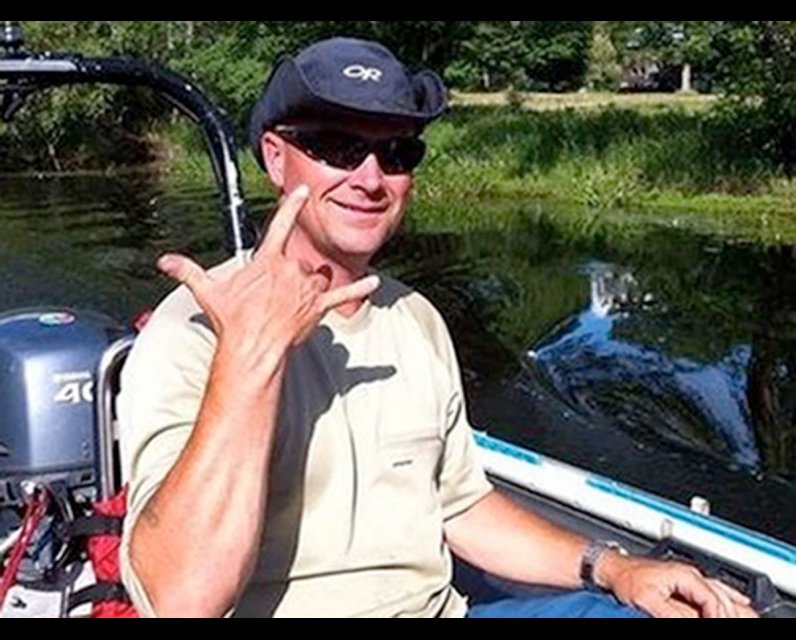
A Toronto man found not criminally responsible for the unprovoked killing of an off-duty firefighter at a café in 2013 who “continues to represent a significant threat to the safety of the public” has moved out of hospital, only has to check in with his handlers every two weeks, and is now living in a residential facility that’s a quick walk or bus ride from the city’s Centre for Addiction and Mental Health.
Nabil Huruy, 35, had been living in the hospital’s secure forensic unit.
“His first transition to community living occurred when he moved to” a 24‑hour supervised residence on Dec. 1, 2025, “where he presently resides,” said a recent decision from the Ontario Review Board (ORB).
Police charged Huruy with second-degree murder for the death of Markham firefighter Dominic Parker. But Huruy — who has been diagnosed with schizophrenia and cannabis use disorder (in remission, in a controlled setting) — was found not criminally responsible in December 2015 on account of a mental disorder.
The Dowling Avenue facility where he’s now living is Kelly’s Residence, which bills itself as “a large three-storey home in the King and Jameson area” with 19 single bedrooms.
“Over the past year, Mr. Huruy has remained psychiatrically stable on clozapine, with no episodes of aggression, threats or behavioural dysregulation,” said the May 12 decision from the independent tribunal that regularly reviews the status of individuals found not criminally responsible due to mental disorder.
“His mental status has been consistent, and he has continued to follow rules and cooperate with staff. He has not shown signs of acute psychosis, and his presentation has been calm, organized, and appropriate throughout the reporting period.”
The ORB heard that Huruy entered a Danforth Avenue café in Toronto on Sept. 14, 2013, “where the victim was seated with other patrons. After briefly sitting near the victim, Mr. Huruy suddenly produced a knife and stabbed the victim in the head, and, when pulled away, used a second knife to stab the victim in the face. The victim was transported to hospital, where he remained in critical condition until succumbing to his injuries. Mr. Huruy was later identified through a taxi he entered after the incident and was arrested the same day.”
Huruy was born in Saudi Arabia and immigrated to Canada at age 12 with his mother and sister, said the decision.
“He is the younger of two children and has maintained close relationships with his family, including renewed contact with his father in recent years. His childhood was described as stable, with no history of abuse or neglect.”
Initially, he did well in the Canadian school system, said the decision. “His academic performance declined in high school, and he ultimately left a few credits short of graduating.”
Before the killing, Huruy had convictions for theft, failing to comply with release conditions and break and enter.
In the days leading up to Parker’s stabbing, Huruy “exhibited behavioural and perceptual disturbances, including two police encounters” on Sept. 11, 2013, said the decision. “He was assessed in hospital but denied psychotic symptoms and was discharged. In the period immediately before the index offence, he reported increasing fear and persecutory beliefs. He armed himself with two knives for protection and later described interpreting others’ intentions and believing that the victim posed a threat to him.”
Huruy “has adjusted well to supervised community living,” at the Dowling facility, said the decision.
“He has complied with all reporting requirements, maintained medication adherence, and managed his daily routines without difficulty. Staff describe him as reliable and cooperative, and there have been no concerns related to substance use, safety, or elevated risk during this period.”
The facility “provides continuous staffing, supervised medication administration, routine mental status monitoring, and immediate communication with the forensic outpatient team regarding any concerns,” said the decision.
Huruy “participates in structured programming, including CAMH programs, several days per week,” said the decision.
He’s living about 1.7 kilometres from CAMH and “travels to programs by walking or public transit.”
According to his psychiatrist, he “has not exhibited active psychotic, manic, or residual psychotic symptoms over the past year. Previously noted religiously themed delusions have not emerged.”
There’s been no evidence of “substance use relapse,” said the decision. “Regular urine drug screening has consistently yielded negative results. Mr. Huruy has remained fully adherent to medication, with no concerns regarding compliance.”
His psychiatrist testified that he saw a “gradual but meaningful expansion in Mr. Huruy’s insight over the past year. While insight is not yet fulsome, Mr. Huruy increasingly links his index offence (of killing Parker) to psychosis and substance use, particularly cannabis.”
Huruy volunteers at a food bank and attends a local mosque for Friday prayers, said the decision.
“He visits his mother, an approved person, on weekends. He has accepted all recommended therapeutic programming and has not declined any proposed interventions.”
According to his psychiatrist, “establishing stability remains necessary before considering increased liberties or the granting of a conditional discharge. However, the evidence supported a reduction in reporting frequency to biweekly, given Mr. Huruy’s sustained compliance and progress.”
A lawyer for the province “raised an issue of concern for the victims,” Parker’s friends and family members, who frequent the area where Huruy’s now living, said the decision.
“Counsel for the Attorney General accepted that the victims’ concerns are genuine, arising from geographic proximity rather than any concern about Mr. Huruy’s conduct or intent.”
The ORB acknowledged that Huruy “has made substantial clinical progress and has demonstrated sustained psychiatric stability over the past year,” said the decision. “The board accepts the evidence that this progress reflects meaningful rehabilitation.”
But it noted Parker’s killing “occurred in the context of untreated psychosis and substance use, and the risk associated with relapse remains a central consideration in the board’s analysis.”
The ORB agreed that, for Huruy, “supervision, and the ability to intervene promptly, remain critical at this stage of reintegration. Any premature reduction in the level of oversight could introduce destabilizing stressors and increase the risk of relapse, with serious public safety concerns. While Mr. Huruy’s insight has improved, it remains partial, and his long-term capacity to independently maintain treatment adherence has not yet been established.”
Our website is the place for the latest breaking news, exclusive scoops, longreads and provocative commentary. Please bookmark nationalpost.com and sign up for our daily newsletter, Posted, here.

Unpublished Newswire



Comments
Be the first to comment