
Stay informed



Small business group tells Ottawa to take big swing at boosting jobs and growth
OTTAWA — With the Canadian economy facing a number of nasty headwinds, the country’s leading small business organization is calling on the federal government to take a big swing at boosting growth and jobs.
In a pre-budget submission to the House of Commons finance committee, the Canadian Federation of Independent Business (CFIB) is calling on Ottawa to take a hefty swipe at the small business income tax rate, make capital investments more attractive and adopt a range of measures that would improve hiring conditions.
The policy changes would be good for the economy, the CFIB says, and help turn around the “entrepreneurial drought” that has seen more businesses close their doors over the last four quarters than new businesses crop up.
In its submission, the CFIB argues that its sector is the backbone of any country’s economy and that fewer small businesses means less competition and innovation, not to mention fewer larger companies down the road. The CFIB says small and medium-sized businesses are responsible for 64 per cent of the private sector jobs in Canada and about 50 per cent of the economy.
“A country that neglects its small businesses, eventually finds its economic resilience has thinned and its communities have weakened,” the organization wrote to the committee.
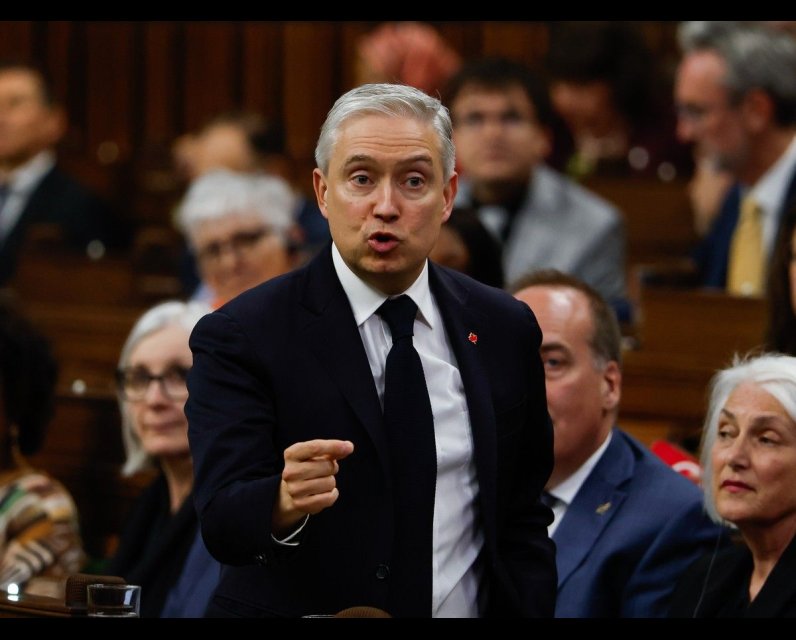
The document, obtained by National Post, was submitted to the parliamentary committee of MPs responsible for fiscal policy, but has not yet been delivered to Finance Minister François-Philippe Champagne. The federal budget, normally unveiled in the spring, was moved last year to the late fall for the first time.
The Canadian economy has so far held up relatively well since U.S. President Donald Trump started imposing new tariffs on key Canadian industrial sectors and many other countries. Canada has also been struggling with weak productivity, a sluggish jobs market, tepid inflation hikes, rising government debt and the effects of international conflicts in Iran and Ukraine.
In its submission, the CFIB recommends that Ottawa responds to these challenges by cutting the small business tax rate to 6 per cent from 9 per cent, increasing the small business income tax threshold to $700,000 from $500,000 and the passive income threshold to $60,000 from $50,000 and expanding the capital cost allowance (CCA) so that the tax deductions apply to more types of capital investments.
The submission also recommends reducing the capital gains inclusion rate when it applies to second tranches of gains, introducing a new lower rate for employment insurance premiums for smaller businesses and removing internal trade barriers between provinces and territories.
Don Drummond, a former high-ranking official at the Department of Finance and chief economist at TD Bank, said he agrees with many of the CFIB’s recommendations, including more attractive capital cost allowance provisions and inter-provincial free trade.
But Drummond, now a fellow-in-residence at the C.D. Howe Institute think-tank, said he doesn’t like the idea of further increasing the gap between small and large businesses. He suggested that any preferential treatment should be given to new companies, not those who remain small. “We need to encourage firms to grow, not reward them for remaining small.”
The CFIB is also asking the federal government to help small businesses boost hiring by increasing the incentives to hire young Canadians, maintaining the temporary foreign worker program and encouraging older workers by increasing the basic exemption for the Canada Pension Plan.
The CFIB is also calling on Ottawa to make it a top priority to balance its budget and to adopt legislated spending limits, except when there’s a global crisis.
John Fragos, a spokesman for Champagne, said pre-budget consultations haven’t started yet but that the government looks forward to meeting again with CFIB and other business organizations to look for ways to improve the economic landscape.
In its spring economic update last month, the government said it expected to post a deficit of $66.9 billion for the past year, slightly less than expected, due to improved fiscal outcomes.
But Ottawa’s fiscal situation remains dire. The federal government has now accumulated $1.27-trillion in debt, almost half of which has been added over the last five years.
National Post
Our website is the place for the latest breaking news, exclusive scoops, longreads and provocative commentary. Please bookmark nationalpost.com and sign up for our daily newsletter, Posted, here.

Comments
Be the first to comment