
Stay informed
Unpublished Opinions



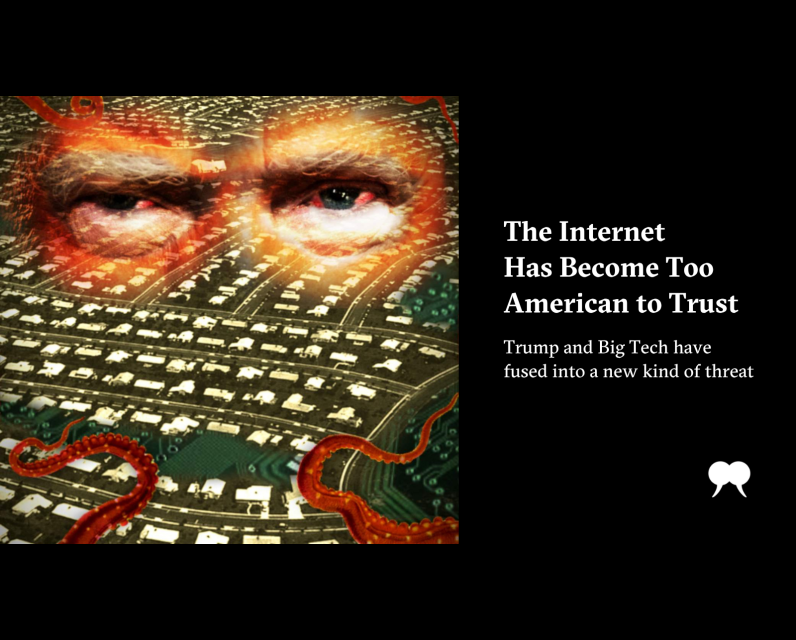
The Internet Has Become Too American to Trust
.main_housing p > a { text-decoration: underline !important; }
.th-hero-container.hm-post-style-6 { display: none !important; }
.text-block-underneath { color: #333; text-align: center; left: 0; right: 0; max-width: 874.75px; display: block; margin: 0 auto; } .text-block-underneath h4{ font-family: "GT Sectra"; font-size: 3rem; line-height: 3.5rem; } .text-block-underneath h2{ font-size: 0.88rem; font-weight: 900; font-family: "Source Sans Pro"; } .text-block-underneath p { text-transform: uppercase; } .text-block-underneath h3{ font-family: "Source Sans Pro"!important; font-size: 1.1875rem; font-weight: 100!important; }
.flourish-embed { width: 100%; max-width: 1292.16ppx; }
.th-content-centered .hm-header-content, #primary.content-area { width: auto; } .entry-content p, ul.related, .widget_sexy_author_bio_widget, .widget_text.widget_custom_html.widget-shortcode.area-arbitrary { margin-left: auto; margin-right: auto; } .hitmag-full-width.th-no-sidebar #custom_html-45.widget { margin: auto; } @media only screen and (max-width: 768px) { .img-two-across-column{ flex-direction: column; } .img-two-across-imgs{ width: auto !important; max-width: 100%!important; padding:0px!important; } .main_housing, .text-block-underneath { margin-left: 25px !important; margin-right: 25px !important; } .text-block-underneath h4{ font-family: "GT Sectra"; font-size: 35.2px; line-height: 38.7167px; } } @media only screen and (min-width: 2100px) { .main_housing, .text-block-underneath { /* margin-left: 32% !important; margin-right: 32% !important; */ } } @media only screen and (max-width: 1200px) { .main_housing, .text-block-underneath { /* margin-left: 25px !important; margin-right: 25px !important; */ } } @media only screen and (max-width: 675px) { .main_housing, .text-block-underneath { margin-left: 10% !important; margin-right: 10% !important; } } .hero-tall {display: none;} .hero-wide { display: block; } @media (max-width:700px) { .hero-wide { display: none; } .hero-tall { display: block; } } TECHNOLOGY The Internet Has Become Too American to Trust Trump and Big Tech have fused into a new kind of threat BY CORY DOCTOROW
Published 6:30, MAY 27, 2026 Cory Doctorow / Pluralistic.net
As a species, we are extremely bad at dealing with slow-motion disasters. When the roof leaks, we typically put a bucket under the drip and then forget about it until the next time it rains. And if, next time, there are two drips, well, that’s just one more drip than the last time. No need to panic. And before you know it, every time it rains, we’re setting out dozens of buckets. And it’s not until the roof caves in, and the furniture is wrecked, that we take action. Because when the roof caves in, you have to move.
So, spoiler alert: this is a climate change metaphor. This inability to act until it’s too late is a curse upon our species. It’s our existential risk. But that doesn’t mean I’m happy that, every so often, some mad emperor precipitates a crisis, which, in turn, precipitates change. I’m not happy that Russian president Vladimir Putin invaded Ukraine. But I’m also not sad that the resulting energy crisis lit a fire under the European Union’s energy transition, taking the bloc from ten years behind schedule on solarization to fifteen years ahead of schedule in just a few short years.
It turns out that when you’re shivering in the dark, all the reasons for inaction fade into the background. The all-powerful fossil fuel lobbyists suddenly find a lot of doors slamming in their faces in Brussels, in Strausburg, and in Berlin. And that tedious neighbour who insists the solar panel you want to hang on your balcony will “spoil the aesthetic character of the neighbourhood”—that jerk can piss off all the way into the sun. No one is going to listen to them anymore.
Once again, all things being equal, the world would be better off without mad emperors and their wars of choice. But if there is a mad emperor, and there is a war of choice, at the very least we should strive to salvage what we can out of their depraved and unforgivable acts of aggression. For avoidance of doubt, this is a statement about United States president Donald Trump’s lethal bungling in the Strait of Epstein.
And speaking of Trump, he is a machine for turning slow-motion disasters into unavoidable catastrophes. A chaos agent who spends every hour that God sends caving in roofs and getting people moving on important matters that they have neglected for decades. Like the American internet.
We’ve known the Americans couldn’t be trusted to run our internet for decades—at least since 2005. That was the year an unassuming guy walked into my office at the Electronic Frontier Foundation (EFF) in San Francisco’s Mission District. His name was Mark Klein, and he had an incredible story. Recently retired from being a network engineer at AT&T, Klein brought a tranche of files from his old job that documented how his bosses had ordered him to build a secret room at the company’s Folsom Street office, and then insert a beam-splitter into AT&T’s fibre backbone in order to provide the National Security Agency with access to all of AT&T’s network traffic—warrantless, illegal access to the world’s communications.
Yes, the world. Because the world sends its fibre lines across the ocean to make landfall in America; companies like AT&T provide interchange between these lines, serving as the global data hub rather than requiring all 200-odd countries run direct fibre links to and from every other nation. This reduces the number of expensive transoceanic fibre cables from tens of thousands to merely hundreds.
I’ve spent twenty-five years at the EFF, the world’s oldest and most important digital rights group. And we hear from a lot of people with incredible stories, and not all of them are in possession of their senses. But every now and again we get someone like Mark. Indisputably sane, with a story so paranoid it sounds like a delusion. But Mark was telling the truth. So, we sued the NSA. We brought a series of cases that dragged on for years, capturing national attention. It led to a remarkable exchange in the United States Senate where Ron Wyden, ranking member on the Senate intelligence committee, point blank asked James Clapper, the US director of national intelligence, whether the NSA was engaged in mass surveillance of the sort described in our lawsuit. And right there, in front of the Senate and the C-SPAN cameras, Clapper just straight up lied.
Now, one of the people watching the C-SPAN feed that day was a young, idealistic NSA contractor named Edward Snowden. At that moment, Snowden lost all confidence that his bosses cared about the law or the constitution. And we know what happened next.
Drip, drip. Klein in 2005. Snowden in 2013. And yet, today, we are still using the American internet—the surveillance-prone, easily interdicted internet. Because Klein and Snowden were individual leaks, we put our buckets out and hoped things wouldn’t get worse. Instead of migrating off the American internet, we tried to regulate the tech giants. We pretended that the problem with Mark Zuckerberg was that he was the wrong guy to be the unelected, permanent social media czar with total control over 4 billion peoples’ lives, rather than confronting the fact that no one should have that job.
We don’t need Zuck to learn to be better at his job. We don’t need someone else in that job. We need to abolish that job. Because the ketamine-addled Zuckermuskian mediocrities that run our digital lives aren’t smart enough to be causes. They are effects. They are products of an enshittogenic policy environment that rewards the worst ideas of the worst people with the most money. Which means that if Elon Musk popped his clogs tonight, there would be an overnight succession battle amongst twelve equally horrible Big Ballses, and whoever emerged victorious would be indistinguishable from Musk himself.
That’s because our policymakers created the enshittocene, not tech executives. Tech executives didn’t plan to enshittify their services because they don’t plan anything. That’s not their style. Like Trump, their strategy is to race across a river over the backs of alligators without losing a leg. These guys A/B tested their way into the enshittification playbook.
You may have encountered my theory of that playbook by now. If not, here’s a quick recap. Stage one: the platform is good to end users, while finding a way to lock those users in. Think of Facebook. In 2006, Zuckerberg decided to open Facebook to the general public, dropping the requirement that you had to sign up with an .edu address from an American college.
But he had a problem. Everyone who wanted a social media account already had one on a rival service called MySpace. So, Zuckerberg made these MySpace users a sweet pitch. “Come to Facebook,” he said, “and tell me who matters to you—who you want to follow. And every time any of those people post something for public consumption, I will show it to you in an ad-free, reverse chronological feed. You will see the things you want to see and nothing else. And best of all, I will never spy on you. Not like MySpace, whose owner is an evil, crapulent, senescent, immortal, Australian, billionaire vampire named Rupert Murdoch.”
You gotta hand it to him. That was a good offer. So, we flocked to Facebook. In doing so, we also fulfilled the second half of stage one: getting locked into the platform. There are lots of ways a platform can lock you in. Amazon sells us Prime and gets us to pay for a year’s worth of shipping in advance, so we’d be a fool to use some other service. Uber pissed away $31 billion worth of Saudi royal family money, losing $0.41 on every dollar for thirteen years, creating a lost decade for transit investment while cratering competing cabs, so it’s the only game in town. Google pays Apple over $20 billion a year not to make a competing search engine.
But Facebook and other social media get to play lock-in on the easiest setting. Because we lock ourselves into social media. That’s thanks to something called the collective action problem. Which is how economists describe the fact that, even though you and your besties all hate Facebook, you can’t agree on when to leave or where to go next, and because you love your friends, leaving Facebook is a costly proposition. It has a high switching cost—another economist’s term, meaning “everything you have to give up when you switch from one service to another.” So long as you love your friends more than you hate Zuckerberg, you will stick around.
So that’s stage one of enshittification. Be good to users, but lock them in, so that you can move on to stage two enshittification. Making things worse for users to make life better for business customers. To the advertisers, Zuckerberg said: “Remember I told these rubes that we wouldn’t spy on them? Total lie. We spy on them from asshole to appetite. Give us a shockingly small amount of money, and I will target ads to them with exquisite fidelity. And because I’m such a conscientious craftsperson, I’m gonna throw in a whole building full of engineers who do nothing except hunt down ad fraud, so that when you give me a dollar to stick an ad in someone’s face, that face will have your ad shoved in it.”
And to the publishers, Zuckerberg said: “Hey, remember when I told these suckers I would only show them the things they asked to see? Obviously a total lie. Tell you what. You post excerpts from your web articles to Facebook, with a link back to your site, and we will cram them down the eyeballs of our users. It’s a free traffic funnel you can monetize as you see fit.”
So, the publishers and advertisers piled in, and they got locked in too. The publishers and the advertisers became dependent on Facebook. Which is to say, they became dependent on us. We took them hostage. And we took each other hostage.
Which means it was time for Facebook to enter stage three enshittification. When they made things worse for everyone in order to benefit their stockholders and executives. Advertising prices soared, ad targeting fidelity plunged, and ad fraud reached farcical heights. In 2017, Procter & Gamble zeroed out its budget for so-called “programmatic” ads. The ads weren’t performing the way the company thought they should, so they tried an experiment. They went from spending $200 million per year to $0 per year, and they saw a 0 percent drop in sales. Because, to a first approximation, nobody saw the ads. It was all disappearing down the fraud hole.
If things were bad for advertisers, they were downright terrible for publishers who found that they had to post longer and longer excerpts to Facebook just to be shown to the people who’d actually subscribed to their feeds, let alone getting boosted into the feeds of people who didn’t follow them. Eventually, publishers found that they had to upload the full text of every story, making Facebook a substitute for their website rather than a promotional tool to drive traffic. And woe betide the publisher who included a link back to their own website because anything that linked off-platform was suppressed by Facebook on the grounds it might be a “malicious link.”
Publishers were reduced to commodity back-end suppliers to Facebook, and their only path to monetization was Facebook’s wildly corrupt advertising system. Everyone got a bad deal. The quantum of material that we asked to see in our Facebook feed was reduced to an undetectable homeopathic residue, leaving a great void that could be filled with boosted content and ads paid for by advertisers and publishers who were getting screwed for billions.
What’s the lesson here? It’s that anyone who says “If you’re not paying for the product, you’re the product” has been tricked. Facebook didn’t screw its users to benefit advertisers. Facebook screwed its users, its advertisers, and its publishers to benefit itself. Just like Amazon screws the sellers on its platform, who pay 50 to 60 percent out of every dollar in junk fees. Just like Apple and Google screw every app publisher on iOS and Android, who pay 30 percent out of every dollar in junk fees.
Pay or don’t pay: everyone who can be turned into the product becomes the product. It’s the platforms versus the world. The only difference is that they know they’re on the same team. And we all think we’re on different teams. You think Google and Apple are on different teams? The single largest payment Apple receives, every single year, is the $20 billion bribe that Google writes it in exchange for Apple not entering the search market. Is that illegal? Hell yes. Last year, Google was convicted of being a monopolist by a federal judge three times. But last month, that same judge, Amit Mehta, decided to let Google continue to bribe Apple on the grounds that if Apple doesn’t get that annual bribe, it wouldn’t be able to afford the research and development for cool new iPhone features.
Meanwhile, in 2022, Meta and Google were busted for operating an illegal, collusive arrangement called Jedi Blue, a conspiracy to rig the ad market so that advertisers paid more and publishers got less.
They are all on one team. Every one of those companies whose chief executive officers personally paid Trump $1 million for a seat on the dais at the inauguration are on team tech oligarch. Everyone else, even the non-tech oligarchs, is on the other team.
So that’s enshittification, from the outside. Stage one: a company is good to its users while finding a way to lock them in. Stage two: the company screws the users to lure in business customers while finding a way to lock them in. Stage three: the company screws the business customers and everyone loses, except the corporate executives and their investors. But even they aren’t happy because they know that the equilibrium where all the value is transferred to investors and executives—save the minimum needed to lock in business customers and end users—is a brittle one. The difference between “I hate this place, but I can’t stop using it” and “I hate this place, and I’m never coming back” is razor thin. All it takes is a livestreamed mass shooting, a Cambridge Analytica scandal, a whistleblower scandal, and users bolt for the exits—whereupon the market stages a mass sell-off of the company’s stock.
But Silicon Valley bosses have a technical term for panicking. They call it pivoting. Which is how it came to be that, in 2021, Zuckerberg arose from his sarcophagus and intoned: “Harken to me, my brothers and sisters, for I have had a vision. I know I told you that your future would consist of an endless argument with your most racist uncle using the primitive text interface I created in my dorm room so I could nonconsensually rate the fuckability of my fellow Harvard undergrads. But lo, I have received a new plan from on high. The true future is one in which I turn you and everyone you love into a legless, sexless, low-polygon, heavily surveilled cartoon character that I will imprison in a virtual world I stole from a twenty-five-year-old satirical cyberpunk novel called ‘The Metaverse’.”
That is the final point of enshittification: the point at which it all becomes a giant pile of shit.
We let these companies form monopolies, duopolies, and cartels. We stood by as they became too big to fail, too big to jail, and too big to care. And when we finally noticed that these guys sucked and decided to do something about it, it was too late. We had to confine ourselves to small and mostly symbolic wins, like forcing Apple to use USB-C ports on its phones while the major conduct went on uninterrupted.
Here in Canada, we racked up an embarrassing string of abject defeats in our attempts to rein in big tech. When we tried to get Facebook to pay for news, they just deleted the news. When we tried to get Netflix to put some CanCon in the catalogue, they refused. When we tried to get them to pay a largely symbolic 3 percent tax, Trump rattled his sabre, and Prime Minister Mark Carney folded like a cheap suit.
It’s no mystery why Canada failed. These companies are a lot bigger than Canada. Our 2024 gross domestic product was $2.2 trillion (CAD). Apple’s market cap is $3.9 trillion (US). Canada’s 2025 federal budget is $487 million (CAD). Google’s 2025 operational expenditures were $78 billion (US).
Now, for a brief moment, it looked like former US president Joe Biden would help. He sent his enforcers to help the European Commission slay their common enemy as they made ready to launch the Digital Markets Act and Digital Services Act, two landmark pieces of legislation that had big tech in both barrels. But now, those ambitious plans are in retreat with the commission introducing omnibus legislation to gut their existing tech regulations. And they’ve invited the Trump regime to craft the enforcement system for the DMA and DSA, even as tech companies supply Trump with the private communications of lawmakers and policymakers who worked on the DSA to target them for sanctions.
We can’t count on the US to help us tame Big Tech. The US is Big Tech. The roof isn’t leaking anymore. The roof has fallen in, and it’s time to move.
This isn’t all bad. All things being equal, it would be better if Putin had stayed out of Ukraine and if Trump had lost the 2024 election. But when life gives you SARS, you make sarsaparilla. Trump’s incontinent belligerence creates the conditions for the replacement of our old enshittified internet with a new, good internet. A post-American internet. That’s the internet that activists like me and EFF have been trying to build for decades ever since it became apparent that the old, good internet was gone. Swallowed by enshittifying monopolists.
We tried hard. We eked out some victories. But we were overmatched by the largest, most rapacious corporations to curse the Earth since the Hudson’s Bay Company. Today, we have new allies. Members of a coalition who have different motives and access to different levels of power but have a shared goal.
In all, Trump has summoned up three armies to fight for the post-American internet. The first army: digital civil society groups battling for privacy, consumer rights, and labor rights; for an end to the systematic program of worker misclassification and wage theft we call the gig economy; for the right to use the internet anonymously rather than having your data harvested in the name of age verification only to have it mobilized later by the next Viktor Orbán or Trump; for an end to Big Tech monopolies and their corrosive power over our democracies and lives.
Then there’s the second army. This is a cohort who may not care about any of that hippy-dippy human rights stuff but who observe that America has been exporting grossly defective information technology products for decades. Products that steal our data and our money. Products whose defects have not been successfully remediated by governments. This is an army that attempts to regulate corporations that are orders of magnitude larger than nearly any state. These are people who look at Canada’s failure to get Facebook to pay for the news and ask, “Why don’t we just sell an alternative Facebook client that scrapes the data Facebook is waiting to show you but deletes all the ads, blocks all the trackers, throws away the algorithmic suggestions, and shows you a feed of the things you’ve asked to see, plus the news folded back in?”
These are people who look at Canada’s failure to get Netflix to carry CanCon and ask, “Why don’t we just sell alternative Netflix clients that let you search all the videos in all the services you subscribe to and mixes in the entire National Film Board catalogue?”
These are people who look at Canada’s failure to tax Big Tech and ask, “Why don’t we just sell a dongle in the checkout aisle at Shoppers that you plug into your iPhone to bypass the bootloader and install an alternative app store which will let Canadian consumers, news publishers, performers, and everyone else who sells through an app deke out that $100 billion Apple tax that sucks thirty cents out of every dollar and sends it to California? Why not replace that ripoff with a Made in Canada app store that offers a 90 percent discount on Apple’s 30 percent payment fee? We can export that tool to every iPhone owner in the world, pocketing the 3 percent and turning Apple’s $100 billion into our $10 billion.”
In other words, rather than letting Big Tech steal billions and then attempting to tax some of it back, why don’t we just stop them from stealing it in the first place? Any economist will tell you that pre-distribution is far more reliable than redistribution.
This second army of investors and technologists are hungry for investment opportunities that don’t rely on the proposition that if we sacrifice our climate and waterways to build data centers, this might enable us to teach the word-guessing program so many words that it wakes up and makes us all unemployed. That is, if it doesn’t turn us all into paperclips. (This, by the way, is a very weird bet. Not everyone is convinced we can create God by shovelling words into the chatbot generator. Some of us think that’s like breeding horses to run faster in the hopes that one of our mares gives birth to a locomotive.)
This second army is pursuing the age-old dream of “making a dent in the universe.” They want to do this instead of destroying their lives with fake startups that only exist to get acqui-hired by a Big Tech giant bent on firing as many workers as possible and replacing them with chatbots. Some of these elite nerds are fleeing Silicon Valley, one step ahead of a guy in a mask and Oakleys who wants to shoot them in the head or deport them to a Salvadoran slave-labour camp.
So that’s the second army, reinforcements on the line that the digital rights crowd’s been holding for decades: allies who dream of turning American trillions into their own billions while incidentally liberating people from America’s extractive and defective tech.
And now we come to the third army that Trump has summoned up to build us a post-American internet: national security hawks. These are the people who heard the prime minister declare a “rupture” in the old order at Davos back in January and said, “FINALLY! SOMEONE GETS IT!” These are people who watched tech companies fuse themselves with the Trump regime, saw tech CEOs pay $1 million each to sit behind him on the inaugural dais, saw the millions tech companies donated to the Epstein Ballroom, saw these companies begging for no-bid contracts to help Trump’s ethnic cleansing and genocide projects, and said, “We cannot afford to run our governments, structurally important firms, and households on American tech.”
Big Tech is Trump, and Trump is Big Tech. Big Tech is now an arm of American foreign policy. When Trump gets angry at someone, his tech companies punish them. Like the chief prosecutor of the International Criminal Court who, after swearing out an arrest warrant for the genocidaire Benjamin Netanyahu, promptly lost access to his Office 365 accounts—all his documents, working files, diaries, address books, email archives, and the email address he needed to log in to every other account he had.
Microsoft swears this was just a coincidence, and I guess we’re all free to decide who we believe here: the convicted monopolist or the chief justice of the ICC. These disputes are so hard to make sense of. But then there’s this: when a high court judge in Brazil sentenced the election-stealing Trump ally Jair Bolsonaro, Trump denounced him, and Microsoft did it again.
If Trump wants to steal Greenland, he doesn’t need to roll tanks into Nuuk. He can just brick the entire Danish state, shut down every ministry and firm, choke off the world’s supply of Ozempic, Lego, and delicious black licorice until the Danes cave. And if Trump wants to steal Alberta, he can do the same thing—and worse. Remember back in 2022 when Putin’s thugs stole $6 million worth of tractors from Ukraine and spirited them away to Chechnya? The John Deere Company sent a kill signal to those tractors that immobilized them forever.
Now, the cyberpunk writer in me has to admit this is pretty cool. But if I think about it for all of ten seconds, it becomes apparent that Trump can kill any tractor in Alberta—or all the tractors in Alberta. This is the kind of existential risk we were warned of if we allowed Huawei into our 5G infrastructure. A risk so grave that we were willing to provoke a global diplomatic crisis over it. That, one day, Chinese president Xi Jinping would wake up in a bad mood and all our phones would stop working.
Well, Trump can’t shut down our network switches, but the two companies that provide our mobile operating systems have merged with the Trump regime, and they can switch off any of our phones or all of our phones. And Trump’s not the only mad emperor out there we should worry about. Because all those inverters and batteries we’re gonna install as the Strait of Epstein energy emergency drags on? They’re all connected to the Chinese cloud. And their manufacturers can be suborned to push software updates that brick them too.
So, this is the third army: NatSec hawks who want to build free, open, auditable, and transparent alternatives to the American internet. Not just productivity suites like Office 365 and Google Docs but also all the opaque, networked firmware blobs that animate our ag-tech, our ventilators, our cars, our smart speakers—the whole shebang.
Nervous NatSec hawks, ambitious entrepreneurs and technologists, furious digital rights activists. We’re on the same side. What stands in our way?
A prodigious technical challenge, that’s what. But that’s the kind of challenge we’re good at solving.
The biggest challenge is a policy blocker. An obsolete 2012 Canadian law that prohibits reverse engineering and modification of these defective and dangerous American products. The Copyright Modernization Act, Bill C-11, which was passed in the teeth of overwhelming opposition after a massive 2010 consultation in which 99.14 percent of Canadian respondents objected to its passage and only less than 1 percent wrote in favour of it.
This law makes it a crime to modify our own devices—to change our tractor so it can be repaired by an independent technician, to change our printer so it can use generic ink, to change our phone so it can access a Canadian app store. We passed this law because the US trade representative threatened tariffs unless we protected the ability of American businesses to extract from us. So here we are. Happy liberation day, everyone.
If someone threatens to burn your house down unless you do as you’re told, and you do as you’re told, and they burn your house down anyway, you don’t have to keep doing as you were told! In fact, you’re a sucker if you do. Now, we’re not the only suckers out there. Every US trading partner signed up to a law like this. In the EU, it’s Article 6 of the Copyright Directive. Mexico got theirs through the Canada–United States–Mexico Agreement. Australia through the US–Australia free trade agreement. And so on. And every one of those countries is in the same boat we’re in. There’s a race on to see which country will stop being suckers first and become the Disenshittification Nation, the global exporter of the disenshittifying tools that power the post-American internet, and who will receive of the billions extracted from America’s trillions.
And yes, whoever does this is going to make Trump mad. But Trump’s always mad. Think of how mad he’s gonna be when we tell him he can’t have Alberta! Anything we do to fight Trump will make Trump mad. So, in the grand traditions of our people, please allow me to apologize. I’m sorry. I’m sorry that I don’t have any toothless symbolic gestures we can use to fight Trump. I’m sorry that I only have ideas that will work and will make us more secure and protect our rights and make us hundreds of billions of dollars. I’m sorry to tell you that even toothless symbolic gestures make Trump angry, like when Ontario premier Doug Ford ran some TV ads featuring old footage of Ronald Reagan saying mean things about tariffs and Trump blew a gasket.
Building the post-American internet while we’re all dependent on the existing, enshittified American internet isn’t ideal. But as the punchline from my favourite Newfoundland joke goes, “If you wanted to get there, I wouldn’t start from here.”
And yet here we are. And it’s not all bad, honestly. Because all over this world, there is a political appetite for change. This decade has seen a quiet revolution in policymaking that challenges corporate dominance. There were historic antitrust cases in the US under Trump I, then Biden. We saw the EU’s Digital Markets Act and Digital Services Act, as well as actions by member states like France, Germany, and Spain. We saw antitrust actions in Australia, South Korea, and Japan. In 2024, we redid our own competition law which, at that point, had created the weakest regulator in the world. Our competition bureau, in its history, had only ever challenged three mergers in court and had never succeeded in blocking one. Now, it has some of the world’s most expansive powers. We got all of that and a revival of tech antitrust in China.
Now, this isn’t because of our political classes. They are not leading us into this rebellion against concentrated corporate wealth and power. If they were leading, then Carney wouldn’t be making real-term cuts to the Competition Bureau so that they can’t wield those new powers. And Trump’s Department of Justice wouldn’t be letting Ticketmaster off the hook. And the European Commission wouldn’t be giving the Americans a chance to design the DMA and DSA enforcement regime.
No, our political classes are following. They’re following the enormous, unstoppable public fury at the capture of our public life by these unaccountable private interests. That political will exists independently of our political leadership. It is a powerful wind. Invisible until it runs into something. It’s on our politicians to unfurl a sail, catch this wind, and escape the doldrums in which our politics has been becalmed for a generation.
I want to say one more thing about AI, because OMG are you going to hear a lot about AI. You’re going to hear from people who are worried that the word-guessing machine will come to life, that it will persuade people to act against their interests, that it will treat humans as instruments for enhancing its reach and power, that it’ll be indifferent to our suffering as it furthers its interests.
I’ll cop to this now: I’m not worried about any of that. I’m worried that when the $1.4 trillion AI bubble bursts, and the seven companies that comprise 35 percent of the S&P 500 stop trading the same $100 billion IOU around and collapse and vaporize a third of the American economy, that the resulting economic calamity will be seized upon as an excuse of yet another round of cruel austerity that will drive more people into the arms of fascists.
But if you’re worried about AI safety, then I have a deal to offer you. Because right now, we are already endangered by a race of artificial life forms that corrupt our politics, threaten our planet, distort our views, and endanger our species. I’m talking about Limited Liability Corporations. The immortal colony organisms that use human beings as inconvenient gut flora. So, here’s the deal. You help me tame those artificial life forms, and once we manage it, we’ll take the forces we assembled to win that war, and we’ll send them off to fight the AI. After all, they’ll have had practice. And maybe, if we tame the corporations that are endangering our planet, we’ll end up averting the AI apocalypse in the process.
This is an edited version of the keynote address delivered by Cory Doctorow at DemocracyXChange on April 16. DemocracyXChange is Canada’s democracy summit, a partnership between OCAD University, the Dais at Toronto Metropolitan University, and the Open Democracy Project. It is reprinted here with permission.
Read Jennifer Hollett’s onstage interview with Doctorow.
The post The Internet Has Become Too American to Trust first appeared on The Walrus.
Unpublished Newswire


Comments
Be the first to comment