
Stay informed
Unpublished Opinions


Ottawa responds to U.S. tariff threat by tabling bill on forced labour
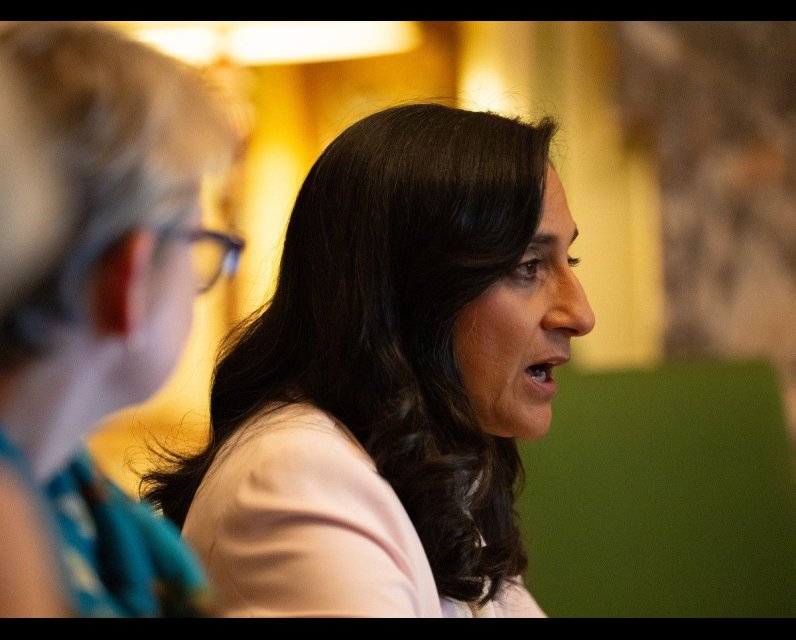
OTTAWA — The federal government will be tabling a bill in the coming days to respond to U.S. President Donald Trump’s new tariff threats on forced labour imports.
Foreign Affairs Minister Anita Anand put a bill entitled “An Act respecting the prohibition of the importation of goods produced by forced labour” on notice on Wednesday.
Government bills are usually put on notice at least 48 hours before they are introduced in the House of Commons, so it could be tabled as soon as Friday.
Officials in Anand’s office were not immediately available to explain what this legislation would entail, but Prime Minister Mark Carney said the government had been looking at ways to “reinforce” its current regime to better stop imports of slavery-made goods.
The government has been forced to respond to this issue after the Trump administration said that several countries, including Canada, will be hit with 10 per cent additional tariffs for failing to effectively enforce their respective bans on imports made with forced labour.
Canada already has an import prohibition on goods that are manufactured or produced wholly or in part by forced labour, through an amendment to its customs tariff in compliance with the Canada-United States-Mexico Agreement (CUSMA).
But the U.S. is arguing that Canada has done too little to stop those imports, pointing to publicly accessible information that shows that, since 2020, only two imports coming into the country were determined to have been produced using forced labour.
In total, 50 shipments were either intercepted or detained. A spokeswoman for Canada Border Services Agency (CBSA), Karine Martel, said those shipments consisted of solar panels, automotive parts, textile goods, agricultural products and frozen seafood.
The two that were found to have been produced with forced labour were a 2024 shipment containing textile products and a 2025 shipment containing frozen seafood, said Martel, adding that both came from China.
“The remaining shipments were either permitted entry upon receipt and review of additional supply chain information, abandoned by the importer, or re-exported out of Canada prior to the CBSA making a formal determination,” she said.
Martel said that importers are responsible for ensuring that any goods they are bringing into Canada are compliant with Canadian law.
Carney said last week that the U.S. actions are “not a surprise” as the trade investigation had been going on for months and that CUSMA would protect Canada from most tariffs.
But he insisted that Canada agrees with the U.S. goal of stopping forced labour imports and would use its influence to eliminate this practice.
National Post calevesque@postmedia.com
Our website is the place for the latest breaking news, exclusive scoops, longreads and provocative commentary. Please bookmark nationalpost.com and sign up for our newsletters here.

Unpublished Newswire


Comments
Be the first to comment