
Stay informed
Unpublished Opinions



To Speak of Solitude
.main_housing p > a { text-decoration: underline !important; }
.th-hero-container.hm-post-style-6 { display: none !important; }
.text-block-underneath { color: #333; text-align: center; left: 0; right: 0; max-width: 874.75px; display: block; margin: 0 auto; } .text-block-underneath h4{ font-family: "GT Sectra"; font-size: 3rem; line-height: 3.5rem; } .text-block-underneath h2{ font-size: 0.88rem; font-weight: 900; font-family: "Source Sans Pro"; } .text-block-underneath p { text-transform: uppercase; } .text-block-underneath h3{ font-family: "Source Sans Pro"!important; font-size: 1.1875rem; font-weight: 100!important; }
.flourish-embed { width: 100%; max-width: 1292.16ppx; }
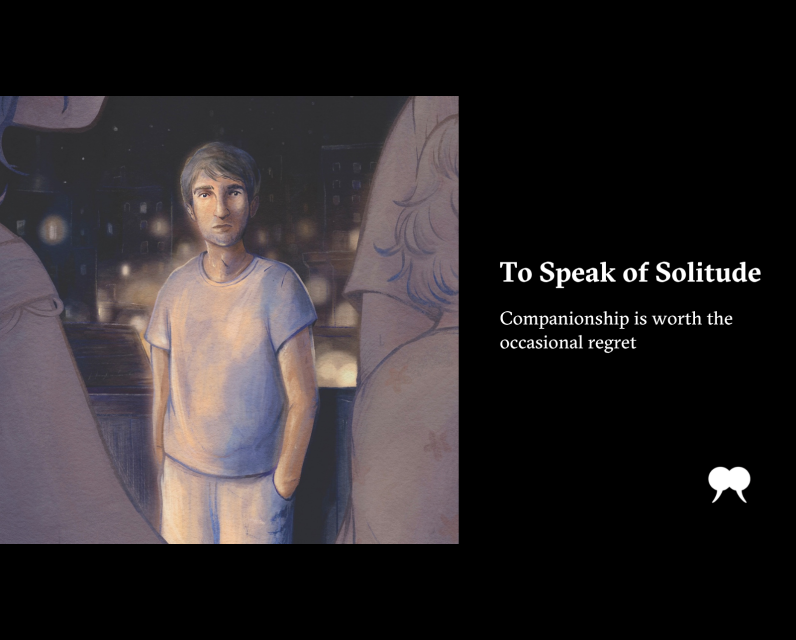
.th-content-centered .hm-header-content, #primary.content-area { width: auto; } .entry-content p, ul.related, .widget_sexy_author_bio_widget, .widget_text.widget_custom_html.widget-shortcode.area-arbitrary { margin-left: auto; margin-right: auto; } .hitmag-full-width.th-no-sidebar #custom_html-45.widget { margin: auto; } @media only screen and (max-width: 768px) { .img-two-across-column{ flex-direction: column; } .img-two-across-imgs{ width: auto !important; max-width: 100%!important; padding:0px!important; } .main_housing, .text-block-underneath { margin-left: 25px !important; margin-right: 25px !important; } .text-block-underneath h4{ font-family: "GT Sectra"; font-size: 35.2px; line-height: 38.7167px; } } @media only screen and (min-width: 2100px) { .main_housing, .text-block-underneath { /* margin-left: 32% !important; margin-right: 32% !important; */ } } @media only screen and (max-width: 1200px) { .main_housing, .text-block-underneath { /* margin-left: 25px !important; margin-right: 25px !important; */ } } @media only screen and (max-width: 675px) { .main_housing, .text-block-underneath { margin-left: 10% !important; margin-right: 10% !important; } } .hero-tall {display: none;} .hero-wide { display: block; } @media (max-width:700px) { .hero-wide { display: none; } .hero-tall { display: block; } } FICTION / JULY/AUGUST 2026 To Speak of Solitude Companionship is worth the occasional regret BY DILAN QADIR ILLUSTRATION BY YANI FENG
Published 6:30, JUNE 11, 2026
It’s nearly 2 a.m. when my friend Saryas texts, “You awake? Can we meet at the park by your place?” The late hour and urgency of his request make me uneasy. I consider calling him but think better of it. If he wanted to talk on the phone, he would have called directly. “Be there in 10 minutes,” I text back.
Already tossing and turning in bed, I’m grateful for the excuse to step outside. Not that outside is any better. It’s late July, stiflingly hot and humid. Hard to believe that just months from now, Montreal will be blanketed in snow and ice.
I pull on a T-shirt and shorts, then tiptoe in the hallway to avoid waking my two roommates—a couple living together. Still, the floorboards groan under my weight. Just as I’m about to slip into my flip-flops by the main door, I head back to my bedroom to grab a book. The floorboards groan some more, but I’m not concerned about my roommates any longer. It’s me who has to suffer through this heat alone; at least they have each other. I’m in my mid-thirties and single, and seeing happy couples fills me with both joy and envy.
Garneau Park, in Le Sud-Ouest borough, is a short walk from my apartment. Above me, a waxing moon hangs in the sky, seeming impatient to reach its full glory. At the park, a group of teenagers occupies two adjacent benches, their banter, laughter, and animated gestures punctuated by moments of silence as they retreat into their phones. I keep my distance, settling on a bench on the opposite side of the small square, about thirty yards away.
Though Saryas lives just a few blocks from the park, he hasn’t arrived yet. I often joke that his chronic lateness reinforces the stereotype that Kurds are always behind schedule—whether it’s for meetings, events, or even their long-awaited independence. It’s 2015, nearly a century after the fall of the Ottoman Empire, and we still don’t have a country of our own.
A lamppost next to my bench casts a dim, orange glow over me. I open my book, Letters to a Young Poet by Rainer Maria Rilke. I’ve read it before, marking it up heavily when I was an aspiring writer and poet. My bookmark is nestled between the pages of a passage that begins, “And to speak of solitude again, it becomes clearer and clearer that fundamentally this is nothing that one can choose or refrain from.”
Are we doomed, then? I wonder. It is doubtful that such a question ever occurred to Rilke; he suggests that solitude is beneficial, something poets can use to their advantage. But what about everyone else? Or even me during those moments, hours, and days when I’m not writing, when I simply need a break from the poet’s life? Rilke would have likely been appalled by my questions.
Five years ago, when I first arrived in Montreal, I fully embraced Rilke’s romanticization of solitude. I spent days without speaking to anyone, strolling through parks, staying up late in introspection, and scribbling away. “In the immense scarcity of beauty,” I had once written, “I seek death in silence.” It captures the mood I was in back then.
Everything changed when I fell in love with Marrigold. Oh, Marrigold, a petite brunette with a sharp wit and an infectious energy. After she ended things two years ago, my first reaction was to curse. People are meant to be together! I exclaimed. In relationships! As the Kurdish saying goes, “Loneliness only befits God.” I decided that the next time I met someone, it would be with the intention of marriage. Enough with the “let’s-see-where-this-goes” poppycock. I became bent on proving Rilke wrong. If we’re going to be stuck with anything, I began to believe, it should be companionship.
When I hear Saryas’s flip-flops scraping the ground, I close my book and lift my head.
“There you are!” I say.
He plops onto the bench with a heavy sigh, as if he’s just put down a load of cement.
“I don’t know what to do, Aso,” he says. “I’m in this dark tunnel, and the only light is this.” He takes a long drag, making the tip of his cigarette glow.
“Are you guys having trouble again?” Saryas and his wife have been going through a rough patch lately. Since they moved to Montreal a year ago, not a week has gone by without them being at each other’s throats.
I hope they will smooth things over. Doesn’t everyone get tired from arguing and fighting? I know I do. That’s part of why I left home. I had taken to constantly quarrelling with my friends and family about politics and religion. At one point, my father said to me, “If you keep going to demonstrations, Aso, you’ll cease to be my son.” My mother, her head bowed over a tea tray, served him tea, perhaps silently praying that I wouldn’t respond. I honoured her wish and drank my tea in silence. When I eventually moved away, I told no one.
“I have been sleeping badly,” Saryas says. “And it looks like I won’t get a wink of sleep tonight. My daughter is a little night owl. My wife suffers from PMDD. And this damn heat!”
“What’s PMDD?”
“You’ve no idea, dude,” he says. “It’s these terrible mood swings.” He sighs, perhaps at the seriousness of the condition, then adds, “Sometimes with paranoia.”
“Are you guys seeing a doctor?” I ask.
“She’s on medication, but it doesn’t help.”
He stubs out his cigarette under his flip-flop and says, “Do you want to come over for a bit? It might help distract me, and maybe the baby will go to sleep.”
My mind searches for an excuse to decline, but I have nothing planned for the next day. I’m simply waiting for my welfare cheque at the end of the month, just as I’ve done every other month for the past year; after Marrigold and I broke up, I moved through a shelter and lost my delivery job. And I’m concerned about Saryas’s wife, Nazaneen, who has always been kind to me; every time I visit, she cooks delicious dolma—stuffed vine leaves—over a thick layer of fava beans. I accept his invitation, though not without apprehension.
Saryas and his family live in a two-bedroom on the top floor of a triplex, just like I do. The door opens into a hallway, with the living area, two bedrooms, and the kitchen lined up in that order to the left. I start to follow Saryas to the living room, but he suddenly stops in the doorway, blocking my way in.
“What?” I hear Nazaneen say.
Saryas shakes his head, seeming to be in disbelief. Curious, I lean in to sneak a look. In the semi-darkness of the room, dimly illuminated by a large TV on mute, Nazaneen sits on the sofa, topless, her hair tied up in a bun. Her right elbow is planted firmly on the armrest, her hand holding her face. My eyes linger on her pomegranate-like breasts—full, prominent, and robust. In the low light, any skilled painter could have captured an alluring image of her, especially if they focused on the contrast between her beautiful frame and her disconsolate expression.
The only sound breaking the silence of those few moments is the whir of a fan in the corner.
“Go to the kitchen,” Saryas says. I’m not sure if he’s speaking to her or to me, and when neither of us moves, he tries again. “Go to the kitchen, Aso!”
I scurry down the hallway, which opens into a cavernous kitchen. The tension in the air makes me hesitant to flick on the ceiling light, so instead, I switch on the stove’s exhaust light and sit down in a kitchen chair. Open envelopes are scattered across the table: CIBC, Bell, Rogers, car insurance, and a Best Buy instalment bill for a sixty-five-inch TV—probably the one in the living room.
Back by the entrance, Saryas is scolding Nazaneen. Despite his attempt to be discreet, the mix of anger and embarrassment makes it impossible for him to keep his voice down. “Get dressed right now!” he growls.
“Mind your damn business!” Nazaneen shouts back. “This is my house too!”
Saryas slams the door shut, and the cry of a child fills the apartment. It’s not a panicked scream or a subdued sobbing, but a sorrowful wail—a long “Ahhhhhhhh,” followed by a gasp.
Saryas rushes into the master bedroom and speaks softly to his daughter. “Daddy is here,” he says, using a voice reserved only for her. “It’s okay. Don’t be scared.” He emerges, cradling her in his arms, rocking her side to side, whispering, “Shh, shh, shh.” He turns on a standing fan and sits down with his daughter on his lap, directly across from me at the kitchen table.
“Look who’s here, Roza!” he says, pointing at me. “It’s uncle Aso!”
Roza stops crying for a moment and glances at me with her big eyes. She sucks her pacifier vigorously, seemingly mesmerized by my presence. I smile at her and wave. “Hi, beautiful,” I say. But my greeting makes her start wailing again, and I feel a wave of disappointment.
Saryas stands up, gently rocking Roza, and heads out to the balcony. “It’s okay, my daughter,” he soothes her. “See how quiet the city is?”
Whether it’s the slightly fresher air on the balcony, Saryas’s gentle words and rocking motion, the silent beauty of the night, or a combination of all of these things, Roza slowly begins to calm down. Saryas leans over and whispers to me, “Bring two chairs.” Then, more urgently, he adds, “And be quiet.”
I do as he says. Once Roza seems to have drifted back to her slumber, Saryas sits down, cradling her. Roza is clutching the neckline of his T-shirt. “She likes to fall asleep like this,” he says softly. “In my arms.” He gazes at his daughter’s peaceful face.
“Give her to me,” Nazaneen says, suddenly appearing on the balcony.
Expecting her to be au naturel, I take a furtive glance. To my relief, she’s wearing a slinky, sleeveless nightgown.
“I’m taking care of her,” Saryas replies.
“Why don’t you take care of those?” Nazaneen says in a hushed voice, gesturing toward the bills on the kitchen table. “Hand her to me!”
Saryas shakes his head. I understand how he must feel. To remind a married man of his inability to manage household finances is like thrusting a knife into the balloon that holds his pride together. With a sigh, Saryas relents and stands up. The delicate transfer of Roza from her father’s arms to her mother’s, as if she were a baby Buddha, is the first moment of harmony I’ve seen since I arrived.
I fidget in my chair before mumbling, “Maybe I should go.”
“Sit down!” Saryas and Nazaneen say in unison. Their simultaneous command startles me. If my presence is one more thing they can agree on, I think to myself, then I’d better stay put.
“Be right back,” Saryas says, following Nazaneen inside. He returns with two beers and offers one to me. “Come on,” he insists.
As soon as I feel the cold can in my hand, anticipation fills me with pleasure. The “tssSSS-POP” sound is music to my ears, and I take a long swig. Although I savour each sip, the knowledge that Saryas supports his family by painting houses makes me feel like a burden. When Saryas offers me a cigarette, I accept it with a profound sense of gratitude.
The beer and the smoke seem to relax Saryas. He pulls out his phone and plays a song, loud enough only for the two of us to hear. We start humming along, the lyrics from a classical poem by the Kurdish poet Nali resonating between us: “If I don’t die this time without you / I warrant you, I won’t even go yonder without you.”
“Even a cold beer isn’t much of a match for this heat,” Saryas says, finishing his drink.
“They call it ‘canicule’ in French,” I reply, referring to the heat wave.
“Cani-cule!” he exclaims. “Doesn’t sound like it has anything to do with heat.”
I open a French dictionary on my phone and look up the word. Canicule comes from Latin, meaning “little dog,” referring to the constellation Canis Major. Its brightest star, Sirius, was often seen rising with the sun in July and August, which sometimes coincided with the hottest days of summer. I share this with Saryas and add, “Isn’t it fascinating how much history is packed into one word?”
Saryas responds with a silent nod. I skip mentioning that ancient people believed Sirius caused the hottest days of summer, and that both people and dogs were at risk of going mad during this time—hence the term “dog days of summer.”
“Be right back,” Saryas says, disappearing into the house. He returns with a small bottle, takes some white powder and places it on the webbing between his thumb and index finger, then snorts it through one nostril while pinching the other closed.
“Do you want a hit?” he asks.
I’m not shocked—Saryas has mentioned his occasional use of cocaine before. But I’m surprised that he offers it to me now, at his place.
“No, thanks,” I say.
He doesn’t push like he did with the beer, which makes sense; I assume the drug must be expensive.
“What’s it like?” I ask.
He leans back, crossing his hands behind his head, and flashes an ecstatic grin. “You know that feeling of being in love?” he asks. “Like the first few months of being madly in love?” He closes his eyes, starts humming a tune, and gently bobs his head.
I feel an urgent need to urinate, but I’m hesitant to interrupt Saryas’s good mood or risk making noises that might wake up the child. I squeeze my pelvic floor muscles to suppress the urge.
“I’ll grab us two more beers,” Saryas says, standing up.
“Is it okay if I use your bathroom?”
“You don’t need to ask!” Saryas exclaims. He’s mentioned before that my behaviour has drifted from traditional Kurdish norms, but I like to think that this is one reason Saryas considers me a friend, unlike some other newcomers whom he steers away from.
As I come out of the bathroom, I hear a subtle but distinct noise coming from the next apartment. Saryas and I pause to listen. At first, it sounds like a woman is cursing, which worries me. But then the noises become more varied and unmistakable: the creaking of a sofa, slapping sounds, moaning, and grunting.
“I can’t believe this!” Saryas exclaims. He sets the two new beers on the counter and adds, “I’m going over there.”
“What?” I recoil, worried he might be drunk. “It’s almost three in the morning.”
He cocks his head toward me, points to the bedroom, and whispers, “They’ll wake Roza!” He speaks as if it’s a matter of life and death. “We’ll keep it short and sweet,” he reassures me.
Before we leave the apartment, Nazaneen, emerging from the master bedroom, asks, “Should I tell Aso about our extra bedroom?”
“Tell me what?” I ask.
“We need to rent it out,” she replies.
“Not now,” Saryas says.
“Then when?” she retorts. “I’ve told you a hundred times.”
Saryas gives her a kiss on the cheek and says, “I’ll take care of it first thing in the morning. I’ll be back soon.”
I reluctantly follow Saryas down the stairs, starting to understand why he expects me to come along. It occurs to me how sometimes a friendship can resemble a marriage—“to laugh with you in joy, to comfort you in sorrow.” Isn’t that also the unspoken vow of true friendship?
Still, as we cross the front yard and enter the next building, I’m convinced it’s a mistake to knock on someone’s door at this hour and ask them to keep it down.
“Can’t you talk to them in the morning?” I want to stall him as much as possible so that the neighbours finish their business and enjoy some of the afterglow. I’ve heard that animals like baboons and chimpanzees can become aggressive if their mating is interrupted.
Saryas stops on the landing, turns to face me, and replies, “If I wait, they’ll deny it later.” Then, just before he knocks on the door, he adds, “This isn’t the first time this has happened.” Somehow, this reassures me that my friend isn’t being nuts.
“C’est qui?” a man’s voice calls from behind the door.
“Voisins,” Saryas replies. Having been a full-time participant in a government-funded program, Saryas’s French is good enough for conversation.
A balding, potbellied man in his early thirties, dressed in a threadbare wife beater and boxers, opens the door.
“Comment je peux vous aider?” he asks, his tone cordial. I mentally correct his sentence to: “Comment puis-je vous aider?”
“Vous faites du bruit,” Saryas begins. “Beaucoup, beaucoup. On a un enfant. Attention, s’il vous plaît.” So far, so good, I think to myself. We can still maintain civility at this infelicitous hour.
The man scratches his belly and then calls into the house, “Chérie!”
His partner, a plump woman with purple hair, joins him at the door. Having overheard the exchange, she starts ranting. “You think we don’t hear you?” she snaps at Saryas. “You, your wife, and that child of yours—oh, the crying is unbearable! Why don’t you mind your business? We don’t know what goes on in your apartment, but if we hear any more of your arguments, we might call the cops next time!” She slams the door in our faces.
I can’t help but empathize with the couple. The two triplexes are likely over fifty years old, and noise issues are inevitable. The eardrum-thin walls separating these old apartments offer little in the way of privacy.
Saryas scoots down the stairs. “Typical BS!” he mutters, referring to his neighbours as “welfare bums.”
“We don’t know them,” I say, irritated by his attitude. There was a time when Saryas was on welfare himself, and he seems to hold double standards. If Saryas was on welfare to improve his job prospects by mastering French, and I’m on it to recover from my breakup with Marrigold and the loss of my job and housing, his neighbours might also have their reasons.
I suggest taking a walk, hoping it will help Saryas release some pent-up energy and frustration. After ten minutes, his pace slows, and he looks tired. I walk him back to his apartment and wish him goodnight.
Back at the park, the teenagers are gone, leaving cans and bottles beside a public trash bin, its mouth stuffed with bags of potato chips. Two raccoons scavenge for chip crumbs and remnants of other snacks the teenagers left behind. At this early hour, the sultriness has dissipated, replaced by a refreshing coolness perfect for snuggling into bed. But I don’t feel sleepy.
I open my book and start reading. After a couple of pages, I feel a tickle on my leg, as though a thread is brushing against it. Without looking up from the book, I reach down and scratch my leg below my knee. As I turn the page, a more persistent tickle on my arm catches my attention. I brush it away and then notice a spider landing on the bench. It quickly retreats into the gap between two slats.
I return to my book. “Therefore, dear Sir,” Rilke writes, “love your solitude and try to sing out with the pain it causes you.” Part of me agrees, but I’ve come to believe that companionship is worth the occasional regret. It isn’t an either/or situation; the two can coexist within a single day. I had that with Marrigold, especially when we lived apart. That blend of connection and space—the very soil in which poets thrive—is what made the breakup so painful.
Just then, in the dim, orange glow of the lampposts, two delicate threads drift slowly through the air in front of me. The thin, silky strands undulate as they fall, the work of spiders ballooning from one spot to another.
How many heartbreaks must I endure before reaching the point of no repair, or the point of discovery? Blessed are those whose number is zero, and equally blessed are the rest of us lone creatures, tethered by gossamer threads to new habitats, sometimes giving up mid-flight, sometimes relentless, until we occasionally find the one that finally feels like home.
Not wanting to disturb the spiders, I get up and head back to my apartment. As I step inside, my roommate greets me in the hallway outside her bedroom. Her blond curls are tangled, and she’s wearing only an oversized T-shirt. She takes a sip from the plastic cup she’s holding, and in the quiet, I hear the ice cubes crackling softly.
The post To Speak of Solitude first appeared on The Walrus.
Comments
Be the first to comment