
Stay informed

Behind the course at IRONMAN Canada-Ottawa
Feature story
One month ago, on Sunday, August 2, IRONMAN returned to Ottawa for an adrenaline-fuelled experience. Around 2,500 athletes from around the world raced through Ottawa in one of the greatest feats of endurance the city has ever seen.
Behind the scenes – and the course – there was just as much going on.
Today, we’ll take a glimpse behind the course with James Macfarlane, a Senior Advisor with the City’s Event Central Unit in the Emergency and Protective Services Department.
Preparing for race dayLike many major events in Ottawa, preparations for IRONMAN Canada-Ottawa started months in advance.
“For an event the size of IRONMAN, planning really starts about a year out to ensure everything goes smoothly on race day,” Macfarlane explains.
So far this year, Event Central has received over 250 applications for special event permits under the City’s Special Events By-law. For each confirmed event, Event Central activates the Special Events Advisory Team (SEAT), which brings representatives from various City departments and external partners to the planning table.
“SEAT's integrated planning is crucial to the success of not only IRONMAN but all of the events we work on,” he says. “By having all partners at the table from the start, we’re able to coordinate events that contribute to the ‘fabric’ of Ottawa, while ensuring the integrity of the transportation network, overall public safety and that City operations are maintained.”
In the weeks leading up to the event, a different race begins as SEAT and their partners work to implement months of planning:
- The Office of Emergency Management preforms a final risk assessment.
- Roads and Parking Services patches pavement and sweeps roadways along the event route.
- Traffic Services installs temporary “Special Event – No Stopping” street signage and By-Law and Regulatory Services monitors those zones for parked vehicles.
- Building Code Services issues temporary permits for event tents and other structures.
- By-Law and Regulatory Services issues an exemption to the Noise By-law.
- Ottawa Public Health and By-law and Regulatory Services work together to inspect food trucks and other licensed businesses at the event.
- Parks Maintenance and Forestry Services, along with Recreation, Culture, and Facility Services, ensure City sites rented by the event organizers are ready for the big day.
After months of careful planning, everyone – athletes and employees alike – are geared up for race day.
Well ahead of the event’s 6 am start time, James and other City employees arrive at Britannia Beach, the first section of the triathlon comprising of a 3.8-kilometre swim in the Ottawa River.
“By 4:30 am, many of us were already at the beach or in the Event Coordination Centre with our first cups of coffee. Arriving so early gives us a chance to review the day’s ‘run of show’ so-to-speak, address any overnight changes and just generally get set up for an action-packed day,” James further explains.
One of the most important things to ensure is in place before the race begins is emergency response.
“The Ottawa Police Service, Ottawa Fire Services and Ottawa Paramedic Service all monitor the race closely, especially the swim course,” James continues. “Police, Paramedic and Fire Services patrol the swim course by boat and keep an eye out from above with drones. If someone needs medical assistance, they’re able to spot them and coordinate an emergency response within seconds.”
By 7 am, the first athlete had left the water and entered the next leg of the course, a 180-kilometre cycle down Colonel By Drive and Sir George Etienne Cartier Parkway, then through local neighbourhoods.
“At this point in time,” James explains, “I was still at Britannia Beach and would be until the final swimmer left the water a few hours later. One of the unique aspects of IRONMAN is that it isn’t one big course, it’s three courses put together. For most of the day, two courses are active at once – it’s a real operational feat and sometimes you need to be in two places at once!”
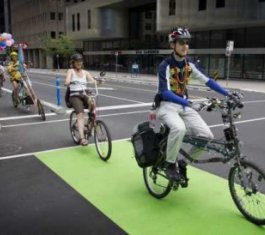
During the IRONMAN event last year, James raced his own bicycle between courses.
“This year was too wet to ride my bike though. I actually went out and bought rain pants part way through the day because I was soaked.”
Around noon, as the rain continued on and off, the first athletes entered the final section of the racecourse – a 42.2-kilometre run towards the finishing line at Parliament Hill.
“The rain was a major challenge for the athletes, but it didn’t cause as many challenges behind the scenes as you’d think,” he recalls. “The biggest impact we felt from the rain was at the medical tents, as the wet conditions made the roads more slippery than participants may have expected. Our first responders are used to working in all weather conditions though and were very prepared.”
At about 3 pm, James and numerous others cheered as the first athlete crossed the finish line. This isn’t the end of race for James though, as the bicycle course is still active and athletes have until midnight to complete the triathlon.
“Once the last athlete passes through a section of the course, those routes are reopened as soon as possible,” James mentions. “Races like IRONMAN have a big footprint because they need to be a specific number of kilometres in length. Traffic Services works with the event organizer to find the best route where we can get those required kilometres with the fewest traffic disruptions, like closing streets or modifying traffic lights. For example, Traffic Services suggested using Champlain Bridge as one of the first parts of the cycling course this year, so that we can get those kilometres in while also reopening this bridge sooner.”
With such a large event footprint, collaboration with other agencies, like the Parliamentary Protective Service and Ville de Gatineau, is essential in maintaining the safety and security of the course, athletes and spectators.
At midnight, the 17-hour long feat of endurance was over. For James, that entailed seven cups of coffee and over 23,000 steps across 21.1 kilometres – a half-marathon of his own!
“Once the race has officially ended, it takes until about 2 am to ensure all of the athletes have safely left the course and to reopen the remaining streets,” James reflects. “But that still isn’t the end of this year’s event, because on the next business day we review how everything went and start planning for next year.”

Unpublished Newswire


Comments
Be the first to comment