
Stay informed



Albertan Mark Milke wants to reinvigorate Canada, not leave it
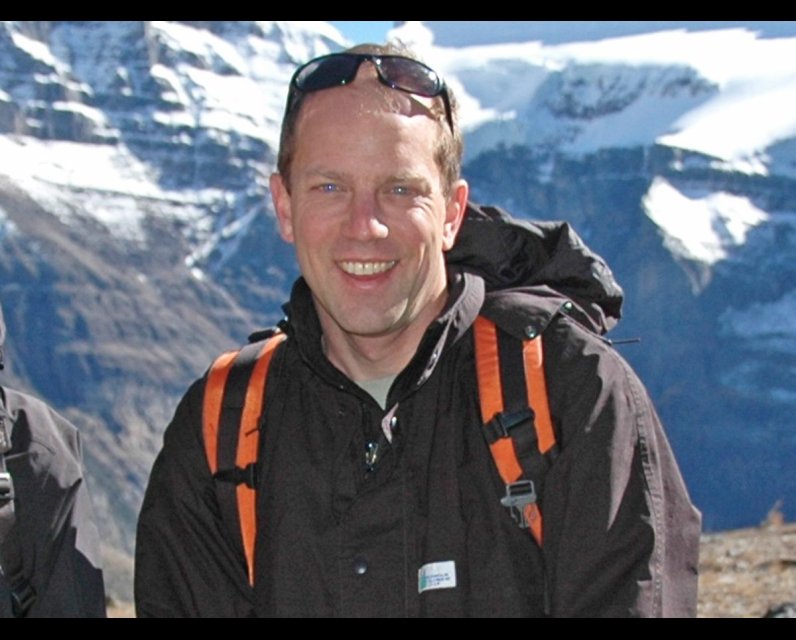
“Starting a separatist movement is like starting a war,” says Mark Milke, the founder and president of the Aristotle Foundation for Public Policy. “You think you’d be home by Christmas and you’re still in the trenches four years later.”
That was Milke’s blunt assessment of the Alberta independence movement, shared over sushi in a downtown Calgary restaurant during Stampede week. (I was the one in full cowgirl regalia; he showed up dressed for “summer in the city.” Milke picked the restaurant, which explains why we were eating sushi and not beef.)
Milke understands Western anger; he just doesn’t believe separation from Canada is the answer.
“What’s the core problem in Confederation?” he asks rhetorically. “I would submit to you that the core problem of the last 50 or 60 years has been Quebec politicians, separatists or not.”
Milke — who voted against the Charlottetown Accord in Canada’s 1992 nation-wide referendum because he “didn’t like special status for Quebec” — traces much of the West’s frustration to decades of federal catering to Quebec nationalism. Quebec’s economic turn leftward after the 1960s, combined with constitutional wrangling and interventionist policies, dragged the national direction in ways that harmed resource-producing provinces. The pattern of accommodating Quebec at the expense of broader national interest has been damaging, he argues.
Business leaders in Alberta who once dismissed separation but now weigh it seriously aren’t “deplorables,” he adds. “I know people in this city that make billion-dollar decisions that will probably vote for separation.” Yet he cautions against the gamble. Nor, he suggests, should Alberta copy Quebec’s model of extracting special status.
Instead, Milke recommends the country should aim to be the “Switzerland of North America” — prosperous, open within its borders, and focused on genuine opportunity rather than managed outcomes or identity-based claims. Provinces should compete on excellence, not lobby for preferential treatment. Quebec’s model, sustained by transfers and special arrangements, is not one to emulate. “Subsidies from the federal government are not my definition of success,” he says plainly.
For Milke, the renewal of our nation lies in rediscovering older Canadian strengths: individual rights, rule of law, and merit. And he sees Alberta as often embodying the freedom-loving, responsible spirit that characterized much of pre-1960s Canada.
He draws inspiration from individuals who stood firm in difficult times, pointing to the Churchill statue on the grounds of the Government of Alberta’s McDougall Centre, across the street from our lunch spot, as one example; the statue was installed two years ago, as a pushback against cancel culture.
Yet Milke is no romantic. He acknowledges flaws in Canada’s past and present, including failures to live up to civil society ideals. But he rejects the notion that the only choices are the current trajectory or rupture. Renewal is possible if the country returns to principles that once made it distinctive: protecting the individual regardless of background, limiting arbitrary power, and measuring success by opportunity and outcomes rather than equity quotas or historical score-settling.
Born in Kelowna, B.C., in 1967 — a literal Centennial baby — Milke grew up in British Columbia with family roots forged in hardship. His grandparents on one side fled Soviet Russia, endured forced travel across Siberia and from Ukraine, and eventually built new lives in western Canada. That hard-won gratitude for Canada still shapes his outlook. His own parents lost their home and savings in the 1980s recession when interest rates soared. That lived experience shapes his wariness of policies that arbitrarily harm individuals and economies.
As someone who grew up on a family farm and watched my own parents navigate crushing interest rates, I find Milke’s personal grounding refreshing. There’s a quiet authenticity when he ties policy critique to real human costs rather than abstract ideology.
Milke’s career runs the gamut from radio host of a gospel show as a teenager, through to the Canadian Taxpayers’ Federation and Fraser Institute, to platform design for Jason Kenney’s UCP campaign and time at the Canadian Energy Centre.
The Aristotle Foundation, launched by Milke in 2023, represents a broader mission: renewing civil, evidence-based public discourse by combining rigorous analysis with historical perspective. Its first major book, The 1867 Project: Why Canada Should Be Cherished — Not Cancelled , became an Amazon bestseller by arguing that Canada’s story contains real achievements worth building upon, not merely sins to atone for.
Milke has spent years gathering and reporting on data and statistics. But he insists “data alone” can’t resolve the present issues facing Canadians. Toxic ideas — combined with concentrated power in courts, bureaucracies, or activist institutions — demand historical context and a defence of classical liberal principles. “Western civilization, as we call it, and the accomplishments… (are) being torn out, dangerously so,” he says, by anti-reality thinking and grievance culture.
The Aristotle Foundation produces data-rich studies on a range of issues that includes corporate DEI practices, parliamentary representation, campus speech, and Indigenous policy outcomes. It pairs the research with books, essays, and historical arguments to counter dominant narratives. The foundation also commissions polls and hosts debates, including a recent one between Kenney (pro-federalist) and Keith Wilson (pro-separation) on the question of Alberta independence.
Milke knows the public square is noisy and tribal; that complacency battles raw emotion. Yet he believes focused, credible work can still cut through. The 1867 Project’s sales success and viral social media posts (including one amplified by Elon Musk) suggest an appetite for reasoned analysis.
The foundation is not exclusively a western Canadian institution. “I think Toronto and Calgary are the two biggest sources of support, followed by Vancouver,” Milke reports. “When we got started, our message immediately resonated in Ontario,” he adds. The foundation’s polling shows under-representation is not only a Western issue. “When people complain about under-representation, yes, I get it as a Westerner, but let’s not forget Ontario is under-represented,” he says. “If your basic principle is ridings should be more or less equal, you have to be intellectually honest.”
Alberta’s frustrations can be a catalyst for national improvement if channelled toward a better Confederation, not exit. Whether enough Canadians are listening remains an open question — though at least some of us are willing to debate it over lunch, cowboy hats optional.
Our website is the place for the latest breaking news, exclusive scoops, longreads and provocative commentary. Please bookmark nationalpost.com and sign up for our newsletters here.

Unpublished Newswire


Comments
Be the first to comment