

Unpublished Opinions
Clinton is an accredited writer for numerous publications in Canada and a panelist for talk radio across Canada and the United States
40 Years Ago - Def Leppard Pulses To Hysteria
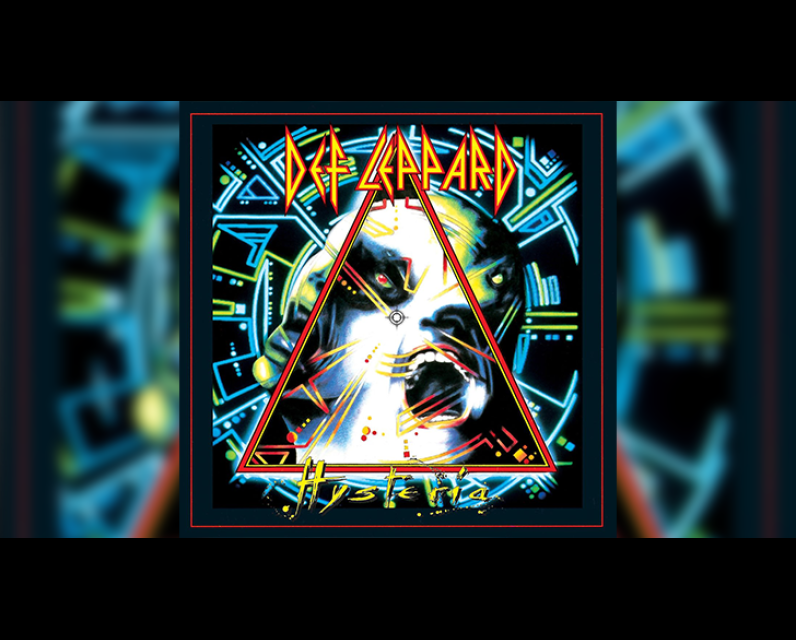
Although Hysteria officially exploded on August 3, 1987, 39 years ago this week, the fuse was lit exactly one year earlier.
Across Britain and Europe, something strange was happening. Def Leppard - rock’s biggest disappearing act - had quietly returned to the stage.
No television appearances. No MuchMusic or MTV campaign. No elaborate press conferences.
Just a handful of club dates, and a couple of massive festival appearances in front of 80,000 people, and 2 songs nobody had ever heard before.
Pyromania was released in 1983; it had already reshaped the hard rock music landscape, Halley’s Comet had flashed past in February 1986, and Def Leppard’s mythical fourth album still hadn’t seen daylight. Rumours swirled. Anticipation was volcanic.
Then suddenly, out of nowhere, radio stations across Canada and Sam the Record Man stores began reporting that on August 5th, 1986, in Cork, Ireland, Def Leppard had quietly launched a month‑long run of unannounced club shows and massive festival dates across the U.K. and Europe. No press blitz. No hype machine. Just a band that had permanently rewired the 1980s hard rock scene stepping back onto the stage with new material - raw, loud, and hungry - to test‑drive in front of equally hungry fans.
Two tracks in particular became instant underground legends: Run Riot (track 9) and Love and Affection (track 12). Most fans don’t know that Love and Affection was actually Steve Clark’s favourite track on the album - something he revealed live on Ottawa’s CHEZ 106 FM on a scorching and sunny June 13, 1988 afternoon while the rest of the band played a charity soccer match at Lansdowne Stadium in Ottawa. Steve went on to repeat his positive words about Love and Affection with fans that afternoon.
That stealth 1986 mini‑tour mattered. It proved the writing and recording of Hysteria were finally on the right trajectory after years of delays, setbacks, and reinvention.
And yes - it was a brutally long three‑year wait between Pyromania and Hysteria. Kids became teenagers. Teenagers became young adults. Bootlegs from that summer tour circulated everywhere, and those two new songs - Run Riot and Love and Affection - kept the fanbase simmering.
By the time Hysteria finally arrived on August 3, 1987 - twelve months after that secret tour - the anticipation had been enormous. Fans bought the album in huge numbers; it immediately shot up to the number 1 spot on the UK album chart; but after an impressive opening surge, sales began to plateau. The album sold a strong initial 3 million copies, then stalled. The lead single, Women, chosen by managers Peter Mensch and Cliff Burnstein, hit rock radio hard but fizzled everywhere else. For the mainstream audience, it simply wasn’t the ignition track they needed. The band needed to sell 3.5 million copies of the Hysteria album just to break even.
1981’s High ’n’ Dry had Let It Go - the first true Leppard fist‑pumper, the track that made kids everywhere play air drums, air guitar, and air everything. Pyromania went nuclear with the crunchy, adrenaline‑shot riff of Photograph, a song that didn’t just pump fists - it detonated them like dynamite.
By comparison, Women was a solid track, but as a lead‑off single in 1987? It was a misfire! Great song, wrong choice. After three years of anticipation, fans wanted a knockout punch - and instead they got a slow burn. And the stakes were brutal: Def Leppard knew they needed to exceed the 3.5 million copies required just to break even on recording costs alone.
That reality lit a fire under the band. They ramped up tour dates, packed their daily schedule with every press opportunity they could grab, and kept Hysteria in the news, on the radio, and in the bloodstream of rock culture long enough to survive until Pour Some Sugar on Me finally dropped in North America in August 1988 - a full twelve months after the album’s release.
And when Sugar hit, the album didn’t just rise - it launched like a NASA Saturn rocket and never looked back. Hysteria went from a slow‑burn underperformer to a global juggernaut, eventually selling over 25 million copies and cementing itself as one of the defining rock albums of the 1980s.
Behind the scenes, though, the band had quietly hit the wall. The Hysteria tour had dragged on for 241 concerts; most of the shows were "In The Round," which meant every gig had the band members running around for 2 hours a night at high speed because they had 4 front-row audiences to satisfy, finally ending on October 28, 1988 - a marathon that pushed them to the edge.
And while the album was exploding worldwide, the band members were reaching personal breaking points. Phil Collen and Joe Elliott were preparing to marry their first wives. Rick Allen had gone from losing an arm after the slipstream of Pyromania and immediately diving into Hysteria, and he needed personal time to process the trauma of his accident. Steve Clark had begun showing serious signs of danger related to alcohol by the winter of 1989, and Rick Savage wanted personal downtime.
Meanwhile, Hysteria kept climbing. It hit #1 on the U.S. Billboard 200 on July 23, 1988 - forty‑nine weeks after release. It had already topped the U.K. Albums Chart shortly after its August ’87 debut. It reached #1 in Canada in September 1988, holding the top spot for five weeks. And in Australia, it finally hit #1 in July 1989, nearly TWO YEARS after release. No other hard rock album had ever taken such a long, slow, unstoppable climb to global domination.
The album eventually spun off seven radio hit singles, all of which charted around the world - again an unheard‑of run for a hard rock record. And there was even talk of an eighth single, Love and Affection, the twelfth song on the album, was slated for release in mid‑April 1989, almost two years after Hysteria first hit shelves. The band management and the music label were gearing up to launch Def Leppard into a massive stadium tour for the summer of 1989.
But the band had reached their limit. They’d carried the album from a shaky start to a global phenomenon, from near collapse to 25‑million‑plus triumph. By early ’89, they weren’t just done with the tour - they told management and the label they were done releasing singles. They were spent.
Forty years later, Hysteria still stands as one of the greatest examples of perseverance in rock history. An album that nearly collapsed under its own ambition ultimately became one of the biggest‑selling records ever made - not because it exploded overnight, but because it refused to fade away.
So on the 40th anniversary of that famous mini-tour, skip straight to track twelve. Put on Love and Affection and crank it up. Listen closely. Steve Clark always believed it was one of the album’s finest moments. Four decades later, it’s still waiting to be rediscovered!
References
- Previous opinion
- Next opinion

Comments
Be the first to comment