The legislative dust has settled, the permits are being filed, and the world’s largest EV maker is officially preparing its Canadian landing. Following the landmark Carney-Xi trade agreement signed in Beijing this past January, Canada has pivoted from a 100% surtax to a 6.1% tariff quota, opening the door for 49,000 Chinese EVs to enter the country this year.
For BYD, the 2026 expansion isn’t just about shipping cars; it’s about planting roots. The company is currently eyeing idled or under-capacity facilities in Brampton and Ingersoll, Ontario - legacy spaces abandoned by the American Big 3 automakers who took taxpayer dollars for decades only to leave. By moving into these footprints, BYD isn't just building a factory; they are rescuing union jobs.
While Unifor National President Lana Payne initially called the January trade deal a "self-inflicted wound," the rhetoric has shifted toward pragmatic negotiation. BYD is signaling a willingness to do something Tesla never would: work with organized labor. Insiders suggest BYD may offer "neutrality agreements" at their proposed Ontario sites, providing Unifor a clear path to organize in exchange for labor stability and political support. Rumours also suggest BYD is interested in joining the federal government’s new $570 million Workforce Alliance, an initiative designed to reskill autoworkers for the EV era.
To avoid the "direct-to-consumer" headaches that plagued early EV entrants, BYD looks to partner with the heavyweights of Canadian automotive retail. As the country's largest dealer group, Dilawri provides BYD with instant national scale. Dilawri is set to be the primary partner for the Ontario and Western Canada rollout if rumours are true, ensuring high-visibility showroom space in the GTA, Ottawa, and Vancouver markets. Meanwhile, I'm also hearing high-level meetings are already underway with the Steele Auto Group to anchor the brand's presence in Atlantic Canada.
Finally, BYD is aggressively courting a Canadian supply chain to build a global car with a local heartbeat. Negotiations are active with Michelin’s plants in Nova Scotia and Bridgestone’s facilities in Quebec to source high-performance, cold-weather tires like the X-Ice Snow. These partnerships lean on Quebec’s expertise in cold-weather rubber - because if anyone knows winter, it’s a Canadian driver.
Beyond tires, BYD intends to establish domestic battery production or assembly. By the time the first BYD rolls off an Ontario line, it could arguably contain more local content than the legacy brands, and it's important to remember the American legacy brands took taxpayer bailouts for decades and ran to Donald Trump and JD Vance.
Will Canadian consumers embrace these high-quality, reliable BYD vehicles the same way they embraced Japanese and Korean brands? When Toyota and Honda arrived in the 1970s, followed by Hyundai in the 1980s, they were initially dismissed; today, they represent the gold standard for reliability, quality, technology, and market share in Canada. In 2026, BYD is approaching a similar inflection point, where the underdog becomes the new standard.
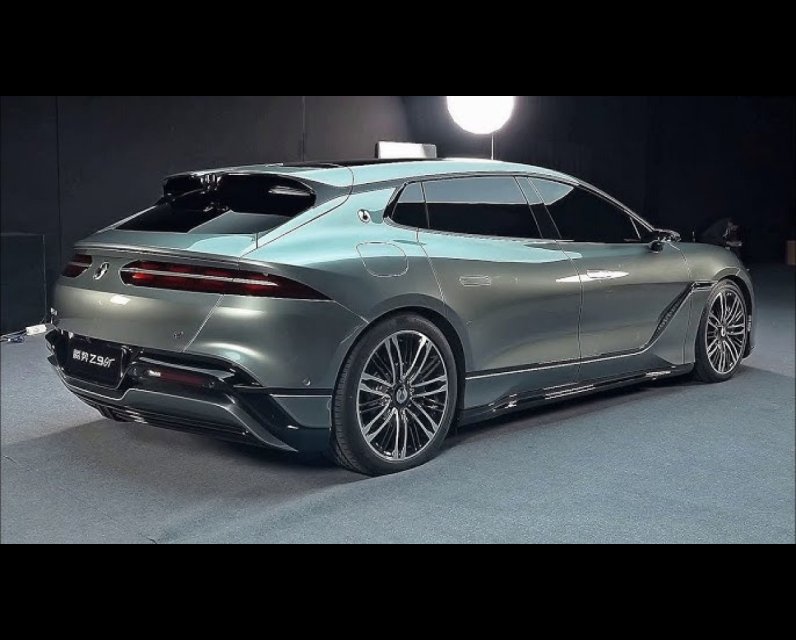
The Denza Z9 is BYD’s top long-range electric vehicle; it gets 1,068 km (663 miles) of range to a single charge, and charges in 9 minutes. Will we see Canadian consumers driving BYD towards the end of Q4 in 2026? Only time will tell.




Comments
Be the first to comment