Pierre Poilievre has entered a high-stakes balancing act in Canadian politics, navigating the growing tension between protecting the manufacturing heartland of Ontario and maintaining the commodity export stability of the Prairies, British Columbia, Quebec, and Atlantic Canada. So far, he is failing miserably.
If Canada follows the U.S. lead by imposing heavy tariffs on Chinese Electric Vehicles (EVs), history suggests China will retaliate against Canadian exports. The precedent is clear: China is a massive buyer of Canadian canola, and during previous diplomatic disputes, Beijing restricted these imports, costing Prairie farmers billions, which harms Ontario sales of F350 pickup trucks to the prairies.
The stakes are equally high on the West Coast. British Columbia’s forestry sector is already reeling from U.S. softwood lumber tariffs that have climbed as high as 45%, leading to devastating mill closures. To survive, B.C. has been forced to pivot toward Asia, recently signing a major pact with China to expand exports of mass timber and engineered wood. For B.C. workers, China isn't just a trading partner; it is the essential alternative to a protectionist United States.
Similarly, China is the second-largest market for Canadian lobster and snow crab. A sudden tariff or "quality inspection" ban would devastate coastal communities across Quebec and Atlantic Canada. While oil and gas from Saskatchewan and Alberta are global commodities, specific long-term contracts and investment flows from Asia could freeze if the trade relationship turns hostile.
Meanwhile, Ontario consumers are overwhelmingly looking for more electric vehicle options. Driving up EV prices through tariffs keeps affordable Asian models out of the market and makes it significantly harder for the average Canadian to make the switch to electric.
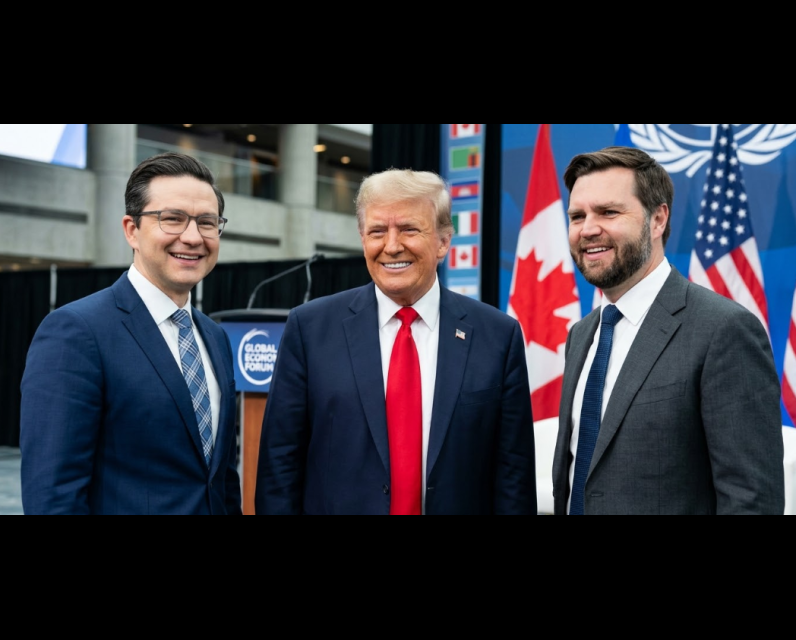
Conservative party membership in Canada is made up of a disproportionate percentage of JD Vance and Donald Trump boosters - or as I like to call them, "Maple MAGA Misfits". Poilievre appears willing to sell out Canadians from every region to align himself with his party base, who wish to be aligned with the "America First" platform of JD Vance and Donald Trump.
Whoever is advising Pierre lacks sound judgment and appears focused on a zero-sum game. Ultimately, his policy proposal surrenders Canadian sovereignty, allowing U.S. domestic policy to dictate how Canada treats its own diverse trading partners. In his quest to appease the residents of "Trumpistan," Poilievre is leaving the rest of Canada behind.




Comments
His trip to Europe failed miserably. It feels like he’s flailing, not knowing what to do. When it should be obvious.
Perhaps it’s time to take a lesson from the smaller parties who know they must be true to themselves in order to gain ground election after election.