

Unpublished Opinions

Stefan Klietsch grew up in the Ottawa Valley outside the town of Renfrew. He later studied Political Science at the University of Ottawa, with a Minor in Religious Studies. He ran as a candidate for Member of Parliament for Renfrew-Nipissing-Pembroke three times from 2015 to 2021. He recently graduated with a Master of Arts in Political Science at the University of Carleton.
Comparing and contrasting the scandals and lows of Prime Ministers Stephen Harper and Justin Trudeau
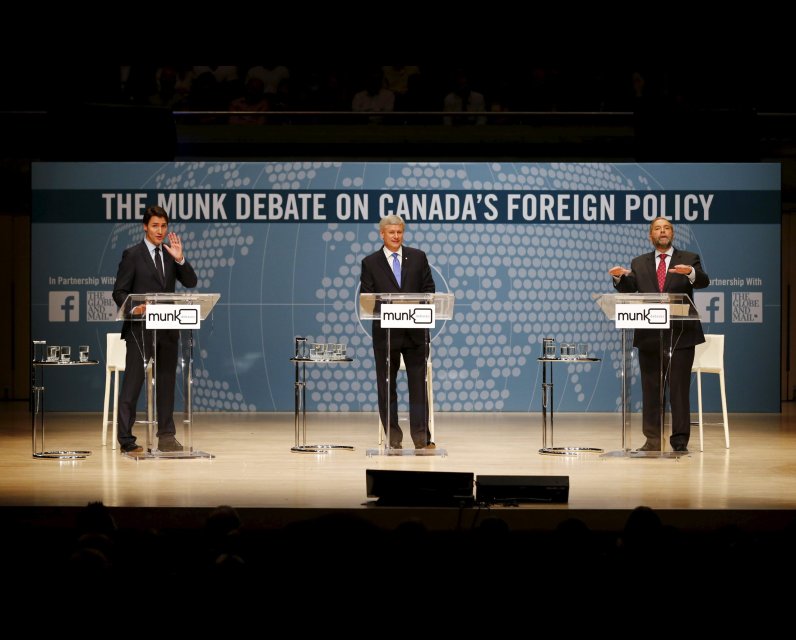
Let us attempt to exhaustively catalogue all the worst scandals and legislation of the last two Prime Ministers and see how they compare…
Why a comparison of the Harper and the Trudeau years is relevant to current events
Incidentally a year after Justin Trudeau announced his imminent resignation as Liberal Party of Canada Leader and as Prime Minister of Canada, Conservatives are now celebrating on social media the 20 years since their 2006 election victory and since the beginning of Prime Minister Stephen Harper’s tenure. While Canada to its fortune has multiple mainstream party options beyond the Liberals and the Conservatives, arguably in the past decade there has been a two-way schism between Canadians who believe that Harper has been one of the worst Prime Minister in modern Canadian history and those who believe that Trudeau has been the worst Prime Minister in modern Canadian history.
This schism is plainly of ongoing relevance to current Canadian political events, since current Prime Minister Mark inherited many Trudeau-era Cabinet Ministers. As well, Opposition Leader and Conservative Party of Canada Leader Pierre Poilievre was a supportive backbencher and later Cabinet Minister under the Harper government. The Liberals publicly pressured Trudeau into resigning and under Carney the Liberal government has seemingly undergone a tonal change, with the promises of increased defence spending being a striking differentiation from the past decade. Yet the Liberals have not overtly disowned or condemned much of the Trudeau legacy. Meanwhile, the Conservatives have seemingly disowned nothing in the Harper legacy, but they were notably silent when the Trudeau Liberals repealed much Harper-era legislation, including legislation that Poilievre previously voted for.
It is these circumstances that have motivated me to attempt an exhaustive comparison of the worst scandals and lows for democratic accountability of the Harper and the Trudeau years. Elsewhere I have firmly made my opinion known and I will not pretend to be neutral in this comparison, but I believe that I will come across with at least some balance.
Each and every government that lasts approximately a decade makes thousands of different policy choices across its tenure. Generalizing about the ultimate consequence of these various policy choices can be next to impossible to objectively quantify. What is easier to measure, however, is how a particular Prime Minister and government responds to the circumstances and the information that are presented to them, and whether the government’s responses are generally reasonable and thoughtful versus arrogant or ignorant. So, the measures of whether a policy makes these lists is not simply whether I happen to disagree with it, but rather whether the policy was pursued in an earnest and respectful manner with no more disrespect or cynicism than most other political differences between opposing parties.
So here begins my comparative lists of the various lows of the Harper and the Trudeau era, with attempted chronological order. (I am omitting the controversy associated with the Temporary Foreign Worker’s program, as both governments ultimately expanded it.) Let us start with Canada’s most recent Prime Minister.
The scandals and lows of Prime Minister Justin Trudeau’s government
- 65 motions of time allocation were used during the Trudeau liberal majority years of 2016 to 2019 (though I cannot verify how many of these instances were controversial or had unanimous opposition from other parties).
- The Trudeau government broke its promise for the 2015 election to be the last under the first-past-the-post electoral system, planting its foot firmly against reform by 2017. Given the opacity and selectivity with which the Prime Minister advocated for a ranked ballot electoral system, and given the unsurprising outcome of the parliamentary process recommending a form of proportional representation, it is difficult to interpret the initial election promise as something other than a lie.
- The 2017 Aga Khan affair occurred where the Prime Minister accepted private island vacations and gifts from a figure who was a recipient of Government of Canada funding.
- In the SNC Lavalin affair culminating in 2019, Trudeau pressured (or in my view, harassed) a couple of his female Cabinet ministers for their criticism of his desired interference in the criminal prosecution of a Liberal-friendly company. But the desired interference did not proceed thanks to Jody Wilson-Raybould’s resistance, and it has not been attempted again after the resulting exposure.
- The Trudeau government attempted in 2020 to award a federal contract to WE Charity for the Canada Student Service Grant program, with a clear conflict of interest in members of Trudeau’s family and the Minister of Finance’s family having had paid opportunities with WE Charity. The attempted contract was reversed in the face of scrutiny.
- In 2020 the Trudeau government sought to defy parliamentary oversight by asking the opposition to surrender its spending authorities in favour of unlimited government spending.
- There was an allegedly premature election called in the fall of 2021, with little evidence that the parliament of that time was difficult to work with and without a distinct change in the returning parliament to even retroactively justify the election call.
- In 2021, it was discovered that the Prime Minister’s Office had been made aware of but took no action regarding a sexual harassment complaint against the Chief of Defence Staff, General Jonathan Vance.
- In 2022 allegations surfaced that Liberal campaigns had benefitted from Chinese interference, which the government was reluctant to publicly investigate. A subsequent public inquiry found no interference that would have pivoted election results, although consequential influence over Liberal MP Han Dong’s nomination victory could not be ruled out.
- In 2023 the Online Streaming Act was passed, which empowers the bureaucracy of the CRTC to intrude upon content creators and even social media users to impose minimums of potentially-arbitrarily-defined “Canadian” content. This was passed despite the concerns of digital privacy activists.
- In 2023 the Online News Act passed, with the support of all non-Conservative parties and ironically at the behest of major newspaper outlets, with the foreseen consequence of driving news off of Meta when it became financially non-viable for Meta to pay the new fines associated with news link-sharing.
- In 2023 Martine Richard was appointed as the interim ethics commissioner of Canada despite familial relations to a Cabinet Minister.
- There were three years of stonewalling on opposition demands to disclose documents relating to the National Microbiology Lab breach, before releasing more documents in 2024.
- There was a temporary complication of the tax code with the GST tax exemptions for holiday 2024, disowned by the then Finance Minister as a political “gimmick”.
- In 2024 there was a government refusal to disclose to parliament documents pertaining to Sustainable Development Technology Canada and its alleged misconduct, despite the clear will of the House to do so.
- There has been the costly banning of select firearms under the Firearms Buyback Program, yet prolonging and delaying implementation of the program to the point that any alleged dangers associated with the weapons in question were allowed to persist.
- In 2025 there was prorogation of parliament to give the Liberal Party of Canada space to elect a new Leader and Prime Minister, without the opposition being allowed to vote down the government in the interim.
(I may have forgotten some notable Trudeau-era scandals. Feel free to remind me of them in the comments below.)
Alleged scandals associated with the Trudeau government that are arguably just policy preferences and/or sincere mistakes
- Conservatives have blamed and perpetually faulted the Trudeau government for introducing a consumer carbon price/tax, which the Carney government has (deniably/partially?) retracted. I do not accept this to be a scandal, not the least because it is a policy that has the support of the economist community, but it is also simple to observe that Liberals have been advocating for carbon pricing since the 2008 election (alongside the Greens), and the policy’s existence in any case was not the result of one politician’s particular corrosive thinking, but instead resulting from mainstream and longstanding political thinking.
- The Trudeau government has been widely faulted for bringing immigration up to harmful levels, or at least bringing in too many temporary foreign workers and/or international students. I reject this as a scandal because the scale of the advance warnings and/or opposition is not clear to me - perhaps I can be corrected in the comments below. It is not a scandal if a government makes a mistake that is obvious with hindsight, and certainly the Liberals were responding to the will of business interests and of the provinces with ongoing high immigration.
- The Trudeau government’s 2022 invocation of the Emergencies Act has been ruled illegal by the courts. I reject this as a scandal because an executive action being deemed illegal is not the same thing as it being ignorant or corrupt. It had at least some basis in independent expertise and popular backing or pressure, even if it did not come from proper legal advice.
- The Trudeau government tabled the controversial Online Harms Act, which in the name of the protecting children featured provisions that would allow human rights tribunals to persecute some Canadians through processes less rigorous and fair than criminal trials. This legislation was not rushed through time allocation and never passed, however. I cannot judge whether a Liberal majority parliament would have passed the Bill as is or not.
Which of the Trudeau scandals have potential lasting negative impacts?
There have been a variety of scandals associated with the Justin Trudeau era. Arguably however, few of these scandals have had lasting impacts on Canadian quality of life, with most affecting Trudeau’s personal reputation and credibility but with little impact on broader Canadian institutions. For example, the WE Charity scandal and the Agha Khan affair were not normalized by Liberals writ large and have not preceded more general policy or institutional changes – if the Carney government ever repeats similar scandals, it will be due to expecting not to be caught, not due to pride in doing more of the same. However, some exceptions are the following:
- The Online News Act remains a distinct blemish of Trudeau’s legislative record, continuing to this day to affect the spread and accessibility of Canadian news sources, including alternative Canadian media run by people whom I know. It remains unclear to me if or when that legislation will ever be repealed. However, it is also unclear to me how a government under a different Leader or a non-Liberal government would have responded when the newspaper industry lobbied for fining news-link sharing.
- The likely negative (or allegedly positive) impacts of the Online News Act have yet to be seen, as the CRTC has punted implementation of its various regulations.
- The collection or confiscation of the Firearms Buyback Program is imminently proceeding, for better of for worse, though notably despite the expressed privately-recorded Minister of Public Safety’s own misgivings.
- The Liberals normalized the use of prorogation for partisan gain, after previously condemning the Harper government for the same – and got rewarded at the 2025 ballot box in doing so.
The scandals and lows of Prime Minister Stephen Harper’s government
- The Harper government called the 2008 federal election against the spirit (though not against the letter) of its own fixed-election-date legislation.
- The Harper government allegedly precipitated a constitutional crisis when it exercised its incumbent authority to prorogue parliament in the face of a would-be vote of non-confidence and in the face of a would-be governing coalition to be led by the Liberals. (Though, the fact that the coalition did not last at least in part reflects upon the other parties’ lack of will to unseat the government.)
- In 2010 parliament was prorogued in a manner alleged to stall the parliamentary investigation of the Afghan detainee file.
- In 2011 the opposition parties voted to unanimously condemn the Harper government as in “contempt of parliament” for withholding some information on budgetary costs.
- There were allegations of voter misdirection favouring the Conservatives in the robocall scandal of the 2011 election, which were not investigated with any public inquiry.
- Industry Minister Tony Clement approved almost $400,000 for the restoration of a vintage steamboat in his riding under the guise of G8 summit purposes, without later punishment.
- Defence Minister Peter MacKay came under fire after asking for a helicopter pickup at public expense and allegedly giving false reasons for the request, without later punishment.
- During the Harper majority years, there were roughly 100 motions for time allocation to reduce debate and rush bills, usually against unanimous opposition among all opposing parties.
- During the Harper majority years, the government rigidly applied the policy of almost never accepting opposition amendments.
- The Harper government in 2012 passed the omnibus Bill C-45, ostensibly for “budgetary” purposes but significantly touching on various environmental laws and the Indian Act through over 450 pages. The Bill was rushed through time allocation, faced unanimous opposition from non-Conservative parties, and stirred significant civil society opposition. Every potential amendment was rejected in an overnight voting marathon.
- The Harper government in 2012 introduced the “Protecting Children from Internet Predators Act” which would require Internet service providers to enable warrantless backdoor government access to users’ data. After accusing opponents of being supportive of child pornography and suffering blistering criticism, the government eventually withdrew the bill.
- In the Harper years government scientists became subject to a notorious level of bureaucratic muzzling, including with respect to basic research, eventually receiving international media attention and culminating in the 2012 march by scientists against the “Death of Evidence” on Parliament Hill.
- The Harper government in 2012 tabled the Canada-China FIPA, which is in force for a minimum of 31 years and which allows Chinese state-companies to sue for Canadian tax dollars via questionable 3-person tribunals in response to legislation affecting their expected profits. The government manipulated secrecy and opposed efforts by the entire opposition to allow more than 1 hour of formal study. The treaty was ratified in 2014 and has been alleged to be a scheme by the Harper government to enable China to force oil development against the wishes of future Canadian governments’ desired environmental regulations.
- In 2013 it came to light that Harper’s Chief of Staff Nigel Wright had paid a secret $90,000 cheque to the sitting Senator Mike Duffy, with the express purpose of affecting said Senator’s behaviour (i.e. a bribe). Released RCMP documents hint that the Prime Minister was “good to go” with these proceedings.
- In 2014 Minister of Democratic Reform Pierre Poilievre introduced the “Fair Elections” Act that introduced various changes to elections finance and voting identification laws in ways alleged to tilt elections to favour the Conservatives. The bill drew widespread civil society opposition and was partially amended after months of mockery of the opposition, and later further amended by the Trudeau Liberal government.
- In 2015 the Harper government tabled Bill C-51, the “Anti-terrorism” Act, which was condemned with widespread civil society opposition including a letter from over 100 law professors. The legislation empowered CSIS to violate laws to disrupt and share information about persons suspected of vaguely-defined “threats to Canada. The Liberals voted for the legislation but then substantially amended it upon forming government.
- The Harper Conservatives had promised to reform the Senate but accomplished no reforms after spending minimal effort on the file.
- The traditional leaders’ debates organized by the media consortium never occurred in the 2015 election after Harper announced that he would not participate.
(I may have forgotten some notable Harper-era scandals. Feel free to remind me of them in the comments below.)
Which of the Harper scandals have had lasting negative impacts?
Like the Justin Trudeau government that would follow it, arguably few of these scandals have had lasting impacts on Canadian quality of life. However, these scandals have generally been so inconsequential to Canadian quality of life because the Harper era policies were quickly repealed without controversy by a different government. The would-be harms associated with the “Anti-Terrorism” Act, with the “Fair Elections” Act, and with Bill C-45 were given short lives because the resulting legislation was mostly not allowed to persist. Much of the incessant and irrational abuse against parliamentary scrutiny was not fully repeated by the Trudeau government, though some was. Canada underwent a speedy policy course-correction shortly after the end of the Harper era, a course correction that was so fast and uncontroversial as to be quickly forgotten.
The biggest scandal to persist from the Harper years remains the 31-year Canada-China FIPA, departure from which cannot be legally executed until 2029, and after which another 16 years must wait until the treaty can be fully null and void. The concern that the treaty will cause harm to Canadian quality of life is somewhat alleviated by the observation that Canada has banned Chinese tech giant Huawei from its 5G network without any resulting FIPA lawsuit. However, there is certainly no distinct upside to this treaty that can help to justify anything in the manipulative way it was quietly and insecurely processed into law.
Concluding summaries and implications of the Harper and Trudeau records of scandal
In the two decades of scandals here that I have attempted to trace, the absolute worst year of a government putting its head in the sand, and doing the best it can to prove that civil society cannot make a difference against executive dominance, was 2012. That year was a particular onslaught of attempts to blindfold citizens, to encourage deep anti-intellectualism, and to disrespect the future democratic integrity of the country like never before. Had the Conservatives been better at reading the room, they would have ended Harper’s tenure as Prime Minister early that year, when he could still hold his head high for the victory of repealing the long-gun registry. Instead they enabled his worst instincts as the worst of his tenure was yet to come.
By contrast, the worst scandals of character occurred in the Trudeau government’s early years. The worst Trudeau legislation came into law in 2023, albeit with the support of some opposition parties. The worst Liberal parliamentary governance scandals tended to be concentrated in 2024 and in events leading in 2025. If there was a time when Trudeau should have resigned with most of his positive legacy intact, it would have possibly been in 2018 before the SNC Lavalin scandal came into the limelight, or in 2022 when whatever accomplishments associated with government pandemic management were in the rearview mirror.
I personally encourage fellow Canadians to pay attention to and consider parties and candidates beyond the Liberals and the Conservatives. But to the extent that Canadians polarize regardless around the two largest parties, the Liberal and Conservative leaders should clarify to what extent they have learned lessons from these governments’ history. Prime Minister Mark Carney is still a relative newcomer to the Canadian political scene, not responsible for the decisions made by either of these governments but also a figure who implicitly endorsed the prorogation that enabled his seizure of power. It would be unsurprising if lack of political experience tempted Carney to repeat some of these mistakes. Meanwhile, Conservative Leader Pierre Poilievre was a vocal and supportive backer of the Harper government who never wavered from any opportunity to encourage the Harper government’s worst instincts. He even tabled one of the Harper government’s worst Bills, and was thankfully not competent enough to steer its initial form through to passage.
Funnily enough, in 2025 the Liberals and the Conservatives colluded to both vote for time allocation to rush into law Bill C-5. That may by itself give some warning that neither of the parties has studied the above history well enough to learn what needs to change. Expect some political hypocrisies to continue!
References

Comments
Excellent and a bit long for this format. Better if you just listed the matters without commentary.
Then added your comments later.
That business about "first past the post" still irks me. Trudeau's government is implicated in chinese influence and Fentanyl related scandals
Harper's penchant for omnibus bills irks me even more. You did not clarify which FIPA meaning.
Trudeau's invocation of emergency measures...was/ is very contentious and an over reach. You are giving them a pass... if your bank account was seized you would not be so generous.
The covid lockdowns were too austere.
Some say Trudeau Jr. Was the worst pm ever...I do not disagree.
ArriveCAN? Green Slush fund? Justin twice in violation of ethics committee? How could you miss those ?
the only “scandals” you could fairly tie to Harper would be the 90k check and possibly the steam boat . The rest were maybe poor decisions and policy but not scandals.