

Unpublished Opinions

Clinton is an accredited writer for numerous publications in Canada and a panelist for talk radio across Canada and the United States
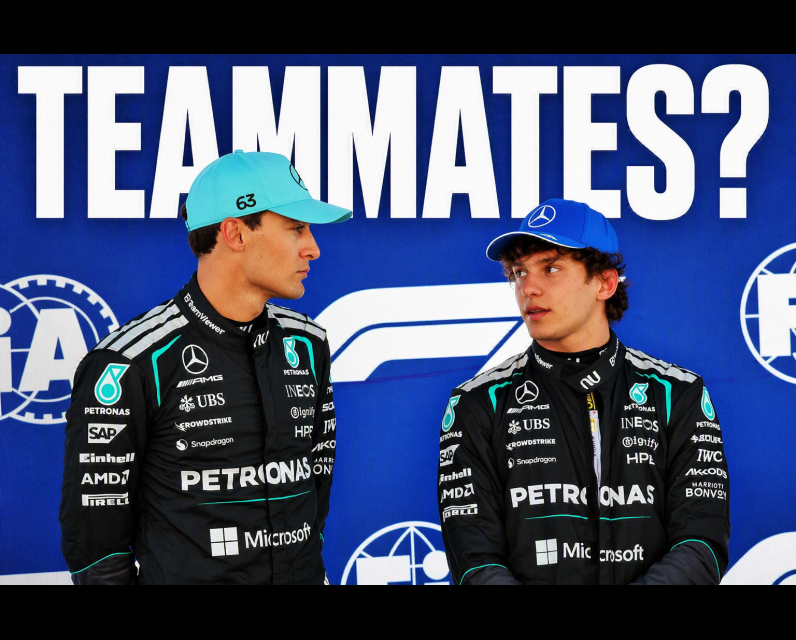
George Russell Thought Mercedes Was His Team. Then Kimi Antonelli Arrived
Many Lewis Hamilton fans fell out of love with George Russell at the 2022 Dutch Grand Prix. During a late-race Safety Car, Russell requested fresh soft tyres. Mercedes granted the stop, leaving Hamilton out on older mediums with Max Verstappen behind him - evoking painful memories of Abu Dhabi 2021. Believing Russell could have acted as a defensive buffer, Hamilton immediately questioned the decision:
“Why’d you stop George?”
Would Michael Schumacher, Sebastian Vettel, or Max Verstappen have been treated as afterthoughts while delivering championships for their teams?
Ironically, many Russell supporters had spent late 2021 arguing he would be the ultimate team player alongside Hamilton. Yet at the first real opportunity to support his teammate, Russell prioritised his own race. Mercedes once again found itself defending a controversial strategic call.
Hamilton’s anger was understandable. At the restart, he lost the lead to Verstappen and was then overtaken by Russell and Charles Leclerc, dropping from first to fourth. A furious Hamilton lashed out:
“That was the biggest fuck up. I can’t believe how much you guys fucked me.”
For many Hamilton fans, Zandvoort wasn’t just a strategic blunder - it was the first sign that Russell’s interests would always come first at Mercedes.
The second moment came at the 2023 Qatar Grand Prix. Mercedes put Hamilton on soft tyres to maximise his launch, but at Turn 1 Russell collided with him. Hamilton attempted to pass around the outside, but contact between Hamilton’s right rear and Russell’s front-left sent Lewis into the gravel and out of the race.
When Bono checked on him, Hamilton’s frustration was unmistakable:
“Yeah, I got taken out by my own teammate.”
Would Michael Schumacher, Sebastian Vettel, or Max Verstappen have accepted such behaviour from a “teammate”?
To many Hamilton fans, Qatar reinforced what Zandvoort had already suggested: when push came to shove, Russell’s priorities came before Hamilton’s - even at Hamilton’s expense.
At the same time, a new narrative was forming. With the return of ground-effect aerodynamics in 2022, pundits began claiming Hamilton couldn’t drive the new generation of cars. Russell’s results were used as evidence that Hamilton had declined.
That narrative ignored reality.
The real problem was Mercedes - not Lewis Hamilton.
The team’s zero-sidepod concept proved a technical dead end. It created a car with fundamental balance problems that Mercedes spent nearly two years trying to solve. The W13 suffered chronic instability between corner entry and exit, its weak rear end robbed drivers of confidence, and its packaging created an extremely narrow operating window. Hamilton was also forced into a driving position he disliked, sitting further forward than he preferred.
Then came the porpoising.
From the first Bahrain test, the W13 bounced violently down the straights. The W14 that followed inherited many of the same flaws. Mercedes had backed itself into a technical corner, and the team spent season after season searching for solutions.
The cars often became competitive only under very specific conditions, particularly with near-empty fuel loads. Setup changes frequently felt like guesswork.
To put it bluntly, the W13 and W14 were deeply flawed Formula 1 cars.
Things became so desperate that Mercedes frequently used Hamilton as an experimental test driver. While the team searched for answers, Hamilton was often asked to trial upgrades, alternative setups, and development parts during race weekends, sacrificing his own results to guide the direction of future cars.
Critics looked at the points standings and concluded Hamilton had forgotten how to drive - a claim promoted by people who didn’t understand Formula 1 or preferred recency bias because it drives online clickbait.
Even during Mercedes’ most difficult period, Hamilton continued to demonstrate elite racecraft, exceptional tyre management, remarkable consistency, and outright pace whenever the car allowed it. The problem was never the driver - it was the machinery beneath him.
Just look at Hamilton’s performance in the 2024 Mexican Grand Prix. Overtaking a quicker Ferrari driven by Charles Leclerc by going down the straight on the grass was extraordinary. It reminded everyone that when given even a slight opportunity, Hamilton produced world-class drives.
Fast-forward to 2026 and the narrative looks very different.
Hamilton now finds himself at Ferrari, working within a team that built a car around coherent design philosophy and clear driver feedback rather than chasing a failed aerodynamic concept. The car has a stable rear end, a broader operating window, and characteristics that allow Hamilton to attack rather than merely survive.
The result?
Lewis Hamilton is once again fighting for victories and competing for the Formula 1 World Championship.
For many Hamilton supporters, that’s all the proof they ever needed.
The claim that Hamilton couldn’t drive ground-effect cars was never convincing. Mercedes spent two years trying to make an uncompetitive concept work while Hamilton carried the burden of helping the team escape its own mistakes.
And while Russell accumulated points and headlines during that period, many Hamilton fans never forgot Zandvoort and Qatar. To them, those incidents revealed something important: not who the faster driver was, but who they believed was truly committed to the team when it mattered most.
Yet there is one final twist.
While Russell spent years trying to establish himself as Hamilton’s successor at Mercedes, many Hamilton fans have unexpectedly embraced Kimi Antonelli as a form of poetic justice.
Not because Antonelli is Lewis Hamilton.
But because he might become the thing Russell never wanted to see arrive.
For years, Russell operated as the future of Mercedes - the chosen one, the heir apparent. By early 2026, there was a growing sense that Mercedes had finally become George Russell’s team.
Some Hamilton fans point to Russell’s much-discussed 2026 Australian Grand Prix walk-and-talk session with journalists as emblematic of that moment. To supporters, he looked confident. To critics, he looked smug - a driver who believed the succession was complete.
Then Kimi Antonelli arrived. And suddenly, a familiar Formula 1 pattern began to emerge.
Sebastian Vettel leaves Red Bull and Daniel Ricciardo believes he is next. Then Max Verstappen appears.
Lewis Hamilton leaves Mercedes. George Russell believes it is finally his team. Then Kimi Antonelli appears.
History doesn’t repeat itself exactly, but Formula 1 has a strange habit of rhyming.
The established champion leaves. The heir steps forward. The bridge driver believes his time has arrived. And then, from the shadows of the junior programme, the real generational talent emerges.
Almost nobody saw Verstappen coming. Almost nobody expected Antonelli’s rise to accelerate so quickly. The uncomfortable reality for Russell is that Formula 1 doesn’t care about succession plans. It doesn’t care who has waited longest. It doesn’t care who believes they’ve earned the throne.
Fast forward to Silverstone 2026 and George Russell was getting clearly outperformed by Kimi Antonelli in an actual equal car with the same upgrades - so he tried to blame his Mercedes’ lack of top speed compared to Antonelli after the race during a cooldown lap. Toto Wolff jumped on the radio immediately and fired back:
“Yeah George, I think straight-line speed was okay in the race.”
In other words, Toto wasn’t having any of it. Kimi Antonelli had the race pace and tyre management until his car died. And the racing gods only care about race pace and tyre management.
And that’s why some Hamilton fans have embraced Antonelli with surprising enthusiasm. To them, it feels like poetic justice. The same fanbase that spent years watching Russell challenge Hamilton under questionable circumstances now finds itself cheering for the young Mercedes prodigy challenging Russell - now that Mercedes has the best car on the grid.
Not because Antonelli is Hamilton. But because he might become the thing Russell never expected to face: a younger version of the future always chasing purple sectors. And King George Russell of King’s Lynn in Norfolk England must step up and prove he has the race pace and tyre management in him.
What if Antonelli has already developed the calm, metronomic race pace that made Hamilton so relentless over a Grand Prix distance?
What if he possesses the same cold-blooded ability to deliver under pressure that turned Verstappen into a qualifying machine?
What if Mercedes didn’t just sign a promising teenager - what if they signed the next generational driver?
Those are the questions that would keep any established team “leader” awake at night.
Because the most frightening thing about Verstappen wasn’t that everyone saw him coming. It was that by the time everyone realized what he was, it was already too late for Daniel Ricciardo.
And perhaps that’s the lesson Formula 1 keeps teaching.
The “next one” is rarely the driver standing in front of the cameras doing walk-and-talks and announcing his arrival.
The real one is usually still in the background. Still learning. Still underestimated. Still pulling at the current beneath the surface. Nobody notices. Nobody worries. Nobody sees the undertow forming.
Then one day, seemingly out of nowhere - boom. Lewis Hamilton.
Fernando Alonso arrived at McLaren in 2007 as the reigning double World Champion and the undisputed team leader. The future was supposed to belong to him. Then a rookie named Lewis Hamilton showed up.
Boom.
Max Verstappen.
Red Bull thought the future belonged to Daniel Ricciardo after Sebastian Vettel’s departure. Then Verstappen arrived.
Boom.
Kimi Antonelli.
Mercedes thought the future belonged to George Russell after Hamilton’s departure. Then Antonelli arrived.
The pattern is almost eerie.
The king leaves. The heir steps forward. The bridge driver believes his time has arrived. And then the actual phenomenon emerges from the junior ranks and changes the entire equation.
Alonso thought he was inheriting McLaren. Ricciardo thought he was inheriting Red Bull. Russell thought he was inheriting Mercedes.
Then Hamilton happened. Then Verstappen happened. And now Russell faces the possibility that Antonelli might happen too.
It’s far too early to know whether Antonelli will ultimately join Hamilton and Verstappen in that rare category of generational drivers - but the fact that young Kimi Antonelli leads the 2026 Drivers’ Championship with Lewis Hamilton hunting him down is enough to shift the ground beneath George Russell’s feet. The future he thought he was inheriting may already belong to someone else.
References

Comments
Be the first to comment